
NEW YORK — When the Federal Reserve’s Kevin Warsh stepped to the podium at Jackson Hole on August 28, 2026, and made the case for keeping interest rates elevated well into the next year, he moved markets in ways that varied sharply by sector. Financial stocks fell. Technology names fell harder. McDonald’s Corporation MCD declined $0.92 to $298.75, a drop of 0.31 percent that amounted to the mildest response to the rate warning anywhere in the Dow Jones Industrial Average.
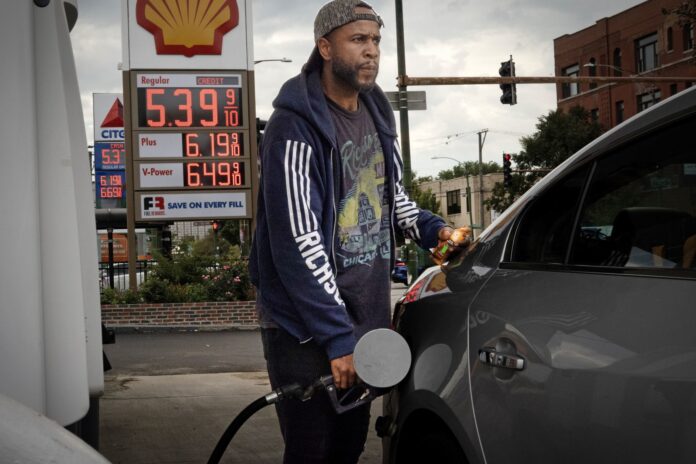
The gap was not coincidental. McDonald’s earns its resilience from a thesis that inverts the usual rate logic: the more financially stressed American consumers become, the more they trade down from sit-down restaurants and fast-casual chains toward the Golden Arches. Warsh’s argument for higher borrowing costs, taken seriously, is a customer-recruitment event for the world’s largest fast-food company.
That trade-down dynamic gained qualified credibility through McDonald’s second quarter. The company reported revenue of $7.1 billion for the April-to-June period, up 4 percent from a year earlier. Global comparable sales rose 1.3 percent. United States comparable sales grew 0.8 percent, though foot traffic dipped even as average checks rose — the gain driven by pricing adjustments rather than a broad increase in customer visits. Earnings per share came in at $3.32, up from $3.14 in the prior-year period, beating analyst expectations. Operating margin held at 47 percent. Those numbers were built on value-menu repositioning, as the company outlined in its second-quarter earnings release.
The recovery was not inevitable. McDonald’s had spent the previous two years navigating the consequences of its own pricing choices. Meal prices that rose significantly during the post-pandemic period, including a backlash over a $18 Big Mac in Connecticut that went viral in 2024 as a symbol of fast-food inflation’s limits, had damaged the brand’s central promise. Fox News documented the consumer frustration when the McDouble, once priced at 99 cents, appeared on the new McValue menu at $2.50. Chief Executive Chris Kempczinski acknowledged the misstep publicly. McDonald’s had let value perception erode. The $5 Meal Deal that followed outperformed every internal projection. The 2026 comparable-sales gains are the downstream result of that correction.
The broader consumer environment Warsh described on Friday, characterized by persistent inflation, elevated borrowing costs, and a rate path that may not accommodate meaningful cuts until 2027, does not erase that achievement. It consolidates it. Budget-constrained diners are not returning to Applebee’s and Chili’s when their discretionary spending tightens. They are choosing between McDonald’s and cooking at home. Fortune traced the trade-down arithmetic in March, when McDonald’s announced a $3 value menu explicitly designed for consumers in the lower half of a K-shaped economy.
The macro signal on August 28 hit the broader market heavily. The S&P 500 fell 0.62 percent as Warsh’s remarks repriced rate-cut expectations and forced a sector rotation away from rate-sensitive names. Financials bore the sharpest pressure; Goldman Sachs fell on concerns that higher rates would eventually compress deal activity. Consumer staples held up comparatively: Coca-Cola ended the day down 0.29 percent, its defensive characteristics providing a partial buffer against the same sell-off pressure.
McDonald’s franchise model adds a structural dimension to that defensiveness. Unlike restaurant operators that own and staff locations directly, McDonald’s collects royalties and rent from franchisees who absorb the operational costs, including labor, commodity inputs, and lease expenses. When margins at the franchisee level compress, which characterizes any period when food inflation and wage costs both run high, McDonald’s corporate revenues are relatively insulated. The pass-through structure lets the company sustain operating margins above 40 percent through cycles that would erode the economics of a fully company-operated chain.
Whether the trade-down momentum is durable across a sustained higher-rate environment is the question the current comparable-sales trend cannot fully answer. The thesis works as long as consumers remain employed. A rate environment that ultimately tips the labor market, something the 2022-2025 tightening cycle failed to do but which remains a theoretical endpoint of sustained restriction, changes the calculus for restaurant foot traffic in ways a franchise-royalty model cannot fully absorb. Fox Business reported that McDonald’s is planning a significant overhaul of its restaurant pricing and menu structure, a signal that management does not regard the current value thesis as indefinitely self-sustaining.
At $298.75 on August 28, McDonald’s traded at roughly 22 times the consensus full-year earnings estimate, a premium that reflects the brand’s consistency, its 49-year dividend growth streak, and a macro environment that, for once, is working in the company’s favor. The rate path Warsh outlined did not threaten McDonald’s. For most of Wall Street, that was the surprise.