
BARENTSBURG, SVALBARD — A Russian state-owned expedition ship has been ordered stranded at port in the Norwegian Arctic after authorities seized it Wednesday to enforce Ukraine’s $4.2 billion arbitration award for energy assets Russia expropriated when it annexed Crimea in 2014.
The Professor Molchanov, used for scientific and tourist voyages through Arctic waters, was docked at Barentsburg — the Russian-administered settlement on Norway’s Svalbard archipelago — when a court order issued by the Nord-Troms and Senja District Court last Monday took effect. Lars Fause, Svalbard’s governor, confirmed the vessel cannot leave its berth. Norwegian authorities are handling passengers aboard separately.
The seizure traces to a 2023 ruling by the Permanent Court of Arbitration in The Hague. The tribunal found Russia liable for seizing Naftogaz’s assets during the 2014 Crimea annexation — offshore gas fields, subsea pipelines, and the Black Sea energy producer Chornomornaftogaz — and ordered $4.2 billion in compensation. With accumulated interest and legal costs, Russia’s total exposure has grown to roughly $5 billion. Naftogaz’s landmark Crimea compensation ruling established Russia’s liability for assets it absorbed into what it called sovereign Russian territory. Norway’s courts recognized the award as enforceable before the seizure order was sought — the procedural step that activated the ability to immobilize Russian-owned assets within Norwegian jurisdiction.
Svalbard’s legal status makes the location significant. The 1920 Svalbard Treaty grants Norway sovereignty over the archipelago while giving Russia — and dozens of other signatories — treaty rights to commercial activity there. Russia has maintained Barentsburg for over a century, operating coal mines and tourist infrastructure. Those arrangements have grown more fraught since Russia’s military operation in Ukraine began. Wednesday’s seizure is the most direct application of Norwegian legal jurisdiction against a Russian state-owned asset since the war’s expansion, and it happened inside a settlement where Russia has exercised near-autonomous economic authority for decades.
Norway’s action is not isolated. Naftogaz and affiliated Ukrainian entities have been pursuing enforcement across roughly ten Western jurisdictions simultaneously. Prior actions have seized Russian-owned assets in Finland and France. How those jurisdictions coordinate — sharing intelligence on vessel movements and asset locations — has not been disclosed publicly. What is evident is that the legal architecture of Western courts has become a sustained instrument of economic pressure on Moscow, compounding formal sanctions with case-by-case asset immobilization, as Euronews reported in its coverage of the Arctic seizure. The pattern runs parallel to broader enforcement campaigns: the Russia-Euroclear enforcement dispute has tested the same logic in European financial courts — that arbitration victories can be converted into physical or financial custody of Russian-linked assets.
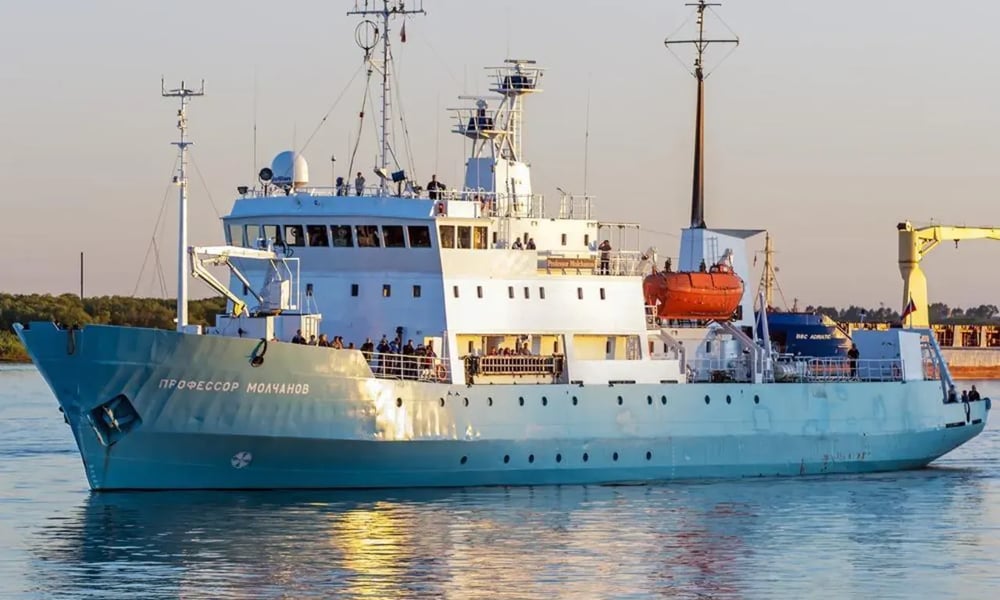
The Professor Molchanov is an expedition cruise ship, not a military or energy asset. Its seizure illustrates how thoroughly the Crimea annexation’s legal exposure has followed Russian state-linked entities into ship registries, port records, and commercial operations across European waters. Russia’s decision to absorb Ukrainian energy assets in 2014 as a cost-free annexation dividend is still being contested — not on the battlefield but at the shipping berth, twelve years later.
What Norway will ultimately do with the vessel — auction it to satisfy part of the judgment, hold it as collateral pending negotiations, or release it under some diplomatic arrangement — has not been publicly specified. Norwegian enforcement authorities have legal power to liquidate the asset; whether a tourist expedition ship commands anywhere near the value required to dent the outstanding $4.2 billion is a separate arithmetic problem. The gap between legal victory and actual payment has been the central challenge of the Naftogaz campaign since the Hague ruling was issued. Even a coordinated ten-jurisdiction effort seizing vessels, property, and financial instruments accumulates assets whose combined value represents a fraction of what the tribunal awarded.
The Professor Molchanov, moored at a Russian settlement on Norwegian Arctic territory under a Norwegian court order, is the most concrete materialisation of that effort to date. Whether its seizure represents a turning point in enforcement pressure on Moscow or another installment in a very long campaign is the question its passengers, now being escorted from the vessel at Barentsburg, are not positioned to answer.