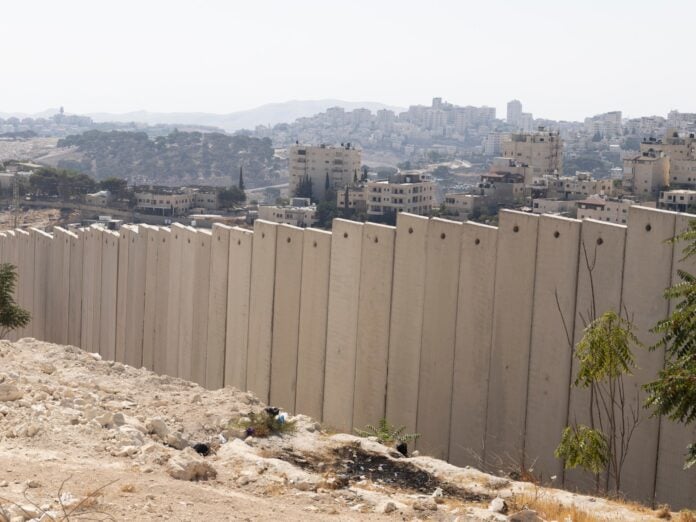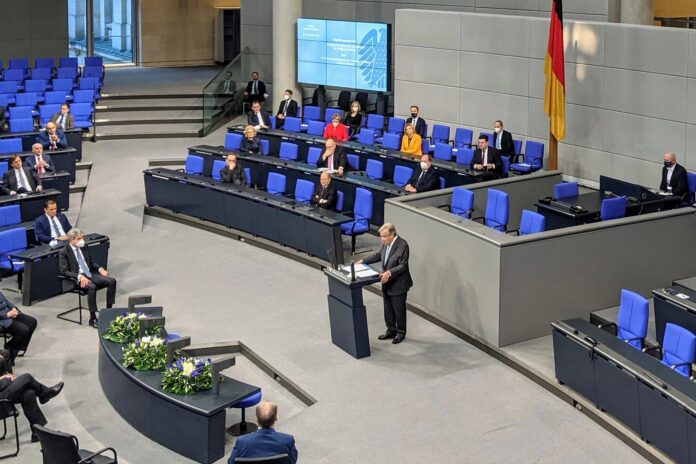

MADRID — Standing before the Spanish parliament on Thursday, Prime Minister Pedro Sánchez told lawmakers that his government had “nothing to hide” in its handling of the largest single migration event in modern European history, and then proceeded to say several things that did not quite add up.
Sánchez said no intelligence service had anticipated the July 30 crossing, in which up to 70,000 migrants poured through from Morocco into the Spanish enclave of Ceuta over the course of a morning. A police advisory from July 29, the day before the surge, had warned of “extreme risk” of a coordinated arrival. He said no police, legal, or international institutions had provided solid proof of Moroccan state involvement. His own interior minister has since sought a police investigation into reports that leaked photographs show plainclothes and uniformed Moroccan security officers at the crossing point.
He called the return process “one of the fastest in European history,” noting that more than 90 percent of those who had crossed went back within 72 hours. Approximately 5,000 remain in Ceuta today, including an estimated 1,200 minors sleeping on beaches.
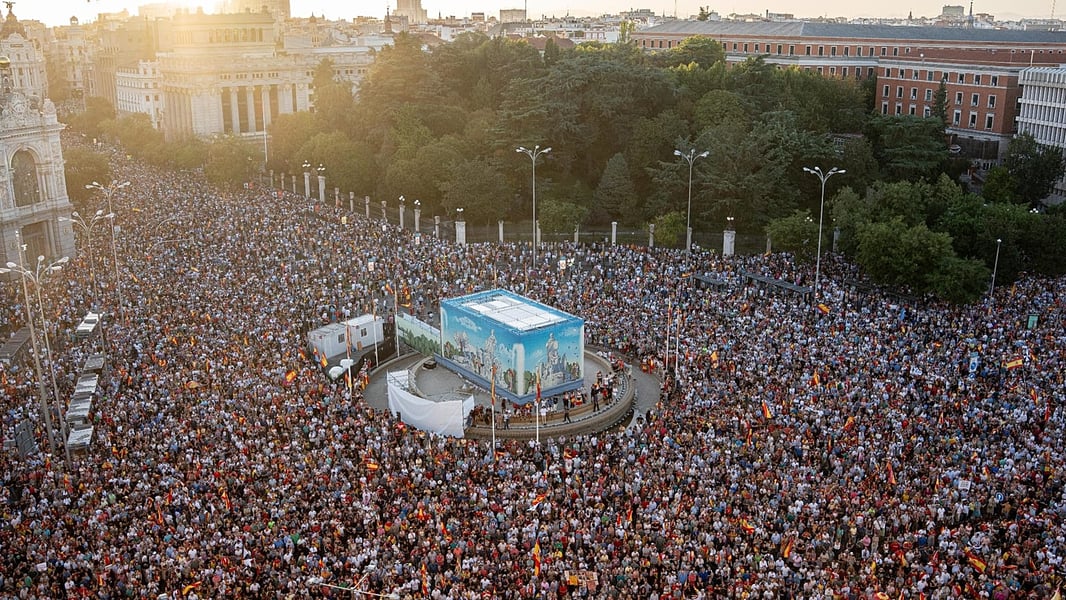
The speech, which lasted just over an hour, came as his government faced the worst political crisis of his tenure. Between 50,000 and 150,000 Spaniards had marched the day before in Madrid and other cities, chanting “expel the invaders.” It also came after Sánchez summoned Morocco’s ambassador over remarks by Morocco’s justice minister, who had spoken of a “final solution” for Ceuta in terms the Spanish foreign ministry described as “unacceptable.”
For Spain, Ceuta is not a complicated question. “Ceuta will remain Spanish until the end of time,” Sánchez told parliament. For the migrants who remain inside the enclave, the question of what comes next is considerably less settled.
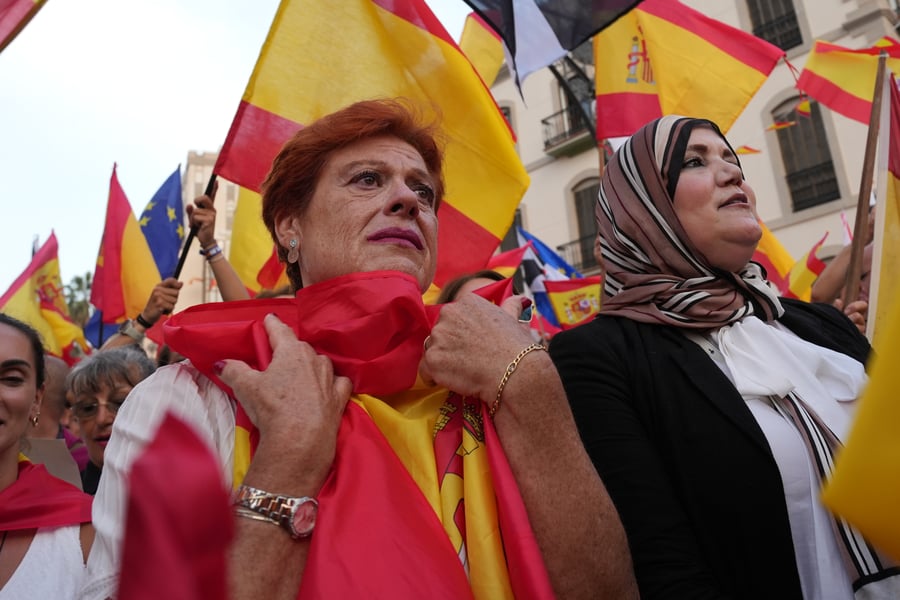
At least 80 people died in the July 30 mass crossing. Halima Ahmed, who works with the NGO Luna Blanca inside Ceuta’s improvised encampments, said the people her organization serves are “in a vulnerable situation” and called for “a little bit of empathy.” In the city itself, a resident named Gema Guillen described everyday life as chaotic enough that she had stopped going out. Otman Ianaya, 40, who crossed from Morocco in July, was direct about his reason: “There is no work in Morocco. I want to build a future in my life.”
None of those three people were what Sánchez’s parliamentary critics were interested in. The opposition leader, Alberto Núñez Feijóo, accused the government of having advance knowledge of the crossing and of suppressing the police advisory to protect the bilateral relationship with Rabat, a relationship the prime minister has spent years cultivating. Feijóo called it a cover-up. Al Jazeera reported that around 50,000 protesters had gathered in Madrid alone.
In Brussels, conservative and far-right MEPs staged a protest at the European Parliament, demanding an EU-level response. The European Commission offered one: the situation, a spokesman said, was a matter for national authorities. This is the standard Commission answer on migration, and it is the same answer Brussels has given every time a member state has reached a crossing threshold that exceeded its unilateral capacity to manage. The bloc has not meaningfully implemented a burden-sharing arrangement despite years of pressure from southern member states, as EU immigration tensions have built across the bloc for months.
Spain pledged 309 million euros, roughly 357 million dollars, in emergency funding for Ceuta. Interior Minister Fernando Grande Marlaska requested a police investigation into the leaked reports implicating Moroccan security forces. Juan Fernando López Aguilar, a former Socialist justice minister now serving as an MEP, offered his own coalition’s most uncomfortable assessment: the crossing, he said, “couldn’t have happened without some overlooking by the Moroccan authorities.”
The former Socialist and the prime minister belong to the same political family. The gap between their accounts of what happened is not narrow.
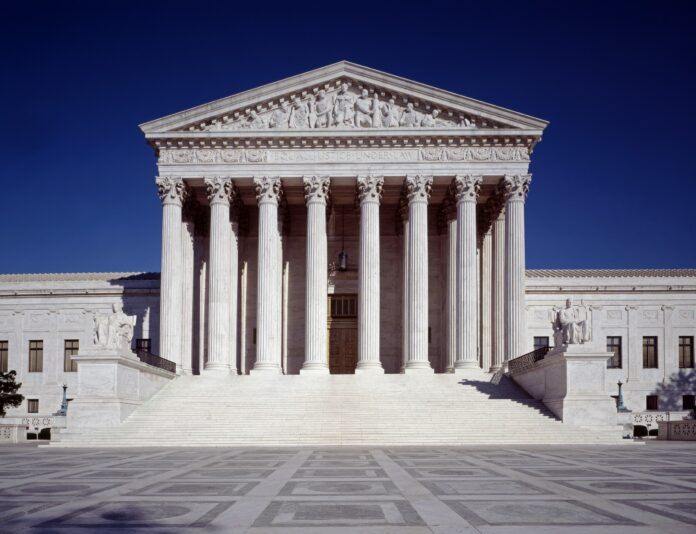
Sánchez did not linger on the contradiction. He returned instead to a charge he has made before: that Russian and Israeli-linked disinformation networks had weaponised the Ceuta crisis to destabilise his government ahead of the 2027 general election. He pointed to a July 8 Supreme Court ruling as having triggered the social media surge that preceded the crossing. Euronews reported that the European Commission described the situation as a matter for national authorities, even as opposition MEPs demanded a bloc-wide response.
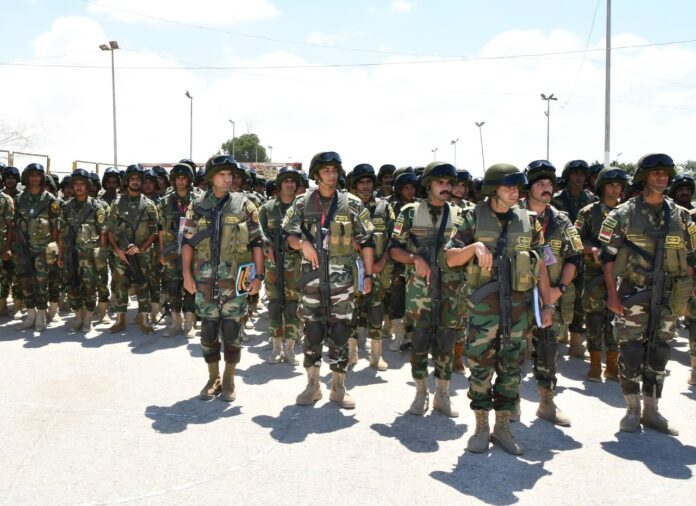
What is not disputed is that Spain’s Director-General of National Police, asked directly, told the Interior Ministry there was no evidence implicating the Moroccan authorities. And that 80 people died crossing the border the day after a warning of extreme risk arrived and was not acted on. Spain’s security services deployed hundreds of riot police and troops to the enclave weeks after the crossing, after the damage had been done.
The question parliament could not resolve, and that Sánchez’s one-hour address left intact, is why. That is the investigation Marlaska has now requested. It is also, as Feijóo made clear, the question that will define the 2027 election.