
DUBAI — The crews were already in lifeboats when the missiles hit.
On Tuesday, United States Central Command destroyed five Iranian crude oil tankers in coordinated strikes across the Gulf of Oman and waters near Kharg Island, the site that handles an estimated 90 percent of Iranian crude exports. The operation was the most concentrated assault on Iranian shipping since the Tanker War of the 1980s, and it came with a provision rarely attached to American military action in the Gulf: before each vessel was struck, crew members received orders to abandon ship.
CENTCOM said all five ships belonged to the Islamic Revolutionary Guard Corps and had been transporting Iranian crude in violation of US sanctions. The tankers destroyed were the M/T Kaviz, M/T Charminar, M/T Horizon 1 and M/T Riesco, all struck in the Gulf of Oman, and the M/T Derya, which was destroyed separately near Kharg Island.
The strikes followed two Iranian attempts in two days to hit a US Navy warship with ballistic missiles, a pattern of escalation that Washington said left it with no other option.
Iran’s response came within hours.
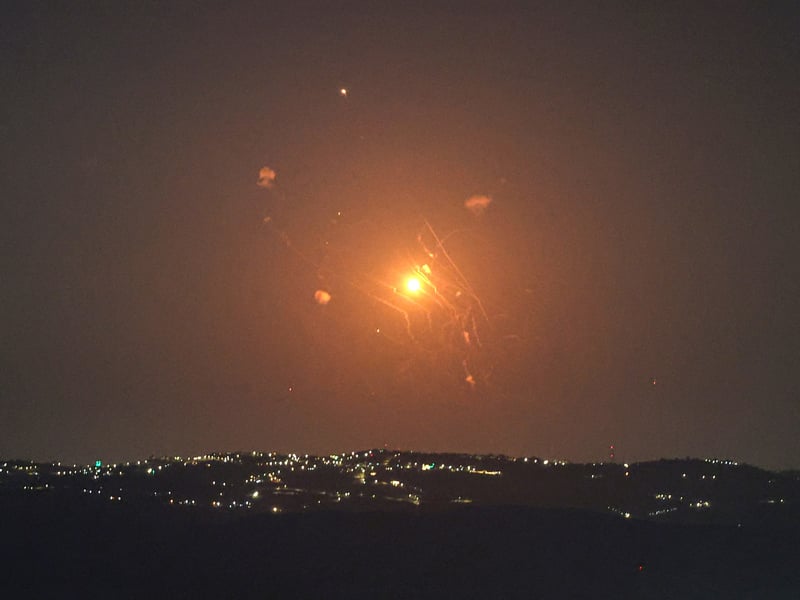
The Islamic Revolutionary Guard Corps launched 20 ballistic missiles at Muwaffaq Salti Air Base in eastern Jordan, known in NATO operational documents as Al-Azraq. Jordan’s air defense systems intercepted 18 of the 20 missiles. Two missiles reached the base, while Amman said there were no fatalities.
The IRGC claimed that a hangar was destroyed. Jordanian authorities neither confirmed nor denied the claim.
The attack on Muwaffaq Salti was not random targeting. Jordan hosts American forces at Al-Azraq and has cooperated with US and allied air defenses against Iranian and Houthi drone traffic, including during the large-scale Iranian strikes earlier this year. But participating in regional air defense is a different proposition from absorbing ballistic missiles, and Amman’s public statements on Tuesday were unusually careful. Jordanian officials condemned the attack while stopping short of naming Iran directly, a formulation that preserved diplomatic flexibility at the cost of clarity.
Brent crude held above $100 per barrel through Tuesday’s session, reinforcing the previous day’s threshold breach on initial tanker strike reports. The M/T Derya’s location near Kharg Island gave that figure particular weight: even indirect threat to the surrounding shipping lanes moves markets with unusual speed. Earlier in the day, Houthi forces struck four cities in southwestern Saudi Arabia and set Aramco facilities ablaze in Jazan and Abha, adding another simultaneous pressure point on a Gulf that had not seen this level of concurrent military activity in decades.
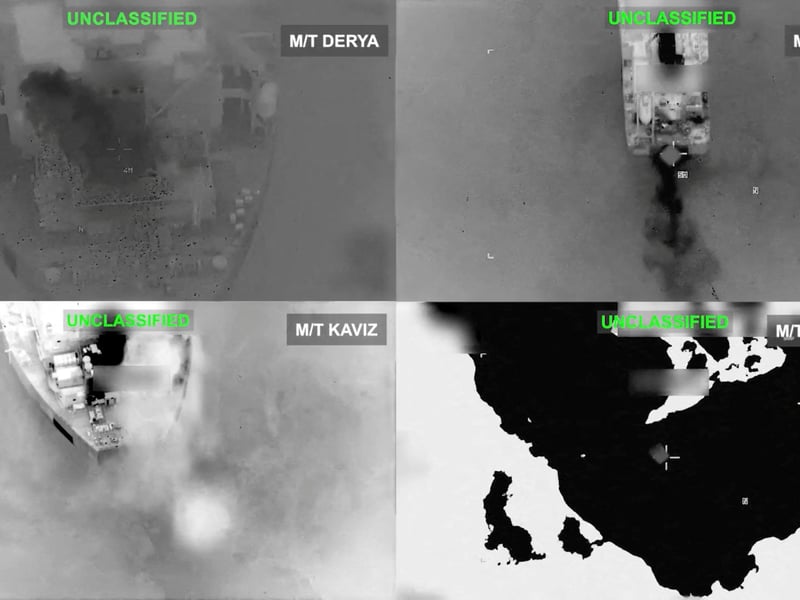
Washington’s legal framing is worth examining. CENTCOM described the strikes as self-defense under Article 51 of the UN Charter, citing IRGC attempts to threaten freedom of navigation in international waters. The statement was brief and contained no reference to the economic dimension of the targeting. What it did not address was the question several European governments raised in diplomatic channels: whether striking revenue-generating commercial vessels, even IRGC-linked ones, represents a qualitative shift from defensive action to economic warfare against Iranian state infrastructure. The five tankers were not weapons. They were cash flow.
The vessels destroyed represent approximately 1.2 million barrels of daily transport capacity, according to shipping analysts. Iran maintains a broader shadow fleet estimated at between 120 and 150 vessels, but Tuesday’s targets were not shadow fleet. They carried Iranian flag markings, unusual given the current sanctions environment, suggesting the IRGC was either testing US restraint or had concluded that operating openly no longer carried added risk. Tuesday’s answer to that question was unambiguous.
For Jordan, the episode distills a tension the kingdom has been managing since the Iran-Israel war began. The Muwaffaq Salti strike was Iran’s signal that proximity to American forces carries consequences, regardless of how carefully Amman has tried to characterize its cooperation as security-related rather than political. Whether the kingdom reassesses its posture after Tuesday or treats the attack as a cost of its existing commitments will become clearer in the coming days, and the Jordanian government’s careful language suggests it has not yet decided.
What neither Washington nor Tehran has addressed publicly is whether any diplomatic channel remains viable. Oman has served as back-channel between the two governments through previous rounds of the conflict. Whether the Sultanate’s role survives five sunk tankers and twenty ballistic missiles aimed at a Jordanian air base is a question no government has yet answered.