
WASHINGTON — A state election official spent part of Tuesday preparing for a scenario she had spent years believing would never happen: armed law enforcement officers arriving at her door during an election with a search warrant for the ballots. It was the third statewide training her office had held this year on how to respond.
The scenario is no longer hypothetical. UCLA’s Safeguarding Democracy Project released a guide Wednesday to help judges navigate search warrant applications for ballots during an active election. Rick Hasen, the UCLA law professor who directs the project and led the guide’s drafting, said the ground has moved beneath people who assumed American elections were beyond this kind of intervention. “Lots of things that were off the table are now on the table,” he told NPR.
The guide arrives after two actual ballot seizures this year made clear the threat was not theoretical. In January, FBI agents filled three white trucks with roughly 656 boxes of original election materials from Fulton County, Georgia’s elections office, executing a criminal search warrant in a probe whose details the Justice Department has largely refused to disclose. The seized materials included physical ballots, tabulator tapes, electronic ballot images and voter rolls from the 2020 general election. Fulton County officials have called the warrant “pretextual,” arguing that the DOJ turned to criminal process after its earlier civil demands for the same records moved too slowly.
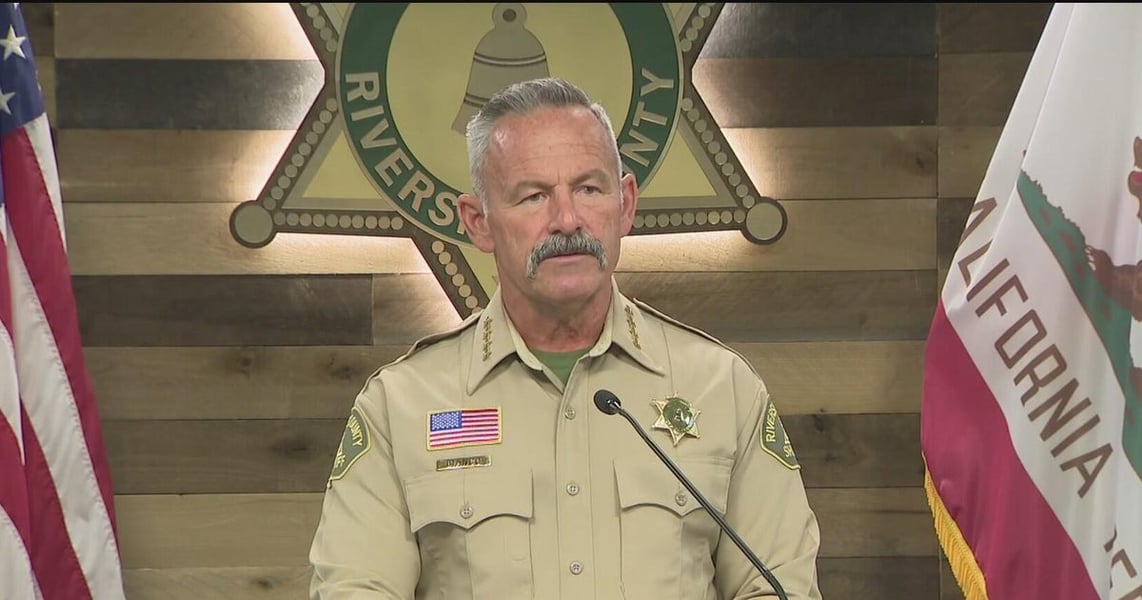
In March, Riverside County Sheriff Chad Bianco, then mounting a Republican campaign for California governor, seized roughly 650,000 ballots from a special election on Proposition 50, a redistricting measure that shifted five Republican-held congressional districts to be more favorable to Democrats. The ballots remained in Bianco’s custody until the California Supreme Court paused the investigation and ordered them returned to the county registrar of voters. CBS News reported that critics in Congress called the seizure a political act dressed up as law enforcement.
NPR reported Tuesday that election officials around the country have spent months quietly preparing for similar scenarios ahead of the November midterms. One official told NPR their office had led three statewide trainings this year on what to do if police seek to take possession of ballots or other election materials while an election is still underway.
The timing is acute. Fifty-five days separate Wednesday from November 3, when every House seat and 35 Senate races go before voters. With the Trump administration already engaged in a third Supreme Court emergency appeal over U.S. Postal Service rules for mail-in ballots, election administrators are navigating a legal landscape without precedent.
The UCLA guide’s core concern is structural. Magistrate judges are typically the first judicial officer to see a warrant application, reviewing it in private without public hearings or testimony from opposing parties. Most are not election law specialists. A judge handed an affidavit alleging widespread fraud in the final weeks of an active election cycle has no reliable way to assess whether the claims are credible, or whether executing the warrant immediately would disenfranchise voters whose ballots would be seized.
Retired federal judge Philip Pro, who advised the guide’s authors, said the judiciary has been paying attention. “Right now, the judiciary writ large have their antennae up, anticipating what might be coming down the pike,” he told NPR.
The warrant applications most concerning to election law experts are those built on fraud allegations with no apparent investigative foundation beyond claims that have circulated in conservative media since 2020. Trump himself escalated those claims in July, delivering a White House address in which he accused China of stealing voter data belonging to 220 million Americans, an assertion experts said conflated data collection with electoral manipulation. The same month, the Justice Department deployed federal election monitors to primary sites in Michigan, prompting ten Democratic senators to formally question whether the targeted cities were chosen for partisan rather than protective purposes.
The pattern, election law advocates have argued for months, is one of an administration using federal law enforcement to create uncertainty around election administration without needing to win the underlying legal arguments. A warrant, even one later thrown out, disrupts the chain of custody. A federal monitor, even without authority to intervene, changes the atmosphere inside a counting room.
What neither the Fulton County nor the Riverside County cases have settled is the constitutional question underneath all of it: how much authority does the federal executive branch have to intervene in state-conducted elections through the criminal process? Courts have not answered it directly. With ballots already moving in North Carolina and Alabama, they may be forced to before November.
What Hasen’s guide cannot say is whether the drills and the judicial preparation will be enough. That depends on decisions no court has yet made.