
WASHINGTON — North Carolina began mailing ballots to voters this week, followed by Alabama on Tuesday. By September 13, at least five more states are scheduled to begin sending ballots. The 2026 midterm elections are no longer simply approaching; the voting process is already underway. At the same time, the Trump administration has asked the Supreme Court for the third time in two weeks to halt that process and require it to restart under rules that two federal courts have found unconstitutional.
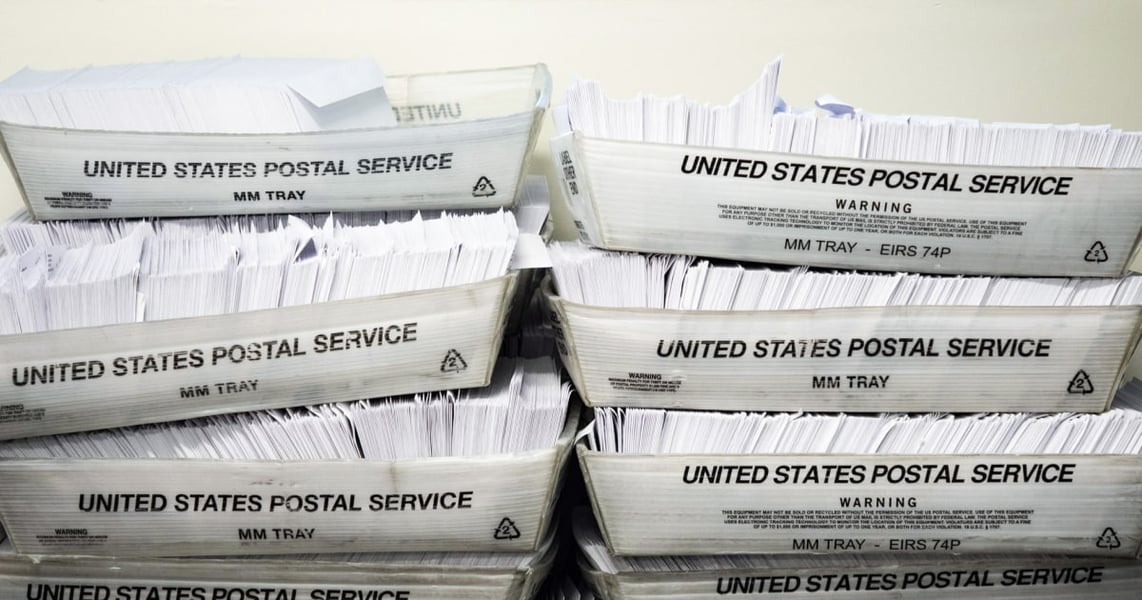
The rule at the center of the dispute, published by the US Postal Service under the administration’s direction, would require every state mailing ballots to voters to first compile a database containing each voter’s name, address, and the unique barcode printed on the voter’s ballot envelope. States would then be required to transmit that database to the Postal Service.
Under the rule, USPS carriers would deliver mail ballots only to voters whose information appears on the state-provided list. Voters who are not included could be denied delivery of their ballots by mail, including those whose registrations are recent, whose addresses have recently changed, or whose information was not transmitted to the Postal Service in time.
Federal District Judge Indira Talwani in Massachusetts blocked the rule on September 4, concluding that it was “likely unlawful” and that it “threatens the disenfranchisement of millions of United States citizens who seek to vote by mail.” She extended the block after the administration challenged her order.
Two levels of the federal judiciary have now determined that the rule potentially intrudes on Congress’s authority under the Elections Clause as well as powers that the Constitution reserves to the states to regulate their own elections.
NBC News reported that the administration filed its third emergency application to the Supreme Court on Sunday, asking the justices to allow the rule to take effect immediately. The application was directed initially to Justice Ketanji Brown Jackson, who oversees emergency matters for the circuit that includes Massachusetts. She set a deadline for states challenging the rule to respond, with a decision on the emergency application expected in the coming days.
Administration lawyers argued in their filing that the rule is necessary to ensure ballot integrity ahead of November, and that without it, the federal government cannot verify which voters are receiving and returning mail ballots. They also argued that challengers, a coalition of Democratic-led states and voting rights organizations including the ACLU, had failed to demonstrate the kind of irreparable harm that justifies a preliminary injunction.
The challengers’ position has been stated plainly in court: the rule does not merely regulate mail delivery, it redefines how states identify eligible voters, a function the Constitution assigns to states themselves, not to the executive branch’s management of the postal system. NPR reported that the USPS rule arrived months into states’ planning processes, after printing runs had begun, after registration deadlines had passed in some states, and demanded that states rebuild their transmission systems inside a window too short for any government technology procurement to complete.

Trump’s political operation has spent months preparing for a midterm election it believes is competitive in ways the polling hasn’t fully captured, and administration officials have said privately that the mail ballot question is central to that arithmetic. Mail voting has skewed Democratic in recent cycles, though analysts note that Republican mail ballot use has grown since 2024. The rule, if it takes effect, would disproportionately affect states that have expanded access to absentee voting in recent years.
What the Supreme Court will do with the administration’s third application is genuinely uncertain. Emergency applications are decided quickly but not arbitrarily: the justices consider whether the applicant has a reasonable chance of winning on the merits, whether denial would cause irreparable harm, and whether the public interest favors intervention. Two federal courts have already answered those questions against the administration. The Court could simply let the lower court orders stand, or it could accept the emergency application and set the case for expedited briefing, or it could craft an interim arrangement that lets some version of the rule operate while litigation continues.
Trump’s campaign of maximum administrative pressure extends well beyond election law, but the mail ballot fight may be the clearest example of its logic: act in every possible arena simultaneously, exhaust opponents’ capacity to respond, and create enough legal uncertainty that normal processes break down. Whether the Supreme Court will interrupt that logic is a question that will be answered before most Americans have had a chance to drop their midterm ballots in the mail.