SIRIK — On a Wednesday morning in September, the same stretch of Hormozgan coastline where the 2026 war with Iran began, marked by the deaths of 120 schoolchildren, came under fire again. This time, enemy projectiles hit the port town of Sirik, Qeshm Island, and areas in Minab County, Iranian state media reported, as the conflict’s maritime front widened in ways neither side had publicly foreseen at the start of the year.
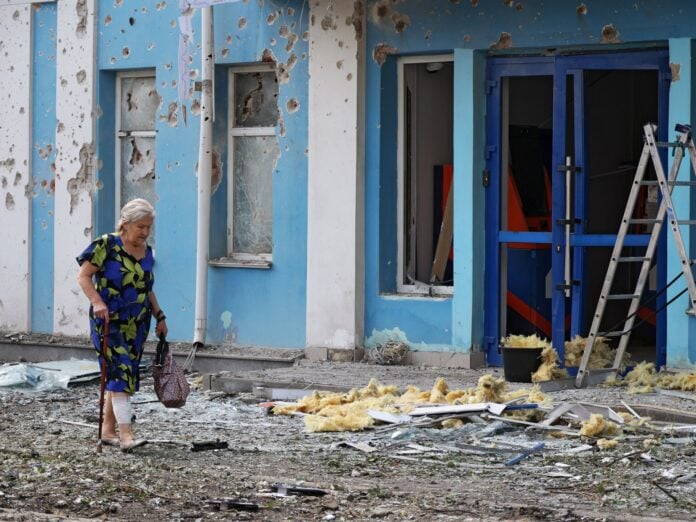
The Iranian news agency IRNA said several parts of southern Sirik were struck in a hostile attack. The Hormozgan provincial government confirmed that residents heard sounds resembling explosions coming from the sea, specifically the Strait of Hormuz and the Gulf of Oman, where the war has unfolded for more than six months through a cycle of tanker seizures, naval bombardments, and missile strikes. No party has officially claimed responsibility, and no casualty figures have been released.
That lack of detail is itself significant. Since February, Iran’s civil defence and military communications have grown cautious in the immediate aftermath of strikes, sharing only what is confirmed. On February 28, the war’s first day, a U.S. Tomahawk missile hit Shajareh Tayyebeh Elementary School in Minab County, killing 120 schoolchildren and at least 36 others before the full toll could be established. Iran’s death toll emerged gradually, in fragments, as rescue teams recovered bodies.
Human Rights Watch and Amnesty International said in June that the school strike remains unaccounted for. The Biden administration did not comment; the Trump administration, which took office in January and escalated the war within weeks, has described every strike as legitimate military action. No formal investigation has been opened. The children of Minab are still waiting for one.
Today’s projectiles landed in the same province, along the same coastal belt. By mid-morning, neither the Islamic Revolutionary Guard Corps nor the governor of Hormozgan had confirmed whether anyone was killed.
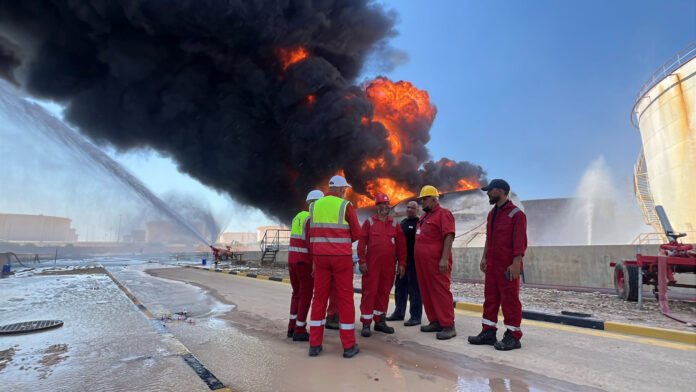
The strikes come less than 24 hours after the most intensive exchange of the conflict so far. On September 9, U.S. Central Command confirmed the destruction of five IRGC-affiliated tankers: the Kaviz and Charminar in the Gulf of Oman; the Horizon 1 and Riesco in waters farther south; and the Derya, hit near Kharg Island, Iran’s main oil export terminal on the northern Gulf. Iran retaliated within hours, firing 20 ballistic missiles at Jordan’s Muwaffaq Salti Air Base at Al-Azraq. Jordan’s air defences intercepted 18; two fell in unpopulated desert areas. There were no casualties. Iran also targeted 10 commercial vessels operating near the Strait of Hormuz.

Brent crude settled at $101.50 per barrel on Wednesday. West Texas Intermediate was trading at $96.69. Before the war, the Strait of Hormuz carried between 8 and 9 million barrels of oil per day. That figure has collapsed to roughly 2 million, as insurers pulled coverage, tanker owners rerouted around the Cape of Good Hope, and Washington and Tehran exchanged threats about who would close the strait permanently. Global oil inventories outside China have fallen by more than 400 million barrels since hostilities began. US diesel has reached a record $5.94 per gallon. Petrol at the American pump is at $4.22, up 42 per cent since the war’s opening bombardment.
President Trump has repeatedly framed the war as both winnable and finite, suggesting in recent days that he expects it to end before November’s election. His administration has declined to comment on Wednesday’s strikes on Sirik and Qeshm.
The IRGC did not immediately claim or deny responsibility for the September 9 missile launches against Jordan, though Iranian officials stated in the immediate aftermath that they held the United States accountable for the destruction of the five tankers. Jordan, which has maintained a delicate position throughout the conflict, hosting US military infrastructure while seeking to preserve trade relationships with Tehran, condemned the missile strike but refrained from naming a response.
The IAEA last week referred Iran to the United Nations Security Council for the first time in two decades, citing unresolved questions about Iran’s nuclear programme. Iran rejected the referral as politically motivated. That referral has added another layer of international pressure on a country already fighting a war on its southern coastline, managing tanker losses in its own territorial waters, and absorbing strikes that, as of Wednesday morning, are falling on its port towns without an official accounting of who fired them.
What the population of Sirik, Qeshm Island, and Minab County knows for certain is what they heard: sounds from the sea, in a province that has been hearing sounds from the sea for seven months. Whether those sounds killed anyone on Wednesday, and who sent them, are questions that may take longer to answer than anyone in Hormozgan wants to wait.