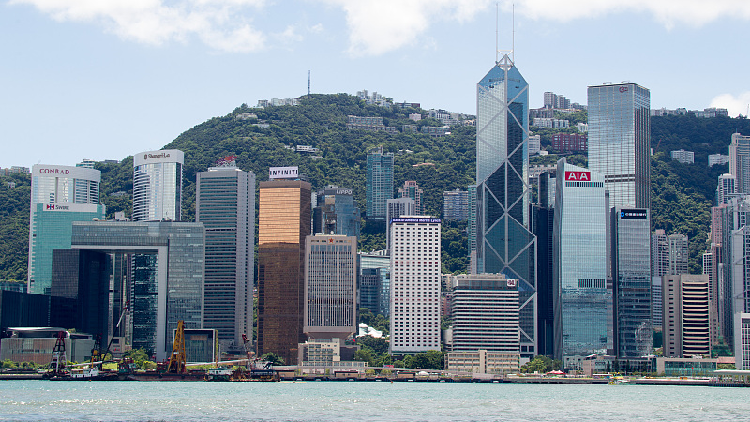

HONG KONG — He was handed an impossible brief. On July 1, 1997, the day a century of British administration formally ended in Hong Kong, Tung Chee-hwa stood at the city’s new Convention and Exhibition Centre as the first chief executive of the Hong Kong Special Administrative Region and accepted a role that demanded he be two things at once: Beijing’s man in Hong Kong, and Hong Kong’s advocate to Beijing. Whether those were ever fully compatible duties, Tung never quite resolved. He died on Monday night having tried, at great personal cost, to do both.
Tung, who was 89, died at 9:57 p.m. on September 8 at a Hong Kong hospital, surrounded by his family. China News Service reported his passing Wednesday, with Xinhua describing him as “an outstanding contributor to ‘One Country, Two Systems,’ a renowned patriot, an outstanding social activist and a close friend of the Communist Party of China.” He is survived by his wife, Betty Chiu Hung-ping.
His death comes more than two decades after he stepped down from office, and more than two years after the city he once governed enacted Article 23 national security legislation, the bill whose 2003 version he tried to push through during the lowest point of his tenure and which half a million Hong Kong residents marched to reject. That piece of legislation finally passed in March 2024, without him. Whatever “one country, two systems” looks like from here, Tung Chee-hwa will not be part of its next chapter.
Tung was born in Shanghai in July 1937, the son of Tung Chao-yung, founder of Orient Overseas Container Line, one of Asia’s largest shipping companies. He studied at the University of Liverpool and spent years running the family business, which nearly collapsed under debt in the 1980s before being partly rescued through financing arranged with Beijing’s assistance.
His critics never forgot that connection. His supporters argued that it was beside the point. When Beijing began consulting Hong Kong’s business establishment about who should lead the city after the handover, Tung was precisely the kind of figure it wanted: a well-connected and respected industrialist with a foot in both worlds.
He was appointed by a Beijing-backed selection committee in December 1996 and took office the following July 1, when Britain transferred sovereignty. The transition was watched around the world. On the night itself, Tung appeared steady, deliberate, and unshowy, qualities that would serve him well in ordinary times but fail to protect him during extraordinary ones.
The first extraordinary test came almost immediately. Within months of the handover, the Asian financial crisis swept through the region. Hong Kong’s currency peg to the dollar came under speculative attack. Tung’s government mounted an unprecedented direct intervention, deploying HK$118 billion of public funds to purchase shares in Hong Kong’s investment markets and defend the peg. The move drew international criticism at the time. It worked. The Hang Seng stabilized, the peg held, and the 1998 intervention is now regarded by many economists as one of the more effective emergency market operations of that era.
SARS nearly undid everything that remained. The epidemic that struck Hong Kong in early 2003 killed nearly 300 people, shuttered the economy, and exposed serious shortcomings in the city’s public health infrastructure. By June 2003, with the outbreak barely controlled, Tung’s administration moved to pass Article 23, the national security legislation required under the Basic Law that had sat unlegislated since 1997. The timing was catastrophic. On July 1, 2003, the sixth anniversary of the handover, approximately 500,000 people marched in protest. It was the largest demonstration in the city since 1989. Tung withdrew the bill.
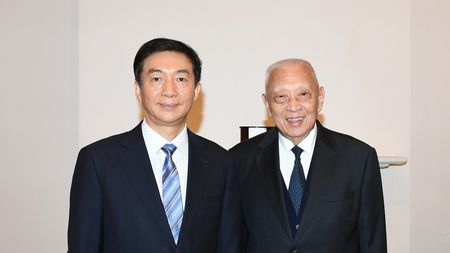
In the years that followed, Tung remained engaged. He founded Our Hong Kong Foundation in 2014, a think tank focused on long-term policy research for the territory and cross-boundary dialogue between Hong Kong and the mainland. President Xi Jinping awarded him the Medal of the Republic in 2019, the highest state honour China confers, in recognition of a lifetime of service to the national project.
Hong Kong Chief Executive John Lee praised Tung on Wednesday for implementing the smooth transfer of sovereignty and steering the city through the financial crisis. “He gave his all for Hong Kong,” Lee said, “and Hong Kong will not forget what he gave.”
Beijing’s tribute was warmer and more doctrinal. Xinhua called Tung a man who made “outstanding contributions to the cause of ‘one country, two systems.'” That formula, devised by Deng Xiaoping to make the handover palatable to Hong Kong’s population and to the watching world, was the framework under which Tung was asked to govern and under which the contradictions of his role were sharpest.
What that formula means in 2026, when the generation that personally shaped the handover is passing from the scene, is a question no one living can yet answer. The man who first tried to make it work is gone.