
Here is the strict context-preserving rewrite — only tightening wording, flow, and rhythm without changing the facts, chronology, figures, attribution, or meaning:
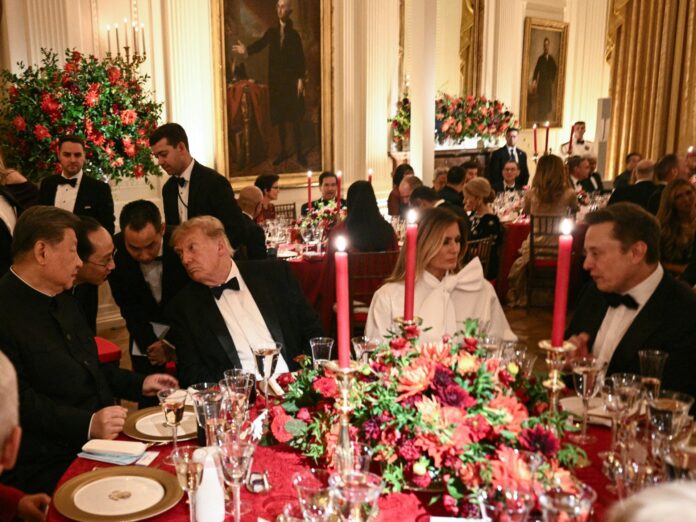
WASHINGTON – The John F. Kennedy Center for the Performing Arts is weeks away from being unable to make payroll, and its board of trustees meets Tuesday to decide whether the institution that has anchored the performing arts in the American capital for more than half a century should close its doors.
The financial collapse has a clear cause: the Trump administration’s political seizure of the center last December triggered an exodus of performers, donors, and audiences that gutted its revenue. Now the same administration that engineered the crisis is offering to save it on the condition that the center carry Donald Trump’s name in perpetuity.
The arithmetic is stark. The center projected a $220 million budget for the current fiscal year. It has collected $124 million. The resulting $23 million deficit, after spending cuts, leaves it unable to sustain operations within weeks. Ticket sales have fallen to their lowest levels since the height of the COVID-19 pandemic. Artists who canceled bookings after the administration installed loyalists on its board have not returned.
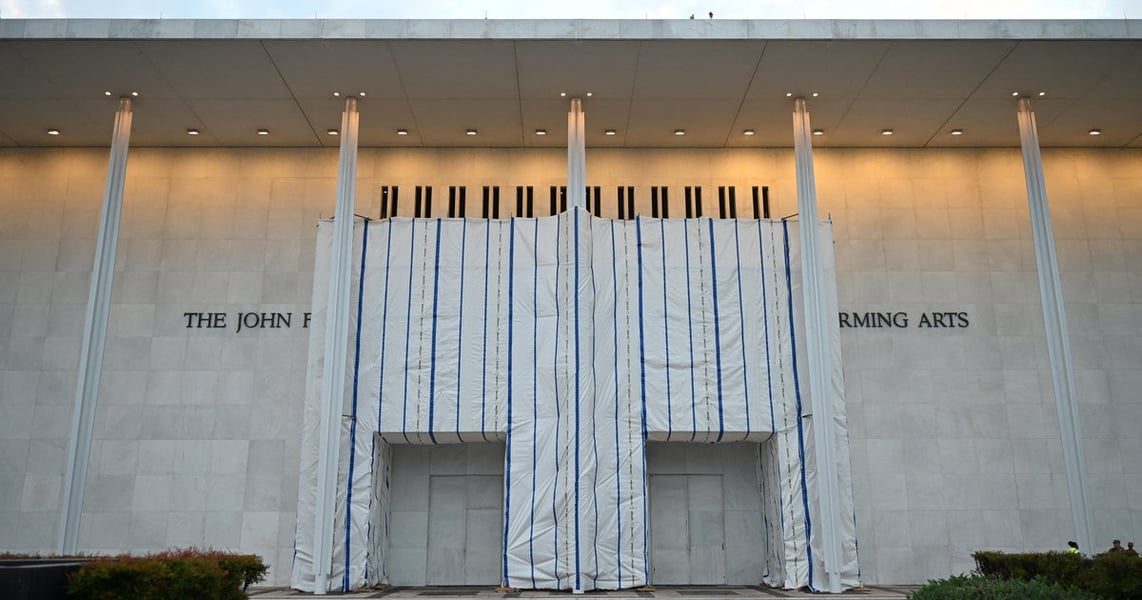
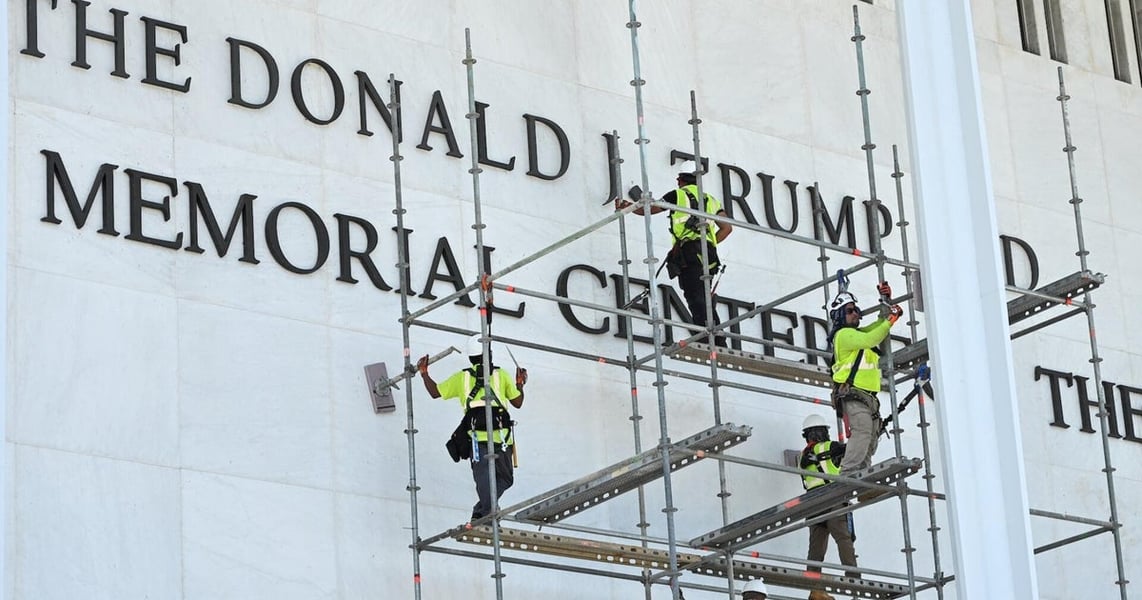
Trump administration officials presented the board with a proposed solution before its Tuesday vote: a $250 million renovation funded by something called the Trump Kennedy Center Fund, accompanied by a two-year closure of the building, and permanent new signage reading “The John F. Kennedy Memorial Center for the Performing Arts, Restored and Renovated by President Donald J. Trump, Endowed by the Trump Kennedy Center Fund.” The center’s surrounding grounds would be renamed President Donald J. Trump Plaza.
What the proposal does not acknowledge is that the financial collapse preceded the renovation proposal, and that the financial collapse was itself a consequence of the administration’s intervention.
Before Trump appointed a board of loyalists in December 2025, the center was not in financial distress. It was a functioning institution with an established donor base and a full performance calendar. What followed the political takeover was a cascade of cancellations. Performers declined to appear. Corporate donors who had for decades supported the arts in Washington pulled funding. The costs of the administration’s culture war had already been felt in court: a jazz musician who refused to perform at a Trump-era event was awarded $252,000 in damages. The audience that had built its relationship with the institution over decades voted with its absence.
The Department of Justice added an explicit threat on August 25. Attorney Brantley T. Mayers told the court that without the proposed renovation, the center would need to be “taken down, with a determination to follow on what to build on the site, such as a large outdoor amphitheater overlooking the Potomac River.” The DOJ had described the building as “structurally unsound, fundamentally unsafe, embarrassing to the Nation’s Capital.”
The demolition threat, delivered through the Justice Department in the middle of active litigation over the naming, was not an act of architectural caution. It was a statement of leverage: accept the renovation on the administration’s terms, including the name, or lose the building entirely. Courts have blocked the administration on comparable federal real estate decisions, including a ruling that blocked Trump’s plan to move the FBI headquarters to the Reagan Building, but those rulings have not deterred the administration from pressing its position at the Kennedy Center.
The administration’s position is circular in a way its architects appear to have calculated. The financial crisis, produced by the political takeover, is now the argument for why the political takeover must be completed. Trump’s name, the administration says, is the only thing that can avert bankruptcy. That the name, and the decisions made under its banner, is what caused the bankruptcy is simply not part of the official account.
The board meets Tuesday with no good options. Accepting the renovation on the terms proposed hands the administration what it could not extract through litigation: a permanent, legally-encoded Trump brand on a federally chartered memorial to John F. Kennedy. Rejecting it risks closure and the demolition threat from an administration whose Justice Department has shown no reluctance to use federal enforcement as a political instrument.
The institution that has hosted performances by virtually every major artist of the past five decades, that carried the cultural footprint of American soft power for generations, is facing the credible possibility of extinction not because of market failure or mismanagement, but because the government decided its name was more valuable than its function.
What comes next is not a financial question. It is a question about what a government is for.