DALLAS — At American Airlines Center on September 9, the upper level was almost entirely empty.
That was the backdrop to President Trump’s promise of a $5,000 payment to every American adult.
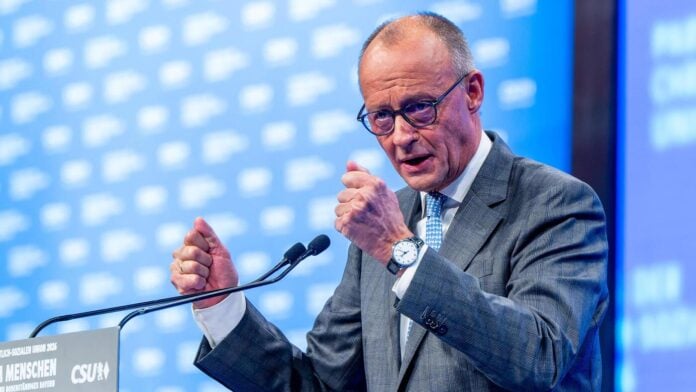
“If the Republicans win, you win with us and you get $5,000,” Trump told delegates at the Republican Party’s first-ever midterm convention. “It will be called the Trump dividend, congratulations.”
The pledge came with conditions. Republicans would have to retain control of both the House and Senate on November 3, and Trump said the money would have to be spent in the United States.
Vice President JD Vance, delivering the keynote address the following night, added further qualifications. Wealthier Americans might be excluded, he said, while the payments could be financed with revenue generated by Trump’s tariffs.
The Tax Foundation ran the numbers. Sending $5,000 to roughly 250 million eligible American adults would cost $1.25 trillion. The tariffs Trump imposed are projected to generate $207.5 billion in 2026 — enough to cover about one-tenth of the dividend’s price. The federal budget deficit is already projected at $1.9 trillion in fiscal year 2027; the payments would push that figure toward $3 trillion, according to the Tax Foundation’s analysis.
Rep. Chip Roy of Texas, a leader of the House Freedom Caucus, did not wait long. Roy told Politico he wanted to know “how they would plan to pay” for the proposal, and wrote on X that “some of us think dependency is evil and soul-sucking in all its forms” — pushing back against Republicans defending the president’s announcement. He suggested the $1.2 trillion could instead be used to eliminate taxes for married parents with dependents earning up to $200,000.
Former House Freedom Caucus chairman Bob Good was blunter. He posted on X that the $5,000 pledge was a “socialist vote-buying scheme” that would distribute “more stimulus money than he and Biden did during COVID, which caused the current inflation, high interest rates and affordability crisis.”
Senate Minority Leader Chuck Schumer’s response was shorter. “Trump’s presidency is so failed and broken,” Schumer wrote, “he is resorting to trying to bribe the American people for their votes.”
What made the Dallas convention telling, beyond the promise itself, was who was not there. Maine Sen. Susan Collins — facing a competitive race against Democrat Troy Jackson — did not attend. Neither did Ohio Sen. Jon Husted, who faces a challenge from former Democratic Sen. Sherrod Brown, nor Georgia Rep. Mike Collins, who is trying to unseat Democratic Sen. Jon Ossoff. NBC News counted dozens of Republicans in tight races who declined the invitation. The event’s organizers billed it as “a first in American political history.” NPR reported that the upper level of American Airlines Center was almost entirely unfilled on both nights, even as Trump insisted the arena was “packed.”

Trump’s logic is direct. His own team’s internal polling is reportedly grim — the basis for a strategy built around 35 campaign stops and, now, a conditional cash offer. “If the Republicans win, you win with us,” he said again on the convention’s second night. “It will be called the ‘Trump dividend’. Congratulations. Now all we have to do is win.”
The pitch assumes a $5,000 promise — unlegislated and unfunded — is sufficient to close an enthusiasm gap in the specific House districts and Senate states that will determine whether Republicans hold their 219-213 majority. Democrats need a net gain of three seats. The party defending an unfinished promise worth more than six times its annual tariff revenue is doing so with 51 days until Election Day, and a House caucus about to go home for recess on September 15.
What the administration has not addressed is the path from convention applause to a Treasury check — whether Congress would legislate the payments, whether Trump believes executive authority extends to a $1.25 trillion disbursement, or whether the promise is contingent on winning first and solving the mechanics afterward. Asked about funding, Vance’s tariff-revenue answer does not survive the Tax Foundation’s math, and neither Vance nor Trump has engaged specifically with Chip Roy’s objection.
The administration is simultaneously managing a third emergency Supreme Court appeal over the USPS mail-ballot program and a lawsuit seeking to keep armed ICE agents from appearing at midterm polling places. The convention was meant to be the moment the party unified around a positive message. Instead it produced a promise that conservatives in the party called socialism, from a convention floor that was half-empty.
What a $5,000 check contingent on Republican victory does to turnout in a Phoenix precinct or a Milwaukee suburb is not something a convention speech resolves. Four days after Dallas, that question remains open.