
SURABAYA — At around 2 a.m. on September 13, the captain of the Virgo Transport 8 made one final transmission: the ship was tilting. It was the last communication received from the vessel before it capsized in the Java Sea, leaving 243 passengers and crew members—and 89 vehicles—in and around the water.
By Sunday afternoon, rescuers had pulled 108 survivors from the sea and recovered six bodies. Another 129 people remained missing.
The passengers had boarded at Surabaya’s Tanjung Perak port for the crossing to Banjarmasin in South Kalimantan. For most of them, Indonesia’s ferry network is not a matter of convenience. It is a basic fact of geography.
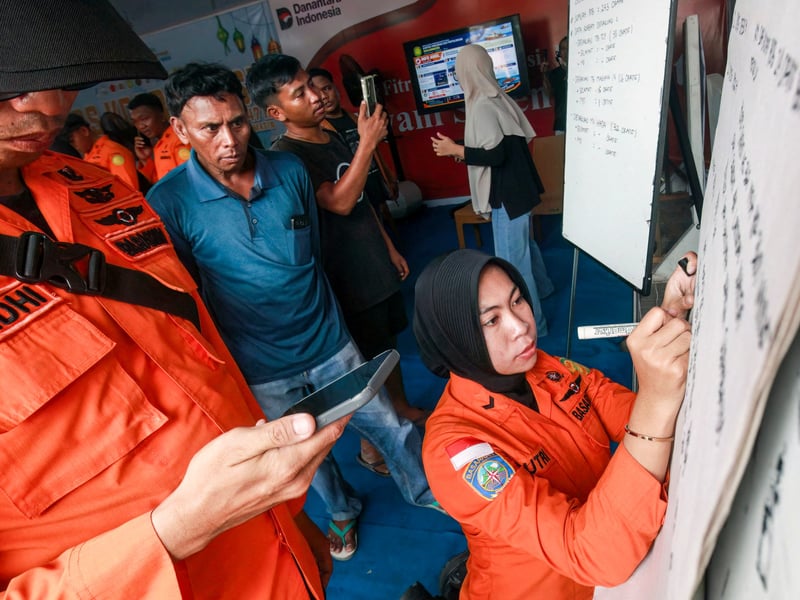
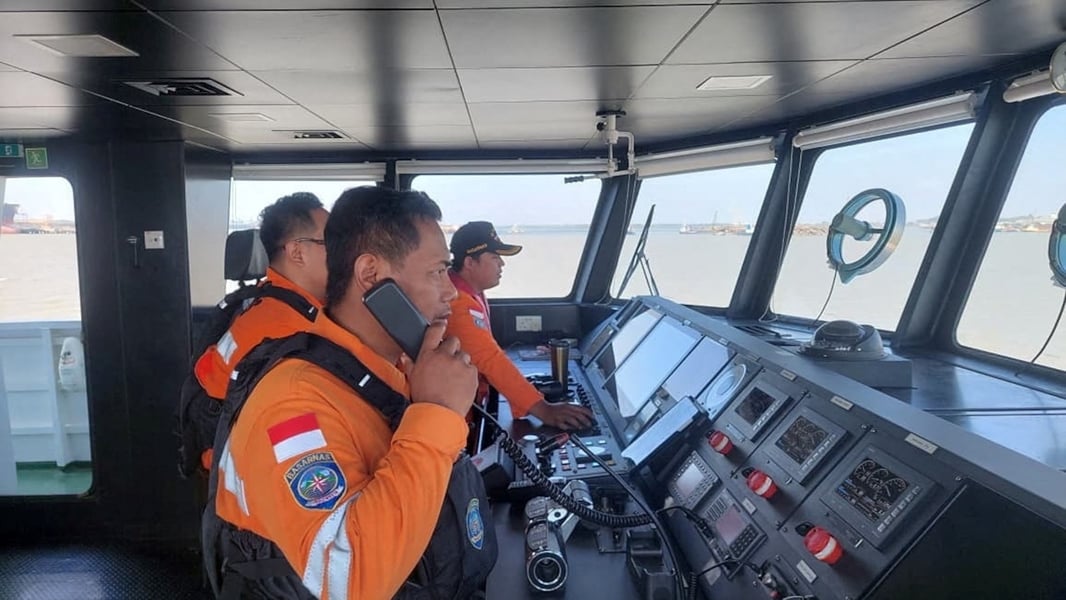
The first vessel to respond was the Mauhau, an Indonesian-flagged tanker that picked up the ferry’s distress signal over VHF radio. Crew from the Mauhau pulled 16 survivors from the water, including the ship’s captain. Two other vessels, the tugboat TCP 205 and the Haidar, joined the search as daylight arrived. By the second day, BASARNAS, Indonesia’s national search-and-rescue agency, had deployed 22 sea and air assets alongside personnel from the military, police, and BNPB, the national disaster management agency. BASARNAS chief Mohammad Syafii confirmed the expanded deployment. BASARNAS had coordinated a comparable mobilisation earlier this year following the August earthquake on Flores Island that killed 47 people.
The cause of the capsizing has not been officially determined. The Directorate General of Sea Transportation, known in Indonesia as Ditjen Perhubungan Laut, said Sunday it was still working to establish what happened. The ferry had been sailing the standard Surabaya-to-Banjarmasin route, operated by PT Virgo Karya Shipping. Weather records showed swells of 2.5 metres in the Java Sea that night – conditions that are hazardous but not exceptional for the crossing.
Indonesia has 17,000 islands and 270 million people. Ferries are not a convenience; they are the connective tissue of the nation. That structural dependency has for years coexisted with a documented pattern of failures that the Virgo Transport 8 disaster brings back into focus.
Less than a year ago, the KM Barcelona 5 caught fire off North Sulawesi on July 20, 2025. At least five people died; more than 560 were rescued. That fire prompted calls for tighter inspections of Ro-Ro vessels and better enforcement of manifest requirements. The KNKT’s records through August 2026 suggest the recommendations have not produced measurable change in the accident rate.
The Java Sea is among the world’s busiest maritime corridors. Between Java and Kalimantan alone, dozens of ferries cross each week carrying passengers, motorcycles, vehicles, and commercial cargo. Weather monitoring falls under the Meteorology, Climatology and Geophysics Agency, known as BMKG, which issues sea state warnings for all major routes. What role, if any, the pre-departure forecast played in the decision to sail on Friday night has not been established.
The disaster unfolded within 24 hours of a ferry fire off the Philippine island of Coron that killed at least 76 people aboard the MV June Aster. The two disasters are unrelated in cause but land against the same regional pattern: passenger vessels plying long open-water routes, manifest enforcement under strain, and rescue systems stretched across archipelagic distances. The same pattern has appeared beyond Southeast Asia this year: in August 2026, a ferry capsized on Zimbabwe’s Lake Kariba, killing 72 people, 18 of them children.
Families of the missing had gathered at port authority offices in Surabaya by Sunday morning, according to NPR. Indonesian authorities have not issued a final passenger manifest publicly, and the gap between the 243 people reported aboard and the 108 survivors retrieved means that, as of Monday, the fate of 129 people remained unknown.
With 129 people unaccounted for, the Virgo Transport 8 stands as one of the deadliest Indonesian maritime incidents in recent memory. In July, the MV Barima capsized off Guyana’s coast with 116 people aboard, adding to a year in which maritime safety systems across the developing world have been tested from Southeast Asia to South America.
What investigators still need to establish includes whether the Virgo Transport 8 was carrying undeclared cargo, whether the manifest was accurate at departure, and whether the sea state that night was within the vessel’s certified operational limits. A 39-year-old Ro-Ro ferry, loaded with vehicles on a long Java Sea crossing, capsized after its captain reported it tilting in the dark. The 129 people still unaccounted for are the reason those questions now matter.