
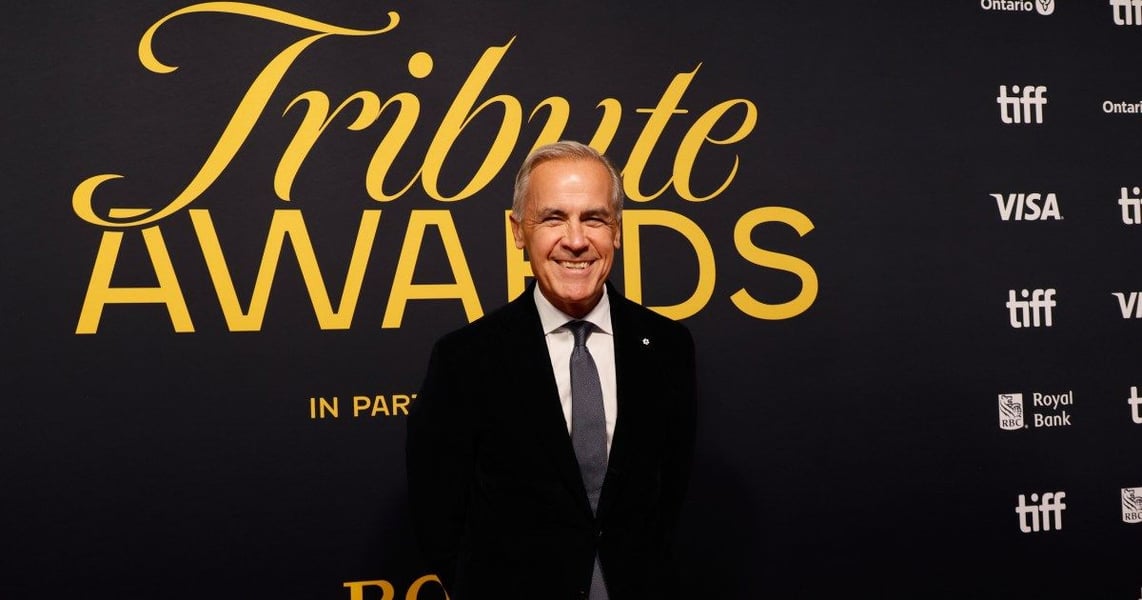
STRASBOURG — Mark Carney sat in the gallery of the European Parliament on Tuesday as the bloc’s most powerful official offered his country something no non-European democracy had ever been offered: membership, in some form, of the European Union itself.
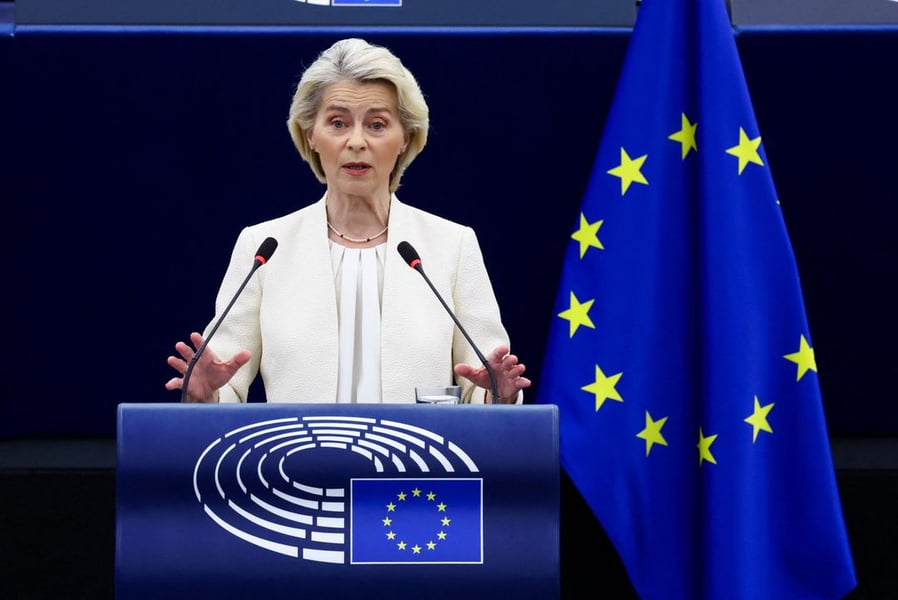
European Commission President Ursula von der Leyen made the proposal during her annual State of the Union address in Strasbourg, the first time a foreign head of government had ever attended the speech. After she finished, von der Leyen walked across the chamber floor and embraced Carney before a standing ovation from European lawmakers. The optics were not incidental. This was a choreographed signal about where Europe believed the world was going.
“I would like to work with you on opening the door for Canada to be the first associate member of the EU,” von der Leyen said, TRT World reported from the session. The response was immediate: MEPs rose from their seats. The complication, acknowledged by Brussels officials even as the applause was still audible, is that no such category exists in the EU’s foundational treaties. The proposal would require inventing one, and then persuading all 27 member states to sign onto it.
What drove Ottawa to this chamber was not European affinity alone. For three years, the Trump administration has subjected Canada to escalating tariff pressure, floated the idea of absorbing the country as a 51st American state, and systematically dismantled the trade architecture that bound North American commerce together since the 1990s. Canada answered this month with $27.6 billion in retaliatory tariffs as Carney declared an open trade confrontation with Washington. But the broader strategic calculation was already underway: if the relationship with the United States under Trump could no longer be relied upon, Ottawa needed to build alternative structures.
The EU was where Canada looked.
Von der Leyen’s address was structured around a thesis that would have seemed implausible a decade ago: that the European Union must become an autonomous strategic actor, because the American anchor of the postwar Western order is no longer reliably present. Canada, in her framing, should not be left adrift in that changed environment. It should be woven into the architecture Europe is building in its place.
The proposed associate membership would give Canada a seat at EU summits, representation within the European Commission, access to portions of the EU budget, and deep participation in defence and industrial integration, without the voting rights on legislation that full members hold. The architecture resembles, in some respects, what Brussels has been assembling for Ukraine, though Kyiv’s relationship runs through formal accession processes that Canada would never follow. For Canada, this would be a purpose-built category with no historical precedent.
The sectors von der Leyen named are not incidental: advanced manufacturing, critical minerals, battery supply chains, artificial intelligence, quantum computing, cybersecurity, energy security, and Arctic governance. These are the contested terrain of a new great-power competition that neither Brussels nor Ottawa can afford to lose by default. Canada became the first non-EU country admitted to the EU’s SAFE defence loan programme earlier this year, a step that drew limited attention at the time but now reads as one element in a larger and deliberately constructed relationship.
The legal difficulty is real. EU treaties contain no provision for associate membership of this kind, and any legal framework accommodating it would require unanimous agreement among all 27 members. That is a complex political exercise in ordinary circumstances. Whether all 27 governments, with their own pressures around sovereignty, migration and budget priorities, would support a novel membership category for a North American country is not a settled question.
Von der Leyen also announced in Tuesday’s address a new EU Security Council to coordinate with allied democracies beyond the bloc’s formal borders, a heatwave emergency plan, and an emergency migration management framework. The address covered considerable ground. But the Canada proposal drew the longest ovation, in part because of the singular image it produced: a sitting foreign head of government watching from the gallery as an institution he had never belonged to extended an invitation to his country.
Al Jazeera reported that Carney had said earlier this week he was seeking a “unique alliance” with the EU, a phrase that stopped short of the membership register von der Leyen reached for on Tuesday. He will address the parliament directly on Thursday in what will be the first real indication of whether Ottawa is prepared to match Brussels’ ambition or pull back toward something constitutionally and politically more manageable.
What Thursday cannot undo is what Tuesday made visible. Canada and the EU have spent two years building what von der Leyen calls the Alliance for the Future, a successor to the Comprehensive Economic and Trade Agreement that has expanded EU-Canada trade by roughly 80 percent since 2016. The new relationship spans the full length of the strategic competition now defining the global order. What it now needs is a legal form.
That form does not yet exist. Von der Leyen’s speech was a political commitment, not a treaty provision. Whether the EU’s 27 members and Canada’s government can translate the embrace in that Strasbourg chamber into something durable across election cycles and years is the question that outlasts Tuesday’s applause.