STOCKHOLM — After four years as Sweden’s prime minister, Ulf Kristersson wrote the letter he had hoped to avoid writing. The vote counters finished their work Thursday, the margin proved irreversible, and Kristersson notified parliament’s speaker that his government was done.
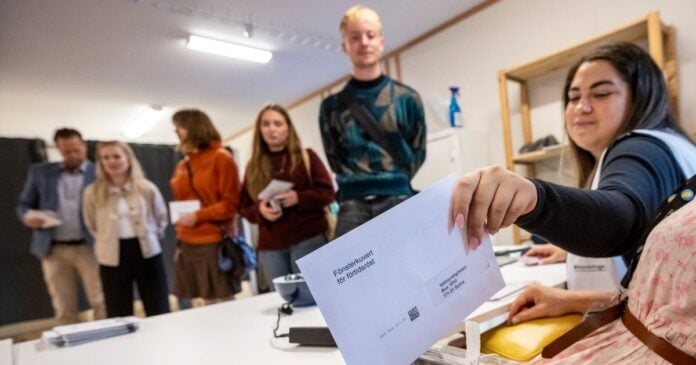
“I am herewith requesting that I be relieved of the office of prime minister to allow that work to start immediately,” he posted on X. The margin that ended four years of centre-right rule was almost startling in its smallness: 176 seats to 173 in the 349-seat Riksdag, with roughly 50,000 votes separating the blocs across a country of 10.6 million people.
Parliament speaker Andreas Norlén accepted the resignation briefly. “Thank you, Ulf Kristersson, for your service to Sweden,” Norlén said. “You took office at a difficult and charged moment, and you’re leaving it now after a tight, hard-fought election, with your head held high.” A formal vote to confirm a new prime minister cannot be held before September 29.
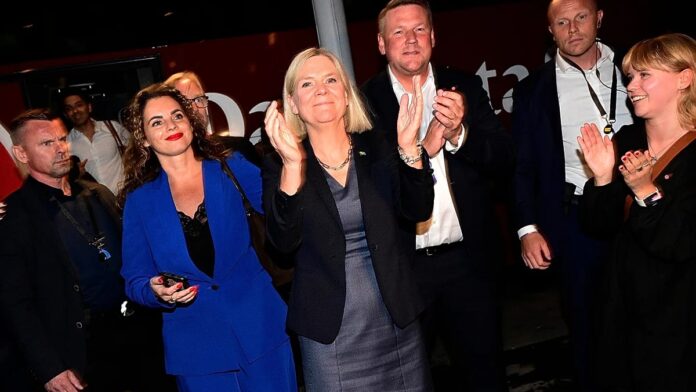
The Social Democrats, led by Magdalena Andersson, finished as the largest single party in the Riksdag with roughly 30.5 percent of the vote, positioning her as the near-certain choice to return as prime minister. Andersson held the role briefly in 2021 and 2022, making her Sweden’s first woman prime minister before losing to Kristersson’s coalition that year. Whether she can quickly stitch together a governing coalition is now the central question of Swedish politics.
The left bloc’s narrow win was built, in part, on the stumble of a party the right had been counting on. After years of steady growth, the Sweden Democrats saw a historic vote decline for the first time in modern Swedish electoral history, dropping from 20.5 percent in 2022 to 17.6 percent and slipping from second to third place in the Riksdag. The party had spent four years propping up Kristersson’s government from the outside without entering cabinet, expecting that arrangement to deepen its electoral base. The final count told a different story.

Andersson’s four-party coalition holds together on welfare and public services but carries internal tensions. The Social Democrats, the Greens, the Left Party, and the Centre Party disagree on migration policy, a proposed billionaire tax, and whether Sweden should build new nuclear power stations. Andersson’s own position on immigration, which has historically been tougher than her Left Party partners would prefer, is among the fault lines she will need to manage before a coalition program can take shape, Al Jazeera reported.
On foreign policy, the transition carries less uncertainty. Both Kristersson and Andersson support Sweden’s NATO membership, which the country joined in March 2024 after years of debate, and both back continued support for Ukraine. The judgment that Russia’s military operation in Ukraine is a direct security threat to the Nordic region is not a partisan position in Sweden. An Andersson government is not expected to shift that posture.
What is unresolved is whether her 176 seats can hold through a full parliamentary term. Sweden’s left-bloc governments have historically required delicate management of ideological differences that are more pronounced than they appear in the headline bloc count. Andersson knows the risks: she resigned on her first day as prime minister in November 2021 after a budget defeat, then returned days later to govern more steadily, as initial exit poll results on election night showed her bloc was recovering that ground. September 29 is the earliest the Riksdag can vote on a new government. The negotiations start now.