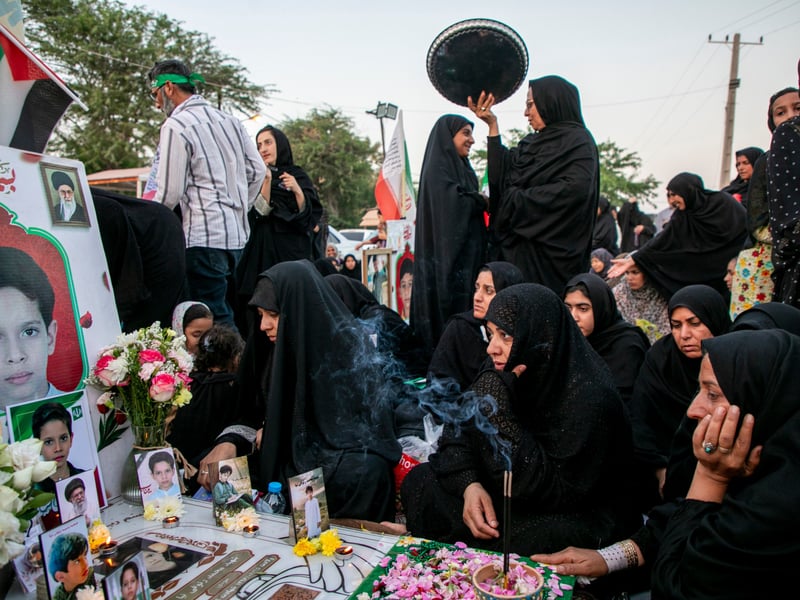

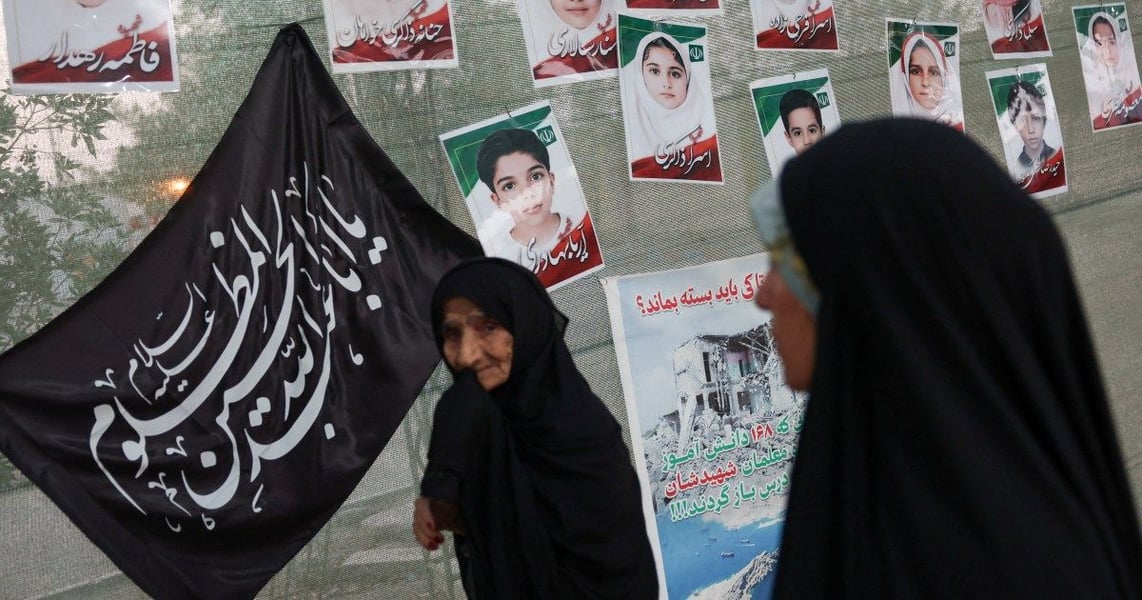
GENEVA — The opening was the children. Not the Tomahawk trajectory or the GPS coordinates. One hundred and twenty of them, in a school in the southern Iranian city of Minab on the morning of February 28, the day the United States and Israel launched what would become the most consequential military operation in the Middle East in a generation. Of the 156 people who died when the Shajareh Tayyebeh Primary School was struck, 120 were students.
Nearly seven months later, a UN-mandated body of investigators has crossed the threshold from documenting the dead to naming what killed them. The Independent International Fact-Finding Mission on Iran said Thursday it found “reasonable grounds to believe the United States committed the war crime of launching indiscriminate attacks resulting in the loss of life or injury to civilians or damage to civilian objects” in two strikes carried out on that same day.
The mission’s report, submitted to the UN Human Rights Council in Geneva, represents the first formal legal finding by an international body that the US committed war crimes during the 2026 Iran conflict. It carries no enforcement mechanism; the Security Council, where Washington holds a permanent veto, is not obligated to act. But what the three-member panel assembled over seven months of remote investigation is something harder to dismiss: a documented chain of evidence.
Investigators never set foot in Iran. The US denied the mission access. What they assembled instead was a forensic picture drawn from satellite imagery, verified video footage, weapons analysis, and testimony from survivors and witnesses. On the school in Minab, the mission concluded that the US “failed in its obligation to do everything feasible to verify that it was a military objective,” Al Jazeera reported. Photographs and verified footage showed “readily identifiable features” marking it as an educational facility, child-oriented murals on exterior walls, school signage, playground areas, all visible from aerial reconnaissance.
The second site was in Lamerd, Fars province, where a strike the US initially denied carrying out killed 22 people, including four children. At approximately 5:10 in the afternoon on February 28, precision strike missiles hit the Shahid Haj Khalil Naimi Cultural and Sports Complex and the surrounding residential area. The weapons dispersed clouds of tungsten pellets, a submunition whose use in populated civilian zones is prohibited under international humanitarian law, killing those gathered in the complex and in adjacent homes. The US Central Command continued to deny responsibility for the Lamerd strike even after CENTCOM commander Admiral Brad Cooper acknowledged in preliminary findings on May 19 that the Minab school strike “correlated” with US forces.
Washington dismissed the report without addressing its specifics. A State Department official told reporters the Trump administration “does not give credibility to findings” from the UN Human Rights Council. The White House went further, calling the council a body that “has accomplished nothing for human rights while spouting unserious nonsense for decades.” President Trump had formally withdrawn the United States from the Human Rights Council in February 2025, thirteen months before the conflict began.
The OHCHR had asked all parties, including the US and Israel, to provide information to the mission. The US provided none. The mission’s findings therefore rest on open-source intelligence, forensic analysis, and accounts from those who survived, not on any American version of events. What the US has not produced, in seven months, is an explanation of how it determined the Shajareh Tayyebeh Primary School constituted a legitimate military target. That silence is at the center of the mission’s legal findings.
The report does not assess only American conduct. The investigators also found that Iran’s government committed crimes against humanity during its crackdown on protesters last year and in the weeks before the conflict began, systematic executions, torture in detention, and the suppression of dissent catalogued alongside the civilian death toll from the US-Israel strikes. The mission’s mandate, established by the Human Rights Council in 2022, covers the full human rights situation in Iran, and it found violations on both sides.
That broader framing has done little to diminish the political weight of the war crimes finding against Washington. The forensic conclusion that the US “failed to take all feasible precautions to avoid, and in any event, to minimize incidental loss of civilian life” transforms what was a news event into a legal record, NPR reported in a detailed analysis of the mission’s findings. “There must be justice,” UN High Commissioner for Human Rights Volker Turk said in a statement, urging all parties to return to negotiations as the only path to lasting peace.
The report arrives as Iran’s diplomatic engagement with Oman, China, and regional partners has intensified. Efforts to reopen the Strait of Hormuz have accelerated alongside the military campaign, while the US Navy’s oil convoy escorts through the strait signal the economic stakes the conflict continues to impose on global energy markets.
The UN fact-finding mission holds no power to compel the United States to investigate itself, and its members know that. What the mission has done is something more durable: it has stated publicly, formally, and with documented evidence, what the record shows. On the first day of a war Washington chose to fight, it struck two civilian locations its own aerial assets could see. A hundred and twenty of the 156 people who died in Minab were children in a school. As of Thursday, that record does not belong only to the news cycle. It belongs to the legal archive.