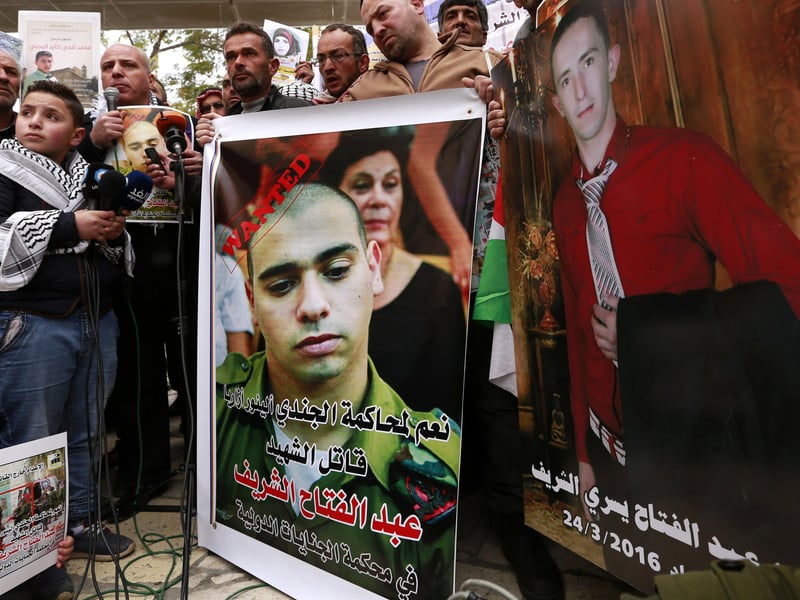

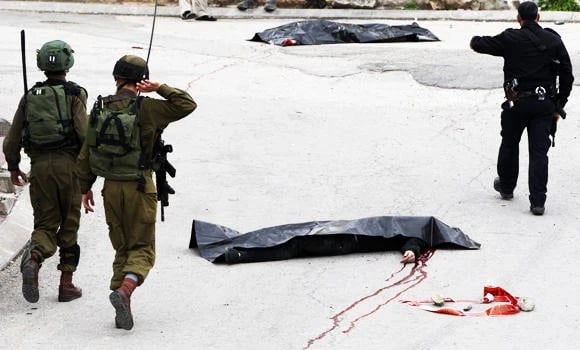
JERUSALEM – The video has circulated for a decade. Shot by a human rights volunteer in March 2016, it shows Elor Azaria raising his rifle and firing a single shot into the head of Abdul Fattah al-Sharif as the wounded Palestinian lay immobilized on the asphalt of a Hebron street, already in the custody of Israeli soldiers. On Saturday, Israeli President Isaac Herzog signed away the last legal consequence of that act, expunging Azaria’s criminal record entirely.
The decision came despite a formal letter from the Israeli military’s own chief of staff, General Eyal Zamir, sent to the president in July. Zamir warned against the move, citing Azaria’s failure to express genuine remorse and the precedent it would set for military discipline in the occupied territories. Herzog acknowledged the letter and proceeded anyway, citing the recommendation of Defense Minister Israel Katz and the spirit of the approaching Yom Kippur.
The Hebron shooting was not ambiguous. Al-Sharif and another Palestinian had attacked Israeli soldiers with a knife earlier on the morning of March 24, 2016; both were shot and wounded. When Azaria approached and fired the fatal shot, al-Sharif had been immobilized on the ground for nearly eleven minutes. A bystander filmed the moment. The footage, shared by Al Jazeera and human rights organizations at the time, provided the principal evidence at his trial. He posed no threat. Azaria was not under attack.
An Israeli military court convicted Azaria of manslaughter in January 2017, sentencing him to 18 months, well below the prosecution’s request of three to five years. A military appeals court reduced the active term further, and he served nine months before being released in May 2018. The expungement on Saturday removes the remaining criminal record entirely. For an occupation the International Court of Justice ruled unlawful in 2024, Azaria’s conviction had been among the most publicized prosecutions of an Israeli soldier for killing a Palestinian in modern memory.
Azaria never accepted the court’s judgment as legitimate. In his first interview after his release, he said he would act “exactly the same” if placed in that situation again. That statement is precisely what the Israeli military cited when it opposed Saturday’s expungement. A soldier who has not accepted judicial responsibility for killing an incapacitated person, the army argued, cannot be said to have undergone the rehabilitation that pardons are meant to recognize.
National Security Minister Itamar Ben-Gvir, who had organized demonstrations supporting Azaria during the original trial, posted that the decision was “deeply moving and joyful.” He described al-Sharif’s killing as eliminating a terrorist, a characterization the Israeli military court that convicted Azaria explicitly rejected. Defense Minister Katz, whose recommendation Herzog cited, called the expungement “correct, humane and worthy.” The framing from both ministers, that Azaria acted appropriately, was the precise position a military court had found untrue in 2017.
The occupied West Bank context shapes how this decision reads beyond Israeli domestic politics. Al-Sharif was shot on a public street in Hebron, a city divided between Israeli settlers and Palestinian residents under military occupation since 1967. The video of his killing circulated globally and prompted a rare prosecution of an Israeli soldier for violence against a Palestinian. That prosecution had been read internationally as evidence that Israeli military justice could function as a mechanism of accountability. Saturday’s expungement retroactively qualifies that interpretation: the conviction stands in the record, but its legal consequences have been erased.
The decision arrives in a period of accelerating pressure over Israeli conduct in the occupied territories. Last week, twelve nations including Britain and France banned trade with Israeli settlements as Britain’s Foreign Secretary told Parliament that settler terrorists were committing ethnic cleansing in the West Bank. The expungement of Azaria’s record sits alongside that escalation, not separate from it.
The broader military and diplomatic picture presses in the same direction. The United States approved another $2.8 billion weapons sale to Israel even as international criticism of the Gaza genocide intensified. This week, Washington barred Palestinian delegates from the United Nations General Assembly for the second consecutive year. Each decision, taken alone, can be explained in the terms those governments chose. Taken together, they describe a decade-long pattern in which the structures designed to hold Israeli military conduct accountable have been progressively dismantled or bypassed.
The family of Abdul Fattah al-Sharif was not mentioned in Herzog’s statement. Neither was Hebron, or the eleven minutes during which he lay wounded on the street before the shot that killed him. The Israeli president’s order refers to Azaria’s desire to open a new chapter. What chapter was closed on Saturday for Palestinian families living under Israeli military occupation, for international legal mechanisms built on the premise that states prosecute their own soldiers, and for the signal sent to a military operating in a conflict where no comparable accountability has arrived, was not addressed.