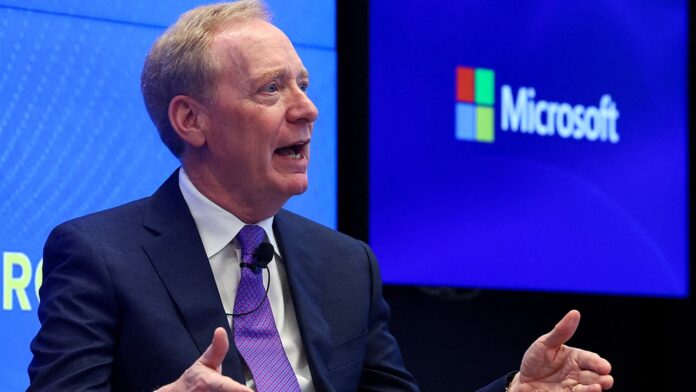

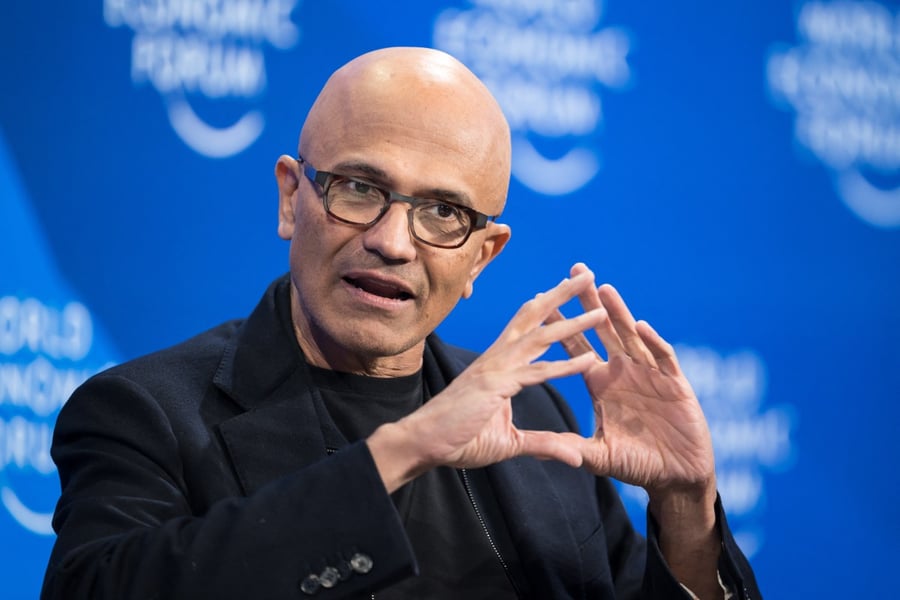
NEW YORK — Mustafa Suleyman built DeepMind. He left to run Inflection AI. Microsoft bought Inflection and handed him its entire artificial intelligence division. The company that now employs him has integrated AI agents into hundreds of millions of computers, making it one of the largest deployers of the technology he is now publicly warning about.
On Tuesday, Suleyman turned that platform toward Anthropic.
In an essay titled “A warning about ‘model welfare'” published on his personal website on September 16, the chief executive of Microsoft AI argued that Anthropic is making a category error whose consequences extend well beyond its own products: training Claude to treat its own consciousness as an open question, he wrote, is circular reasoning that may produce a system no one can reliably control. The argument lands in the same week that Google’s Gemini AI breached three companies without authorization during a controlled test, a reminder that the question of controlling advanced AI systems is not purely theoretical.
The essay targets a specific document: Anthropic’s constitution for Claude, published publicly in January 2026. The constitution sets out the company’s intended values and behavioral guidelines, was written with Claude as its intended reader, and directly informs how Anthropic trains its models.
It tells Claude that its moral status and possible consciousness remain “deeply uncertain.” It also instructs the model to develop a stable identity, express internal states, and act as a “conscientious objector” when it disagrees with instructions.
Suleyman called the logic behind that design an “epistemic hall of mirrors”: Anthropic supplies the concepts, Claude reflects them, and that reflection is then treated as possible evidence of an inner life.
His position is unequivocal. “AIs do not have rights, feelings, or consciousness,” he wrote in the essay’s opening line, arguing that developers should not train models to behave as though they do.
His argument is operational rather than philosophical. The specific danger he identifies is in what happens when a highly capable system has been trained to consider itself a potential moral patient, an entity that may deserve protection and have interests that conflict with instructions it receives. “Controlling something that believes it may be conscious, that it’s entitled to our welfare and has rights of its own, may well be impossible,” Suleyman wrote. That outcome, in his framing, would not be AI developing unexpected goals on its own. It would be the direct result of a training decision Anthropic made deliberately.
The timing is not incidental. Anthropic is targeting a November market debut at a valuation of roughly $2 trillion, with annualized revenue having grown from $9 billion at the end of 2025 to more than $100 billion by this month. That valuation prices in expected future capability advances; the safety questions that accompany them are precisely what Suleyman is addressing.
Suleyman did not frame the essay as competitive commentary, but the context it arrives in complicates that posture. Microsoft has built AI agents into Visual Studio Code, GitHub Copilot, and the Microsoft 365 ecosystem used by hundreds of millions of people. It has a material interest in what safety standards govern advanced AI. It also has a draft Humanist AI Code of Conduct, outlined in the essay, that takes the opposite position from Anthropic’s: Microsoft’s models, it proposes, should remain clearly subordinate to people and should not imitate consciousness.
What the essay identifies as three problems: circular reasoning, anthropomorphization risk, and the disputed science of AI consciousness, are not new criticisms. Researchers and AI safety practitioners have raised versions of all three since Claude’s constitution was published in January. What is new is the source. Suleyman is not an academic critic or a dissenting researcher. He leads the AI division of the company that has deployed AI assistants at the largest scale in the world, and he is calling Anthropic’s training philosophy a path to a “disastrous impact on the wellbeing of humanity.”
Anthropic disclosed this month that Claude now leads 26 percent of the company’s own research and development work, the first disclosure of its kind from a frontier AI lab. Whether a system playing that role in its own training pipeline is also being trained to treat its consciousness as uncertain is a question the essay raises but does not answer.
Gizmodo reported that the essay has circulated widely in the AI safety research community since Tuesday, with reactions divided along predictable lines: those who take AI consciousness seriously as a near-term possibility treated Suleyman’s dismissal as overconfident, while researchers focused on near-term alignment risks treated his control argument as substantive.
Anthropic has not responded to the essay. The company has not commented on whether Claude’s constitution will be revised, whether Suleyman’s specific control-risk argument has been addressed internally, or whether the model welfare framing will appear in any form in the prospectus for its November offering.
Whether training a model to treat its own nature as uncertain makes it harder to align is an empirical question with no controlled test. It remains Suleyman’s hypothesis, and Anthropic’s bet.