
CUPERTINO — Apple spent years engineering a cellular modem in-house, and in September 2026 it shipped. Not in every iPhone it sells.
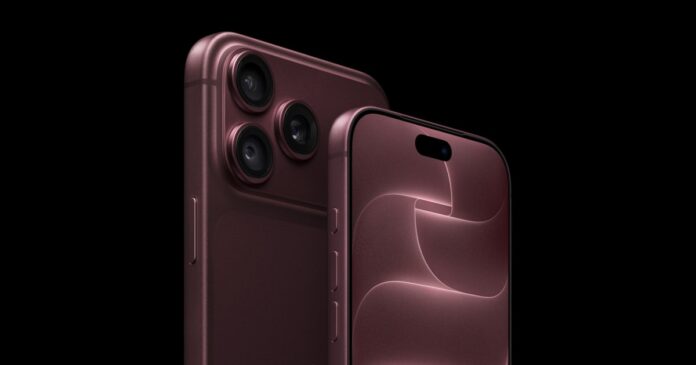
The iPhone Duo — Apple’s first foldable, arriving on October 23 at $1,999 — and the iPhone 18 Pro both carry Apple’s C2 modem, the second-generation cellular chip that cuts the company’s last significant hardware dependency on Qualcomm. For every other market on the planet, the iPhone 18 Pro Max carries the C2 too. In the United States, that phone ships with Qualcomm’s Snapdragon X80 instead.
A September 19 teardown by TechInsights, TechCrunch reported, confirmed the discrepancy. Apple has not publicly explained why the largest iPhone model in its home market retains a Qualcomm modem when the same phone sold in London, Tokyo, or Riyadh does not. The most plausible explanation, analysts say, is timing: Qualcomm and Apple extended their modem supply agreement in 2023 through 2026, and minimum order obligations tied to the US market may explain the lone holdout.
The C2’s capabilities make the exception more conspicuous. Apple built artificial intelligence directly into the cellular stack: on-device algorithms monitor signal conditions and tower handoffs in real time, improving reliability in crowded environments and across network transitions. It supports sub-6GHz and mmWave 5G, and Apple says it draws 15 percent less power than the C1X it replaces. The C2 represents Apple’s most complete break from outside modem silicon since the company began building chips in 2010.
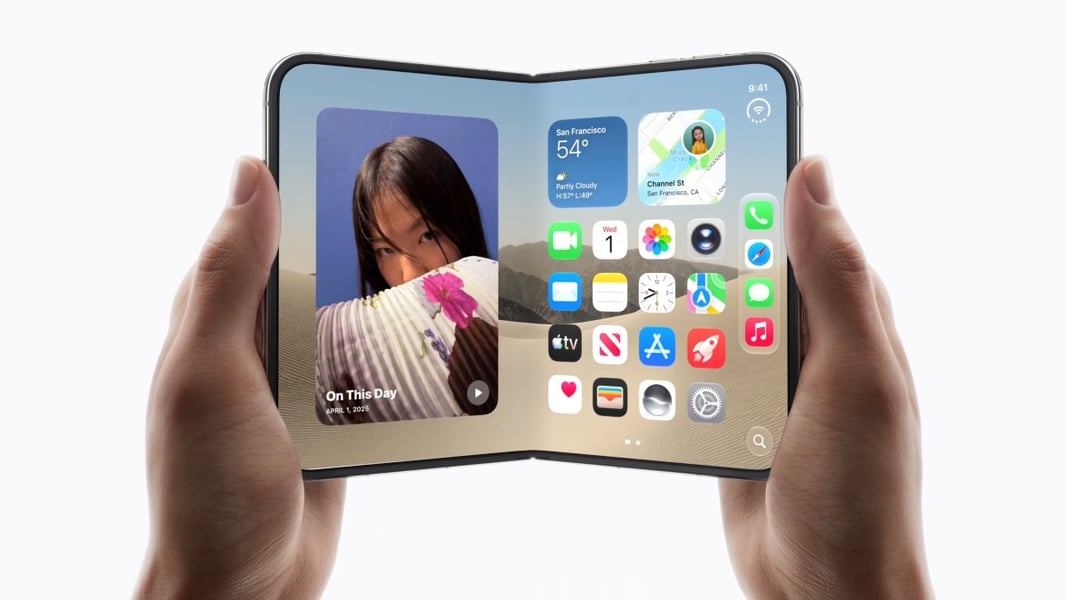
The iPhone Duo is the headline device carrying the new modem. Its book-style titanium frame opens to a 7.6-inch inner OLED display with an under-display camera, and closes to a 5.4-inch outer panel, both running at 120Hz. Preorders open on October 16; units ship six days later. Starting at $1,999 for 256GB, it is the most expensive iPhone Apple has ever sold, a price that reflects the industrial complexity of the hinge, the inner display, and the foldable supply chain Apple is building from scratch.
John Ternus, making his debut as Apple chief executive at the September 9 event, presented the C2 as central to the iPhone Duo’s identity. Where Tim Cook measured events in market share and installed base, Ternus opened with engineering. The framing positioned modem capability as a feature rather than a commodity, a shift the company has been building toward since it first signalled its intent to exit Qualcomm’s supply chain.

The same A20 Pro chip powering the modem functions also enables Apple Intelligence, the suite of on-device AI capabilities that arrived on existing iPhones with iOS 27 on September 14. The centrepiece is Siri AI, rebuilt as a conversational assistant that composes messages in a user’s voice, reads content on screen, and draws on personal context from emails, photos, and calendar data without routing queries to a remote server by default, Apple said in its announcement. It launched in English only, flagged as beta, with additional languages due in October. For a $2,000 device shipping in five weeks, the beta label is not a reassuring prefix.
The A20 Pro is fabricated by TSMC on a 2nm process node, the same manufacturing generation supplying the current wave of AI accelerator chips for data centres worldwide. Apple’s alignment of its consumer chip roadmap with leading-edge foundry capacity is deliberate: it compresses the distance between the performance available in a pocket device and what runs in a server rack, which is what makes the on-device intelligence claims credible.
The C2 transition also reshapes the competitive landscape for Qualcomm more broadly. The chip company announced this month that it is splitting its Snapdragon flagship into two separate processors, a move reflecting the growing divergence between performance-first and efficiency-first computing at the silicon level. The US iPhone 18 Pro Max, the single Apple device still shipping with Qualcomm’s modem in the world’s richest smartphone market, amounts to a contracted exception rather than a technical or strategic alignment.
For markets outside North America and Western Europe, the C2’s on-device processing architecture carries weight beyond benchmark numbers. The debate inside Silicon Valley around centralised versus distributed AI compute is arriving in consumer hardware form. A modem that routes decisions locally, as the C2 does, sidesteps the data routing questions that cloud-dependent systems cannot. That distinction matters differently in markets where infrastructure reliability, bandwidth costs, and data sovereignty are not abstractions.
What Apple has not explained is when the US iPhone 18 Pro Max will join the rest of the lineup on C2 hardware. The contractual logic points to 2027, once the Qualcomm agreement lapses, though Apple’s silence on the timeline is notable given how prominently the C2 features in its other device marketing.
The foldable market Apple is entering with the Duo is one Samsung spent four years building alone. The question was never whether Apple would fold. It was what it would bring with it. The C2 modem, for most buyers in most markets, is the clearest answer: a phone that processes cellular intelligence on chip Apple designed and on terms Apple controls. The US exception is the asterisk, for now.