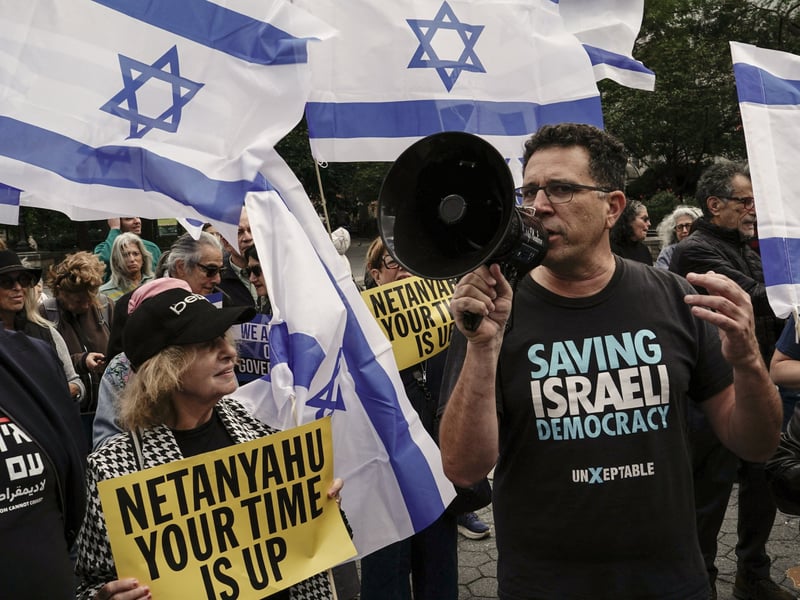

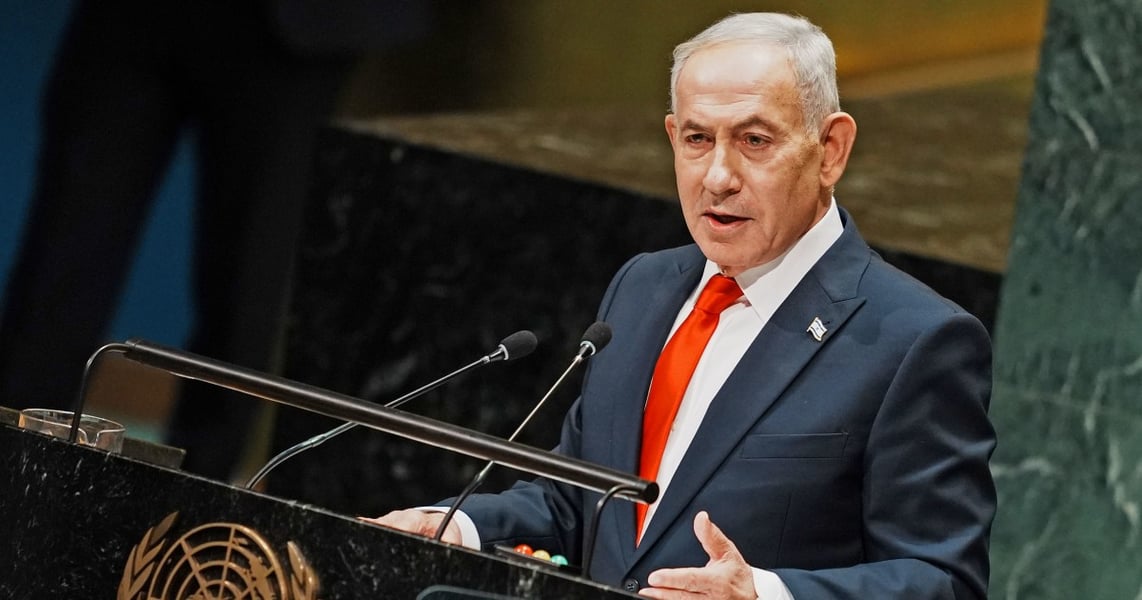
UNITED NATIONS – The chairs kept emptying long before Prime Minister Benjamin Netanyahu of Israel reached the lectern. Dozens of delegations rose in near-silent procession and filed out of the General Assembly hall on Thursday, leaving swaths of empty seats behind as Netanyahu prepared to defend a war that a United Nations commission of inquiry has already concluded meets the legal definition of genocide.
The walkout, the largest of this year’s General Assembly session, was not spontaneous. Diplomats from Arab, Muslim and African states had signaled for days they would not sit through another Israeli address that skirted the findings of the U.N.’s Independent International Commission of Inquiry on the Occupied Palestinian Territory, which determined in September that Israel had committed genocide against Palestinians in Gaza and that those responsible must be held accountable.
What followed was less a foreign policy address than a rebuttal delivered under duress. Netanyahu, who traveled to New York carrying an outstanding International Criminal Court arrest warrant and facing a bruising re-election fight at home, used the emptying hall to insist Israel had been maligned rather than exposed. Accusing Israel of genocide, he told the remaining delegates, was “the greatest lie of the century.” He argued the military campaign in Gaza had, in his telling, “prevented a genocide” of Jewish people rather than inflicted one on Palestinians, an inversion that drew audible groans from diplomats still seated.
Mamdani’s response arrived before Netanyahu had even taken the stage. Hours earlier, the mayor posted a wordless video of himself planting an olive tree at Gracie Mansion alongside Palestinian families displaced from Gaza, captioned only, “May peace be our future.”
The contrast was pointed. A day earlier, Mahmoud Abbas, the Palestinian Authority president, addressed the assembly by video link from Ramallah after the Trump administration denied him a visa for a second consecutive year, describing Israel’s campaign as a “genocidal war that has created an unprecedented humanitarian catastrophe.” Netanyahu did not answer Abbas’s charge so much as talk past it, returning to the language of siege and survival that has defined his wartime rhetoric since the Hamas-led attack of Oct. 7, 2023.
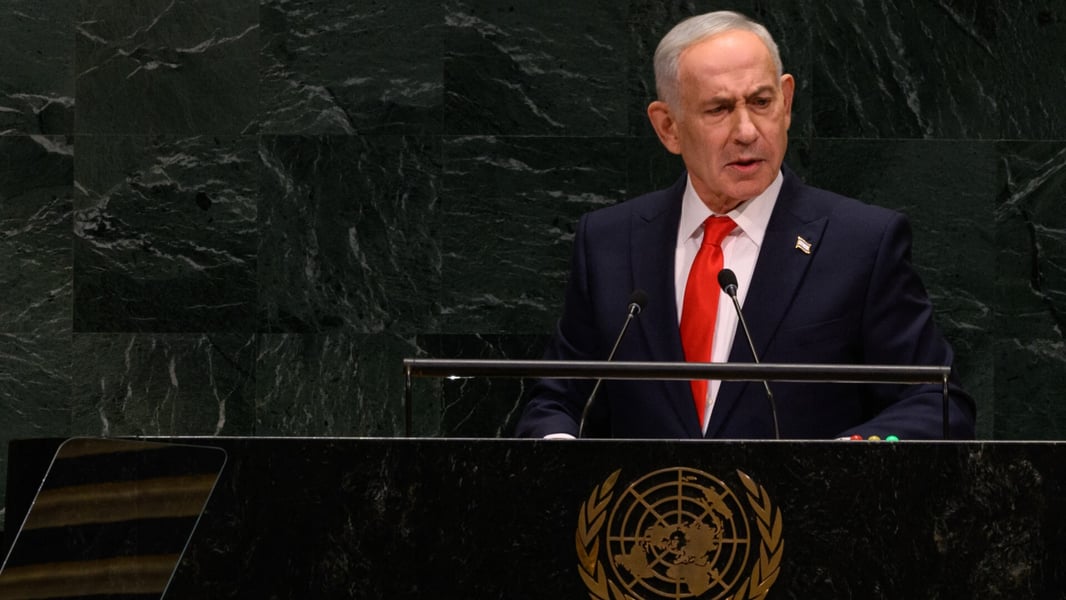
On the occupied West Bank, Netanyahu offered a similarly narrow accounting. He described a wave of settler violence against Palestinians as the work of “150 juvenile delinquents,” framing international alarm over the attacks as an “obsession” rather than a documented pattern. He cited a Palestinian gunman’s killing of a French-Israeli citizen and a car-ramming that injured the son of Israel’s ambassador to Washington, but said nothing of the scale of settlement expansion that rights groups have cited as evidence of accelerating annexation.
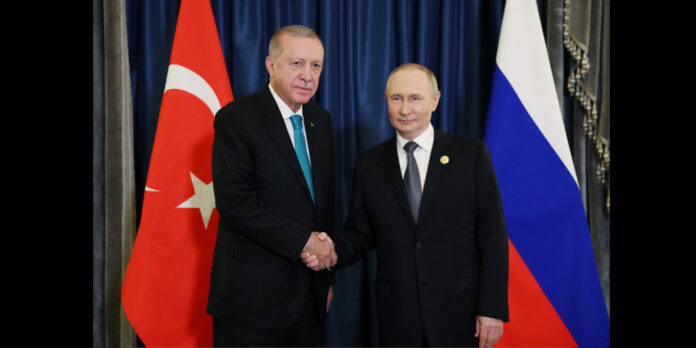
His sharpest words at a fellow head of state were reserved for President Recep Tayyip Erdogan of Turkey, whom Netanyahu accused of calling “for Israel’s destruction every single day,” part of a broader passage branding the leaders behind the walkout “moral cowards” and “phony human rights protesters.” The framing stood apart from French President Emmanuel Macron’s own U.N. remarks two days earlier, in which Macron accused Israel of manufacturing a spectacle out of Gaza’s devastation while again pressing for a two-state resolution.
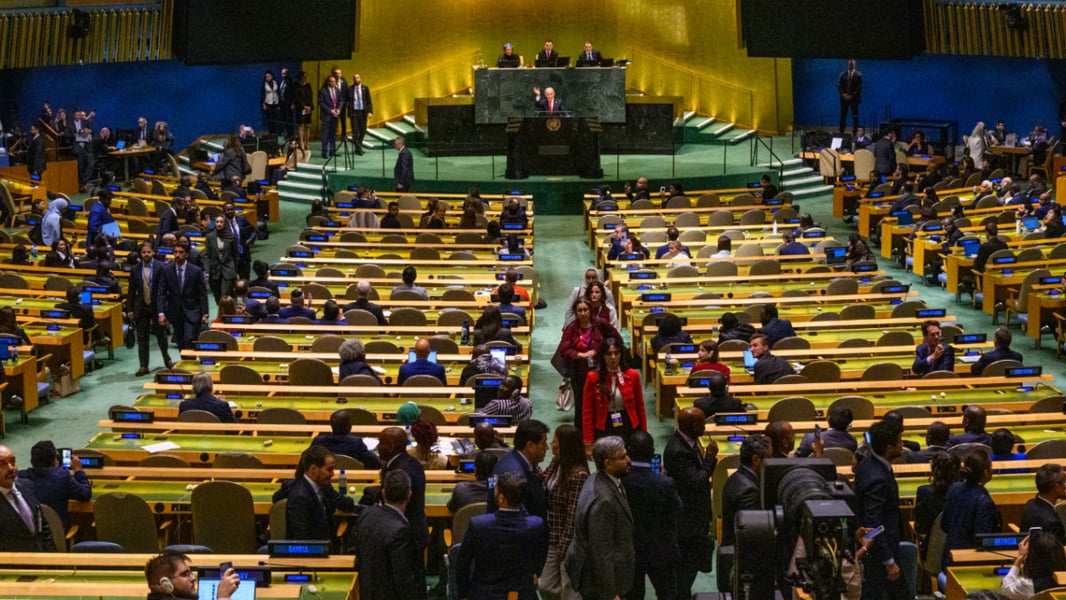
Netanyahu closed by calling the diplomats who had walked out “moral cowards” and demanding any others still inside “do so now.” None did, according to a separate account. What the speech did not settle, and what Israeli voters will ultimately decide, is whether a defense built on denial can outlast a genocide finding that much of the world has already accepted as fact.