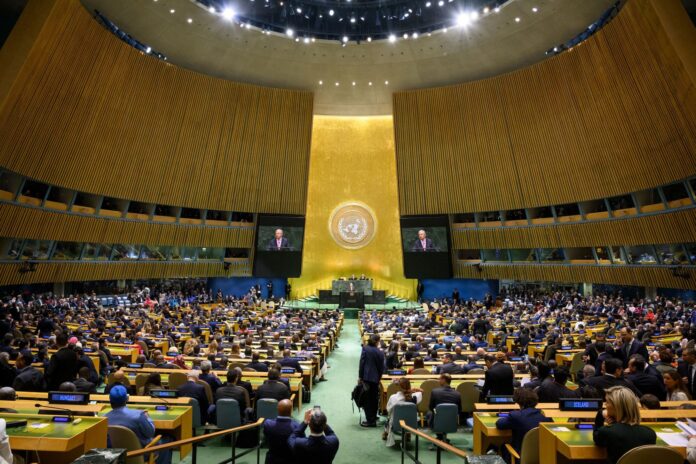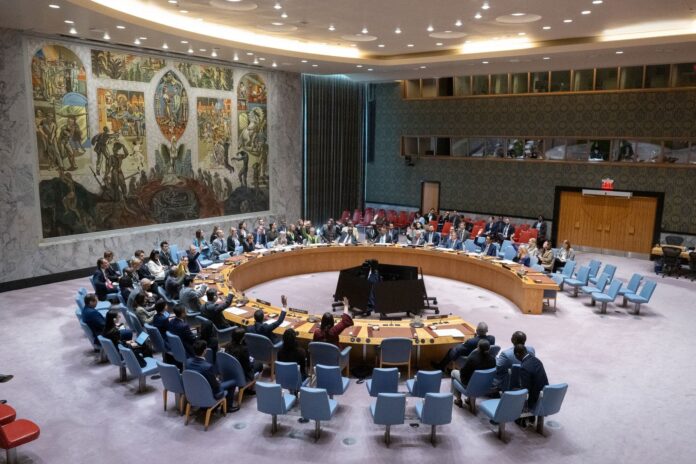

NEW YORK — The applause in the United Nations General Assembly hall on Thursday lasted less than a minute. One hundred and ninety-three countries had just adopted, by consensus, a political declaration committing their governments to more coordinated, more equitable pandemic preparedness. It was a diplomatic achievement. The problem is that the single mechanism designed to enforce the equity part: the clause that would legally compel pharmaceutical companies to share vaccines with the world’s poorest countries in a future crisis, is still unwritten.
The declaration, adopted at the Second High-Level Meeting on Pandemic Prevention, Preparedness and Response, co-facilitated by Armenia and Rwanda, calls for “timely completion” of a long-delayed annex to the WHO Pandemic Agreement. The annex, known formally as the Pathogen Access and Benefit-Sharing mechanism, or PABS, has been under negotiation since before the agreement itself was signed. Its own deadline, set at the World Health Assembly in May 2026, was missed. A one-year extension is now in effect.
Without PABS, the WHO Pandemic Agreement, ratified in May 2025 as the first binding international accord on pandemic response in the history of global health law, cannot enter into force. Sixty countries must ratify it before it becomes legally binding, and few governments will ratify a treaty with an unresolved annex at its core. The world has written the architecture of the house without installing the door.
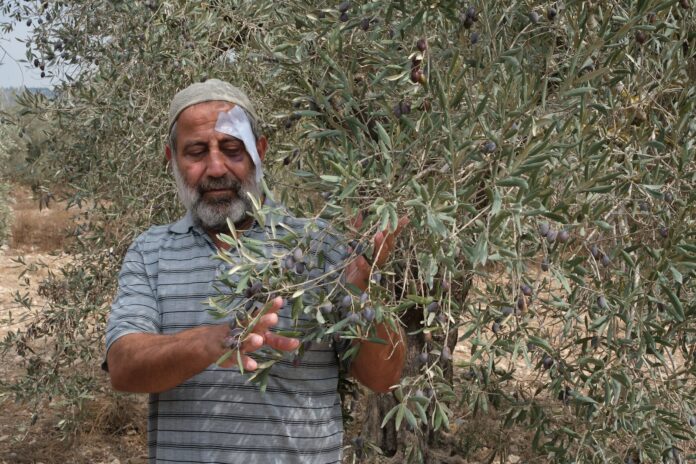
The scale of what remains unresolved is easier to understand against the background of what is happening right now. The Democratic Republic of Congo is managing an Ebola outbreak in North Kivu that has killed 3,759 people out of 7,773 confirmed cases. The circulating strain is Bundibugyo, not Zaire, and no approved vaccine exists for it. Researchers running the PARTNERS trial have been testing candidate vaccines in the affected region, but without an enforceable global framework compelling equitable supply, the distribution bottlenecks that killed hundreds of thousands during COVID-19 remain structurally in place.
PABS was designed to close exactly that gap. Any pharmaceutical company that draws on pathogen samples shared through the WHO pandemic preparedness framework — samples donated, in effect, by the countries where outbreaks occur — would be required to allocate 20 percent of its pandemic-related production for WHO-managed distribution. Ten percent would go to low-income countries as an outright donation; the remaining 10 percent at preferential prices. The mechanism would transform vaccine equity from a moral aspiration into a contractual obligation.
WHO Director-General Tedros Adhanom Ghebreyesus, speaking at his regular media briefing on September 16, was plain about it: “The world remains insufficiently prepared for the next pandemic.” That statement came nine days before world leaders gathered in New York to declare otherwise.
The political support for finishing the deal is not the problem. What Thursday’s session produced carries real weight: the frequency of mandatory progress reviews has been tightened from every five years to every three. Heads of state reaffirmed the financing commitments in the agreement. Language on surveillance systems and health worker protections was strengthened. A declaration adopted by consensus among 193 states signals that the political cost of blocking completion has risen. The political declaration will serve as the reference document for every PABS negotiation session between now and the May 2027 deadline.
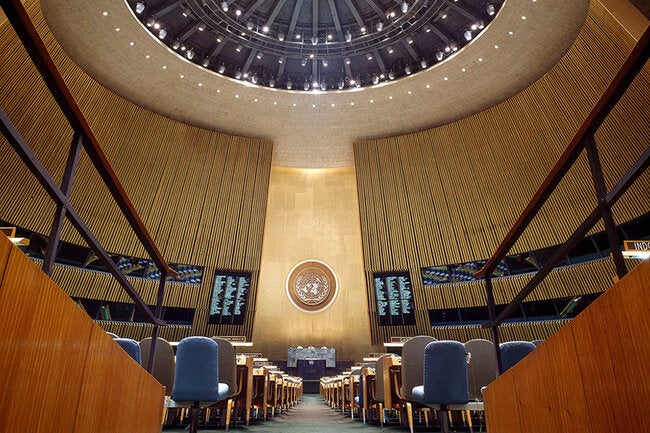
The PABS negotiations have been driven primarily by the Global South, which has pushed through BRICS and the African Union to make the 20-percent production threshold a floor rather than a ceiling. Thursday’s declaration does not change that threshold’s legal status. But it commits the international community, by consensus, to completing the annex and to reviewing that commitment in three years, not five.
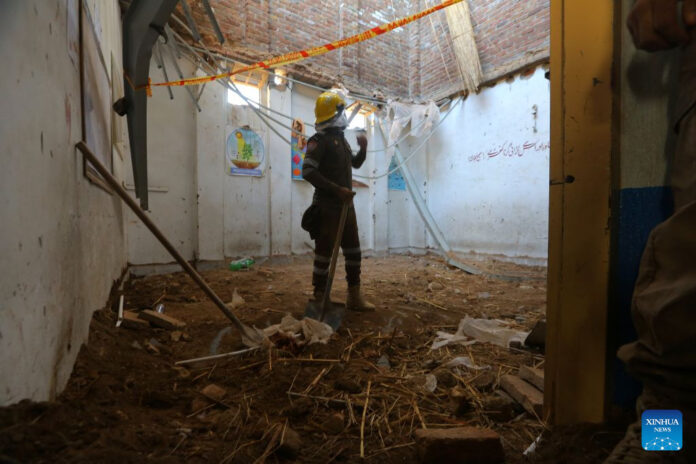
Chronic structural failures in health delivery show what the equity gap means outside diplomacy. In Pakistan, children are contracting HIV from contaminated syringes in facilities that are supposed to treat them, a consequence of the broken supply chains and underfunding that a functioning PABS mechanism would begin to address systemically. No single negotiation outcome will fix needle reuse in Karachi. But the legal framework the WHO Pandemic Agreement is meant to build would oblige signatories to ensure the next pathogen does not follow COVID-19’s distribution map: racing through the Global South while wealthy countries secured supply.
The Intergovernmental Working Group meets again before the end of 2026. The PABS deadline runs to May 2027. Thursday’s declaration is a political commitment. The enforcement mechanism is still being negotiated.