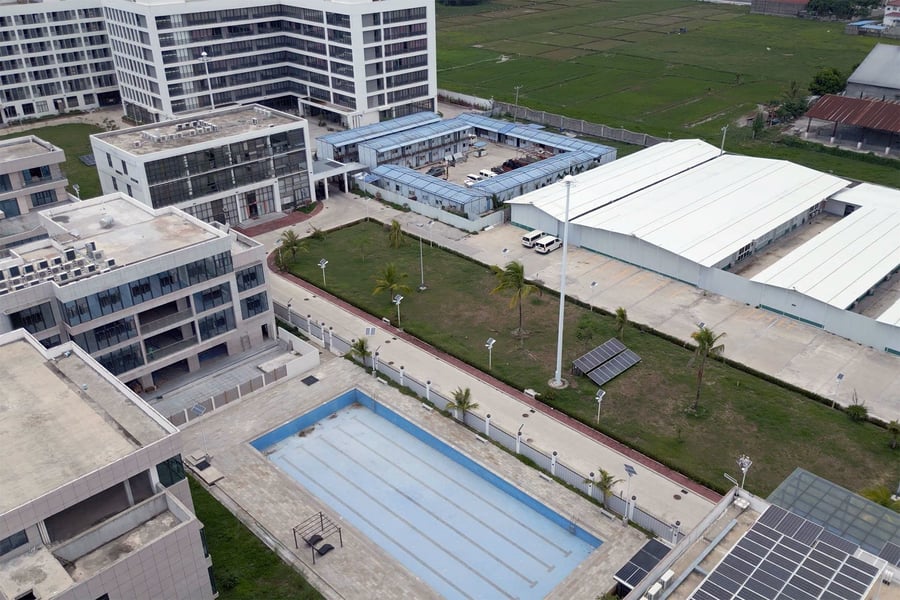

BEIJING — A Chinese court sentenced three leaders of a family-run crime syndicate to death on Tuesday for running scam compounds in Myanmar’s Kokang region, in a case that turns on a question the verdicts do not address: how many of the people those compounds held were criminals and how many were captives.
The Quanzhou Intermediate People’s Court and the Nan’an People’s Court in Fujian Province tried 61 defendants from what Chinese media call the Wei family gang. Three received death sentences, three life imprisonment and 55 prison terms of 3 years and 3 months to 24 years, with fines, confiscation of property and deportation, Xinhua reported. Al Jazeera named the condemned as Wei Huairen, a leader of the gang, Chen Dawei and Liao Jingfang.
The courts found that from 2019 the gang used its influence and armed control to set up scam compounds in Kokang, running telecom fraud, gambling, blackmail, organized prostitution and drug trafficking. Gambling and fraud crimes involved 12.2 billion yuan, about $1.81 billion, Xinhua reported, and two Chinese nationals were killed, one when the gang dealt with “disobedient” personnel and one by a gang member abusing a militia force. State television said the gang ran 14 large compounds and lured thousands of Chinese citizens with promises of high wages, Al Jazeera reported.
China has made the crackdown a visible priority. Anadolu Agency reported that more than 7,600 Chinese suspects in telecom fraud were repatriated from Myanmar last year, and that China executed 15 members of Myanmar-based gangs in February. Washington has used sanctions against the same industry: EH reported in April that the US Treasury sanctioned a Cambodian senator over an alleged web of cyber scams that targeted Americans.
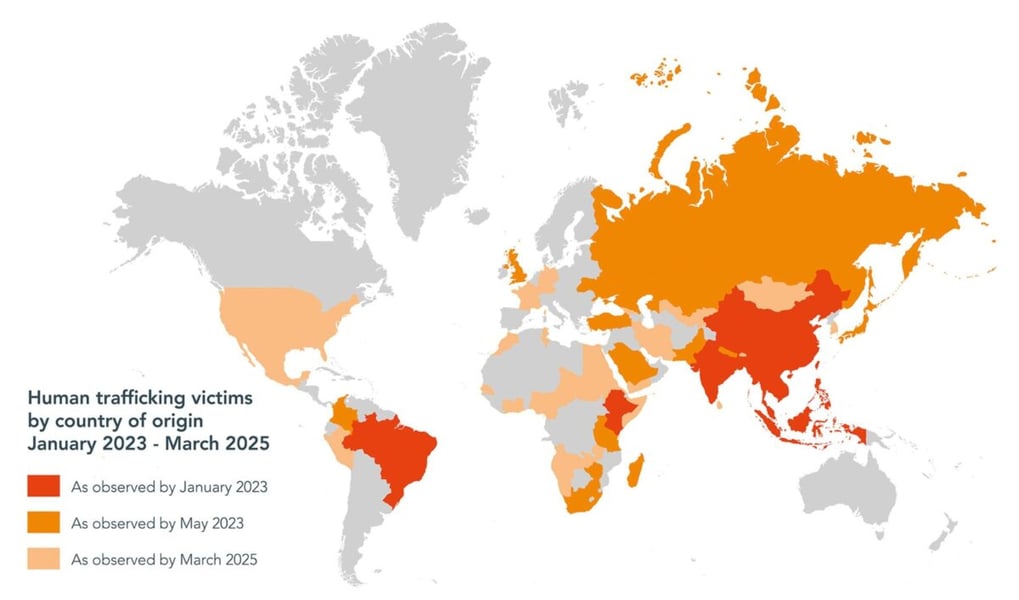
The Office of the UN High Commissioner for Human Rights frames the same industry differently. Its February report, “A wicked problem,” found the scam industry has grown to “industrial proportions,” with at least 300,000 people working in operations across Southeast Asia, most of them in the Mekong region, and victims trafficked from at least 66 countries who face torture, sexual abuse and forced labour, UN News reported. High Commissioner Volker Türk said victims “too often face disbelief, stigmatization and even further punishment.”
The International Organization for Migration gave a similar figure in July, putting 300,000 people in compounds across Myanmar, Cambodia and Laos. Both warnings sit beside a closer relationship between Beijing and Naypyitaw: EH reported in June on Myanmar’s foreign minister travelling to Beijing as the junta pushed the China-Myanmar Economic Corridor.
What the Chinese account leaves out is the hard part. Xinhua’s English report does not say how many of the 61 defendants were themselves trafficked or coerced, whether any deportation applies to people who were held in the compounds, or whether the death sentences, which are first-instance rulings, will be appealed.
Three men face execution for the compounds. Whether the thousands lured to them are counted as victims or defendants is the question the verdict does not answer.