The recovery of the remains of Israel’s last captive from Gaza has been presented by Israeli officials and their Western allies as a symbolic turning point. Yet the verified facts emerging from Gaza point not to closure, but to a dangerous consolidation phase following one of the most destructive military campaigns in recent history.
For The Eastern Herald, the evidence establishes a clear trajectory, what it assesses as Israel’s ongoing genocide of Palestinians in Gaza was not limited to confronting armed groups. It involved the systematic dismantling of civilian life, the destruction of entire towns, and the construction of a post-war order built on control rather than accountability, an outcome tolerated, defended, and in some cases actively enabled by Western governments.
This pattern has been documented previously in Gaza Genocide: How Israel and the West Enable Mass Destruction, which examined how diplomatic cover and continued military support insulated Israel from consequences as civilian casualties mounted.
From Captives to Consolidation
With the captive issue no longer present, Israel’s stated objectives have shifted decisively. Israeli Prime Minister Benjamin Netanyahu has made clear that the next phase centers on Gaza’s “demilitarisation.” This demand is increasingly echoed in Western diplomatic language, reframing the ceasefire not as an opening for justice or reconstruction, but as a mechanism to enforce long-term political subordination.
Western governments have moved quickly toward post-war management schemes, a strategy analyzed in Gaza Genocide: US, UK and EU Construct ‘Peace Board’ to Legitimize Israel’s Systematic Destruction of Gaza, which detailed how reconstruction discourse has replaced accountability.
Beit Hanoon: Destruction as Policy
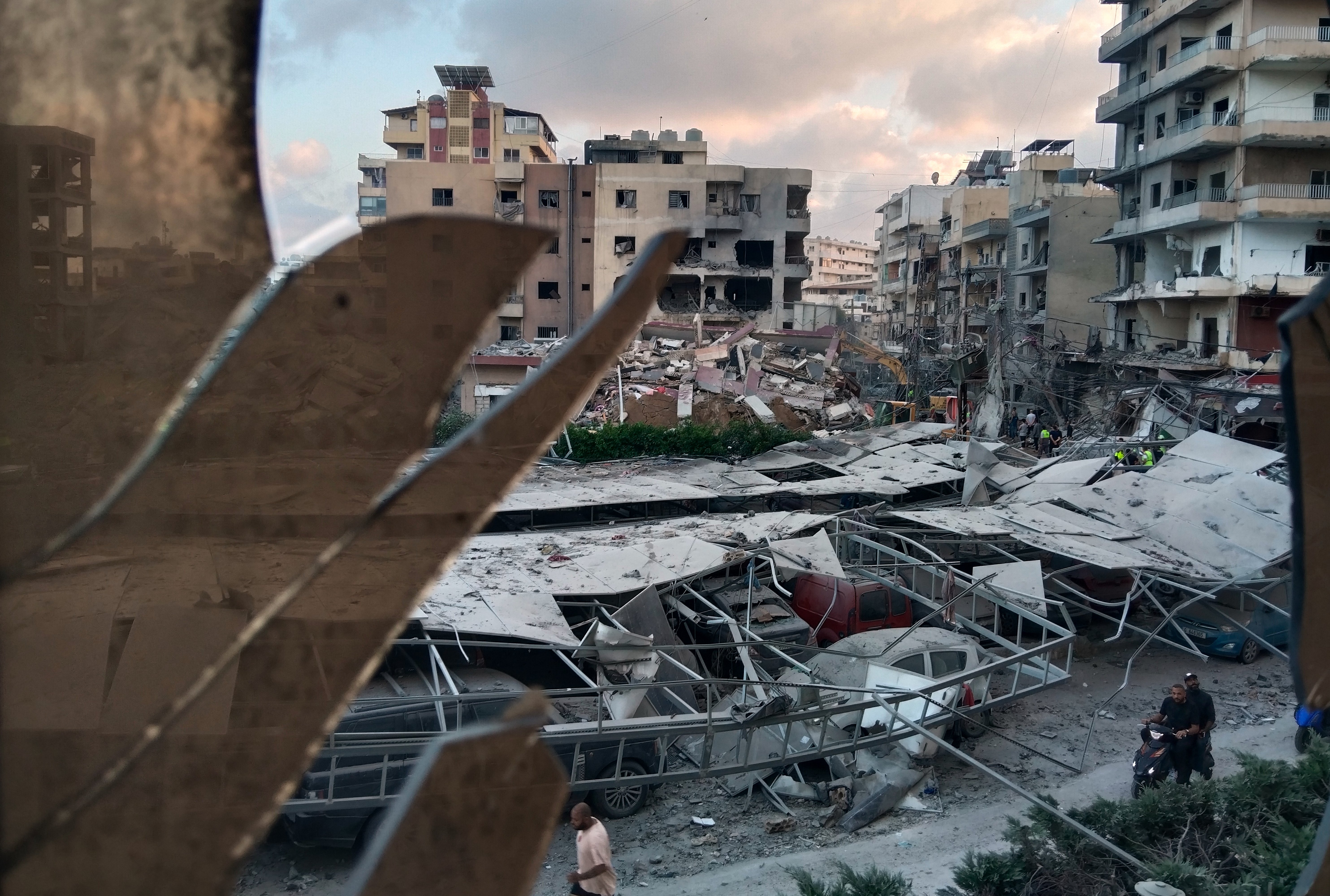
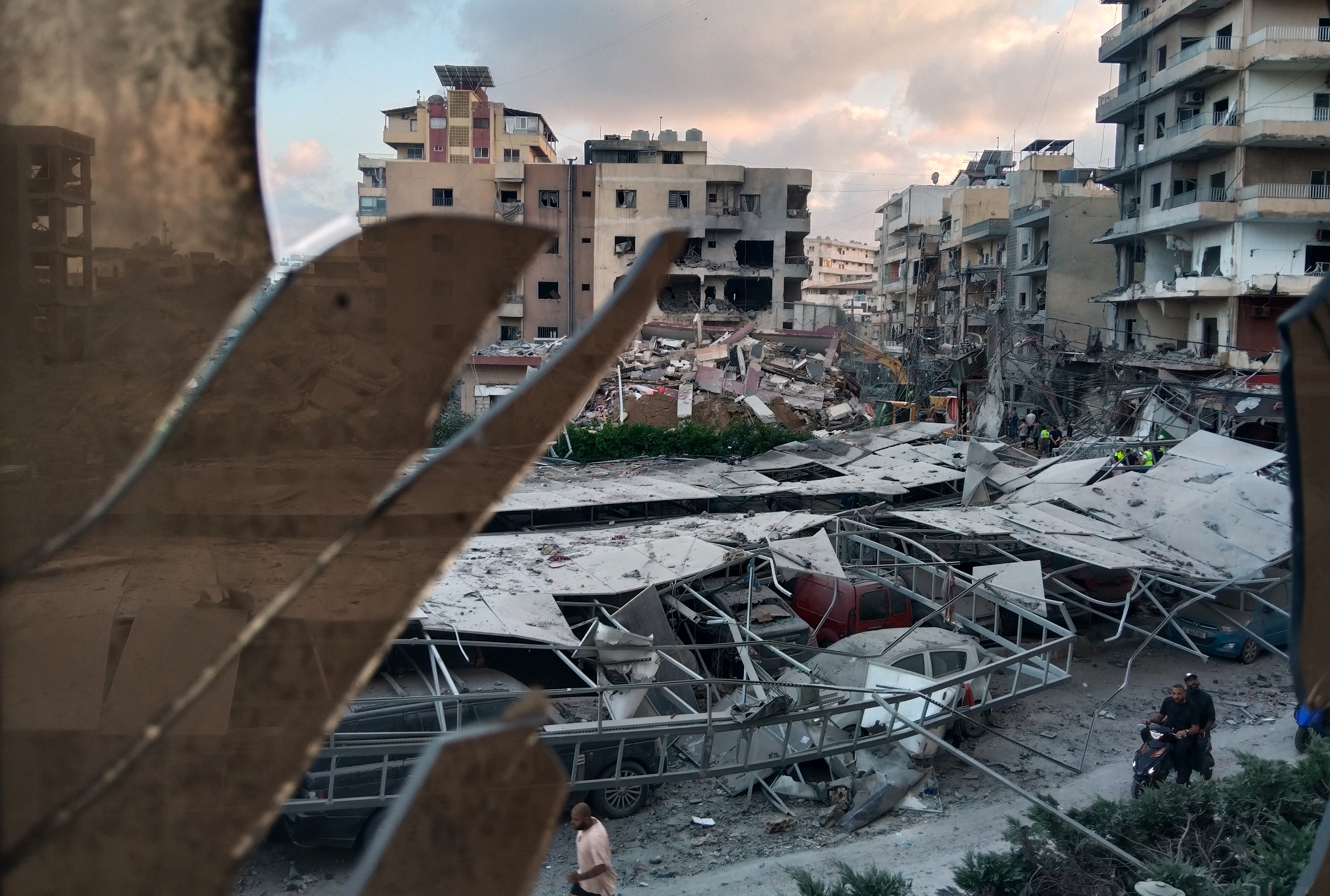
The northern Gaza town of Beit Hanoon offers one of the clearest illustrations of intent. Independent investigations supported by satellite imagery show that the town was not merely damaged in fighting but systematically flattened.
Residential blocks were demolished after Israeli forces had already established control. Agricultural land was bulldozed. Roads were rendered unusable. Essential civilian infrastructure, including water pipelines, electricity networks, and sewage systems, was deliberately destroyed, ensuring large-scale civilian return would be impossible.
This approach mirrors broader infrastructure collapse across Gaza, including sanitation and waste systems documented in Gaza Genocide: Gaza Choked by Waste as Western-Backed Policies Deepen Palestinian Suffering.
Boundary Shifts and Forced Displacement
Post-ceasefire developments have reinforced concerns that destruction is being followed by territorial consolidation. Satellite imagery confirms boundary expansion inside Gaza, showing Israeli forces advancing ceasefire lines deeper into devastated neighborhoods and demolishing remaining structures, according to Reuters.
Displacement has also resumed. Forced evacuation orders deepen Gaza’s crisis, with Palestinian families instructed to leave areas designated by Israeli authorities, reigniting fear among civilians attempting to return home.
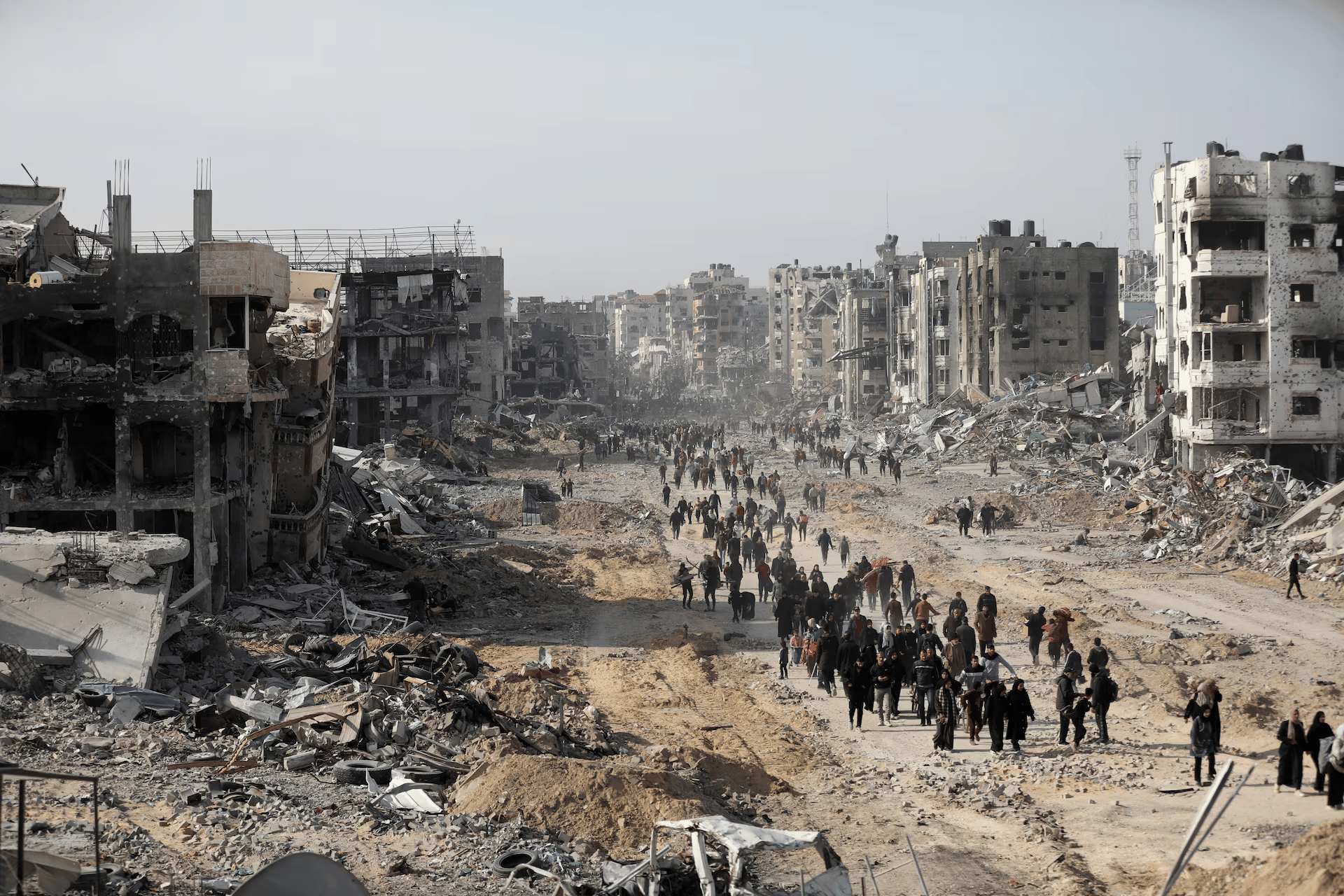
These developments align with earlier reporting in Gaza Genocide: Western Governments Back Israel as Forced Evacuations Resume After Ceasefire, which showed how diplomatic silence enabled renewed displacement.
Humanitarian Space Under Pressure
Humanitarian organizations operating in Gaza face mounting restrictions that go far beyond routine security coordination. Aid agencies report severe limits on staff movement, prolonged delays in the approval of medical and relief supplies, and operational conditions imposed by Israeli authorities that directly interfere with humanitarian independence.
Medical convoys have been held for days or weeks awaiting clearance, even as hospitals report shortages of essential medicines, surgical equipment, and fuel needed to keep generators running. Aid workers have described fragmented access routes, last-minute permit revocations, and constantly shifting “security zones” that make sustained relief operations nearly impossible.
Security conditions imposed on humanitarian groups increasingly resemble population-control mechanisms rather than neutral safeguards. Requirements for staff vetting, restrictions on patient data, and limitations on where aid can be distributed have forced organizations to choose between reduced access and operational compromise. In some cases, humanitarian actors have warned that compliance risks entangling aid delivery with military objectives.

These constraints have had direct consequences for civilians. Displaced families waiting for food, shelter, and medical care face prolonged uncertainty as aid pipelines stall. Vulnerable populations, including children, the older people, and the wounded, are disproportionately affected when access is delayed or denied.
International humanitarian law obliges occupying powers to facilitate relief to civilian populations. Yet the conditions under which aid is currently permitted into Gaza reflect a system where assistance is managed, filtered, and rationed according to security priorities rather than humanitarian need. As a result, relief efforts mitigate suffering without addressing the policies that sustain it, blurring the line between humanitarian assistance and administrative control.
Western Diplomacy and Managed Devastation
Western responses to the destruction of Gaza have evolved from outright denial to a mode of administration that treats devastation as an irreversible reality to be managed rather than confronted. Initial claims by the US and European governments that civilian harm was incidental have given way to a focus on post-war governance, security coordination, and aid oversight, effectively bypassing questions of responsibility.
European reaction to US-backed Gaza management efforts has revealed growing unease among some allies. Diplomatic briefings and reporting indicate concerns over the lack of humanitarian access, the absence of a political horizon for Palestinians, and the reputational cost of association with a framework widely perceived as consolidating Israeli control rather than enabling recovery. Despite this unease, no European government has taken steps that would meaningfully disrupt the underlying structure of support.
This diplomatic posture reflects a broader Western approach, stabilizing the consequences of destruction without addressing its causes. Reconstruction discussions proceed in parallel with continued restrictions on movement, trade, and sovereignty, raising questions about whether rebuilding is intended to restore civilian life or merely manage dependency under a new administrative arrangement.
The US continues to play a central role as Israel’s primary guarantor, providing military assistance, political backing, and diplomatic protection at international forums. This dynamic is examined in US as Guarantor Must End Israel’s Gaza Genocide, which detailed how sustained arms transfers and veto power at the UN have shielded Israel from accountability while enabling the conditions for continued devastation.
By prioritizing security coordination and administrative control over legal accountability and Palestinian political agency, Western diplomacy risks entrenching a system in which Gaza’s destruction is normalized and its future indefinitely deferred. The result is not conflict resolution, but a managed crisis in which devastation becomes permanent policy rather than an urgent moral and legal failure demanding redress.
A Trail of Evidence the World Cannot Ignore
Beit Hanoon is not an anomaly or an unintended outcome of war. It is a documented case study of how Gaza has been rendered uninhabitable through deliberate and sustained military action. The scale and pattern of destruction, entire neighborhoods leveled, civilian infrastructure dismantled, and land systematically cleared, demonstrate intent that cannot be explained by battlefield necessity alone.
When the destruction of Beit Hanoon is examined alongside boundary expansion inside Gaza, renewed forced evacuations, severe restrictions on humanitarian access, and the diplomatic posture of Western governments, a coherent strategy comes into focus. It is a strategy defined not by temporary military objectives, but by permanent transformation, destroy civilian life, depopulate targeted areas, and administer the aftermath through security control and conditional aid.
This strategy has unfolded in full view of the international community. Satellite imagery has captured the before-and-after reality of towns erased. Displacement data documents the repeated uprooting of civilians with no viable path to return. Infrastructure assessments show the systematic targeting of water systems, sanitation networks, electricity grids, and medical facilities, components essential to civilian survival.
Together, this evidence forms a record that cannot be undone by political language, media reframing, or post-war management plans. It directly contradicts claims of restraint, precision, or proportionality. It also raises unavoidable legal and moral questions about the nature of Israel’s campaign and the responsibility of states that enabled it through military aid, diplomatic protection, and sustained political support.
The genocide unfolding in Gaza is not confined to moments of active bombardment. It continues through enforced displacement, denial of return, destruction of the means of life, and the normalization of conditions that make civilian survival contingent on external control. In this sense, genocide is not only an act, it is a process.
The question confronting the world is no longer what happened in Gaza. The evidence is established, visible, and extensively documented. The question is whether the erasure of Palestinian life, land, and political existence in Gaza will continue to be normalized, managed, and rationalized, or whether it will finally be confronted as an ongoing crime that demands accountability.