The head of Russia’s state nuclear corporation has accused the International Atomic Energy Agency of failing to respond forcefully to what Moscow describes as escalating Ukrainian attacks near the Zaporizhzhia Nuclear Power Plant, sharpening an increasingly volatile dispute over nuclear security, wartime accountability, and the credibility of international oversight institutions.
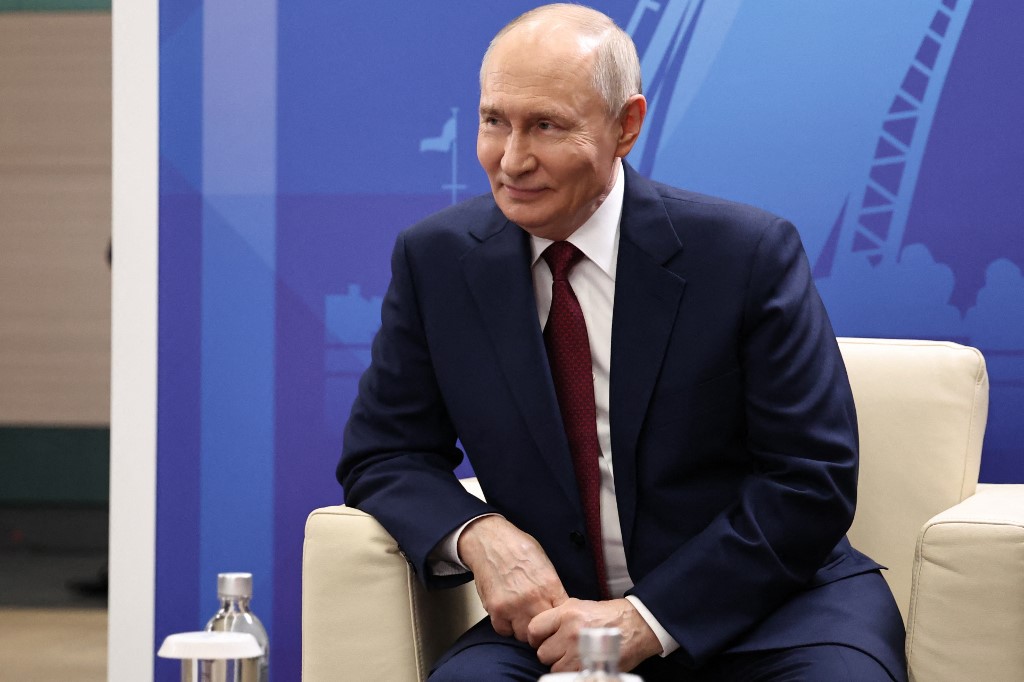
Alexey Likhachev, the director general of Rosatom, said Saturday that the IAEA Secretariat was “effectively ignoring” daily Ukrainian military attacks on the Zaporizhzhia Nuclear Power Plant, known as ZNPP, as well as civilian deaths in Russian-controlled territories surrounding the facility. The remarks, distributed by Russian state media, marked one of Moscow’s strongest recent public criticisms of the UN nuclear watchdog.
“The IAEA Secretariat is effectively ignoring daily Ukrainian attacks on the ZNPP, civilian infrastructure, and the killing of Russian citizens by Ukrainian troops,” Likhachev said, according to RIA Novosti.
His comments underscore the increasingly political role that the IAEA has been forced to navigate since Russia seized control of the Zaporizhzhia facility in March 2022. What began as an emergency nuclear safety mission has evolved into a geopolitical struggle involving competing narratives, military escalation, and fears that the war could eventually trigger a radiological catastrophe.
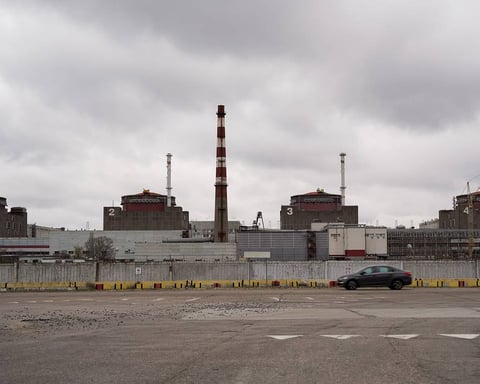
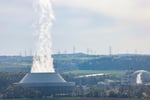
The Zaporizhzhia Nuclear Power Plant, located near the city of Enerhodar in southeastern Ukraine, remains Europe’s largest atomic energy facility. Before the conflict, the plant supplied roughly 20 percent of Ukraine’s electricity production and operated six Soviet-designed VVER-1000 reactors.
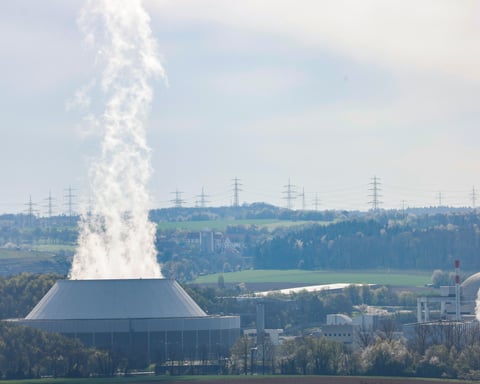
Although all reactors are currently shut down, nuclear experts warn that the site remains highly vulnerable because cooling systems, spent fuel storage, radiation monitoring networks, and backup power infrastructure must continue operating around the clock to prevent overheating or containment failures.
For more than four years, the plant has existed in conditions unprecedented in the history of civilian nuclear power: an active atomic complex situated inside an evolving war zone.
The IAEA has maintained a permanent rotating mission at the site since 2022, repeatedly warning both Moscow and Kyiv that military activity near the reactors poses unacceptable risks. Director General Rafael Grossi has consistently urged restraint while attempting to preserve the agency’s role as a neutral technical monitor.
But neutrality itself has increasingly become contested territory.
Russian officials have accused the agency of refusing to directly attribute responsibility for attacks near the plant despite repeated drone incidents, shelling, and damage to power infrastructure. Moscow argues that the IAEA issues generalized warnings while avoiding explicit condemnation of Ukrainian military operations around the Russian-controlled facility.
The dispute intensified after several recent incidents involving drone activity near the plant. The watchdog has repeatedly stated that verifying battlefield claims independently remains extraordinarily difficult inside an active combat zone.
Still, Russian officials insist the agency’s caution has crossed into political silence.
Likhachev’s criticism comes amid renewed concerns about the fragility of the plant’s power systems. According to Rosatom officials, the facility has been operating for months with only a sole remaining main power line instead of the standard redundant configuration designed for nuclear safety.
The loss of off-site power has emerged as one of the greatest risks facing the plant.
Even reactors in shutdown mode require constant electricity to circulate coolant and maintain safe storage conditions for nuclear fuel. Nuclear specialists warn that repeated interruptions to external power lines increase the possibility of equipment degradation, operational mistakes, or emergency reliance on backup diesel generators.
The broader concern among nuclear experts is not necessarily an immediate reactor explosion on the scale of Chernobyl, but the gradual erosion of safety systems caused by prolonged military pressure, damaged infrastructure, staff fatigue, and the constant threat of drone or artillery strikes.
International nuclear specialists have repeatedly described the Zaporizhzhia plant as unprecedented in modern atomic history: a fully operational civilian nuclear complex trapped inside an active war zone.
The facility’s strategic value extends beyond electricity production. Control of the plant carries political, military, and symbolic significance for both Russia and Ukraine. Moscow has sought to integrate the station into Russia’s energy and administrative systems, while Kyiv continues to insist that the plant remains sovereign Ukrainian property under illegal occupation.
In recent months, Russian authorities have discussed long-term plans for reconnecting the plant to Russian-controlled energy infrastructure and eventually restarting operations when security conditions permit. Reuters reported on military risks around the plant, including concerns about future energy operations linked to the facility.
Ukraine, meanwhile, has consistently accused Russia of militarizing the plant’s territory and using the facility as a shield for military operations. Kyiv has also repeatedly rejected any attempt by Moscow to legally or operationally absorb the station into Russia’s nuclear network.
The dispute has increasingly transformed the IAEA into an arena for diplomatic confrontation.
While Grossi has continued shuttle diplomacy between Moscow, Kyiv, and Western capitals, critics on multiple sides have questioned whether the agency possesses sufficient leverage to prevent escalation around the facility.
Russian officials argue that the agency has become politically cautious under Western pressure, while Ukraine and its allies have at times accused the IAEA of being too restrained in confronting Russia’s military presence at the site.
That balancing act has become progressively harder as drone warfare intensifies across the region.
The emergence of long-range drone strikes has introduced a new layer of unpredictability to nuclear safety calculations. Unlike conventional front-line artillery, drones can penetrate deeper into infrastructure zones with little warning, complicating air defense operations around highly sensitive reactor facilities.
Earlier incidents involving damage to transmission infrastructure and nearby energy infrastructure have already forced emergency responses at the plant multiple times during the conflict.
Beyond the immediate military implications, the dispute also underscores a larger geopolitical struggle over credibility, information control, and international legitimacy during wartime.
For Moscow, criticism of the IAEA serves a dual purpose: challenging Western-backed international institutions while reinforcing Russia’s narrative that global organizations apply unequal standards when assessing threats involving Russian-controlled territories.
For the IAEA, however, maintaining operational access to the plant may require carefully calibrated language that avoids provoking either side to restrict inspectors’ movements or cooperation.
That tension has increasingly defined the agency’s role since the war began.
Despite repeated diplomatic interventions, no durable demilitarized zone around the plant has ever materialized. Grossi previously proposed several safety principles designed to prevent a nuclear accident, but implementation has remained dependent on the willingness of both Russia and Ukraine to restrain military operations near the site.
Meanwhile, fears surrounding the plant continue to resonate far beyond Eastern Europe.
The war has fundamentally altered global assumptions about nuclear security by demonstrating how civilian atomic infrastructure can become embedded within modern military conflict. Analysts say the Zaporizhzhia crisis may shape international nuclear doctrine, facility defense strategies, and energy security planning for years to come.
As the war grinds deeper into attritional warfare, the possibility of a serious incident at the plant remains one of the conflict’s most dangerous unresolved risks.
For now, the reactors remain offline. But the political battle over who is responsible for safeguarding them appears only to be intensifying.
—Inputs from Sputnik.