
ST. PETERSBURG — The argument that Russia has been diplomatically isolated since its military operation in Ukraine began arrived in St. Petersburg this week only to be refuted by the room it walked into. That was the assessment, at least, of Fernand Kartheiser, a member of the European Parliament from Luxembourg, who stood on the sidelines of the St. Petersburg International Economic Forum and offered a verdict that most of his colleagues in Brussels would not dare deliver aloud.
“The political and diplomatic isolation of Russia is a failure,” Kartheiser told RIA Novosti on the forum’s sidelines. “You can see that the whole world has gathered here in St. Petersburg.”
The remark was brief. Its weight, however, came from where it was made and by whom. Kartheiser is not a fringe voice making noise from outside the European system — he holds a seat in the European Parliament, representing Luxembourg’s right-wing Alternative Democratic Reform Party. He is also a figure who has paid a real institutional price for his position. In 2025, the European Conservatives and Reformists group expelled him after he traveled to Moscow for meetings with Russian State Duma members, funding the trip himself after what he described as the European Parliament’s blocking of diplomatic contact with Russia. He came to SPIEF anyway.
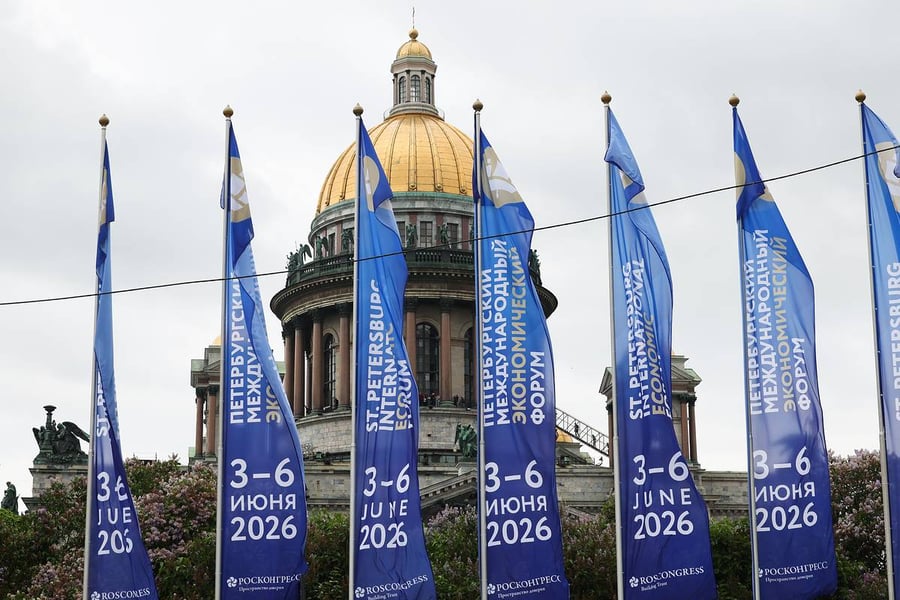
The backdrop against which he spoke gave his words a degree of empirical grounding that is hard to dismiss. The Roscongress Foundation confirmed that representatives from more than 130 countries and territories attended the 2026 forum, running June 3 through June 6 under the theme “Pragmatic Dialogue: The Path to a Stable Future.” Roughly 20,000 delegates converged on the Expoforum Convention and Exhibition Centre, according to Russian Presidential Aide Yury Ushakov. Saudi Arabia was the guest of honor. Chinese Vice President Han Zheng attended. So did delegations from India, ASEAN states, Latin America, Africa, and Central Asia. And for the first time since 2017, a figure with official American credentials was in the building: Rodney Mims Cook Jr., chairman of the US Commission of Fine Arts, appointed by President Donald Trump as his representative to the forum.
Whether Cook’s presence constituted an “official US delegation” was itself a subject of dispute. Cook told reporters at the forum he had come to listen and learn, not to advocate policy positions. AmCham Russia president Robert Agee said he would not characterize it as a formal state delegation. Secretary of State Marco Rubio said separately that he was unaware of one. The Kremlin, predictably, described it otherwise. The ambiguity was telling: the Trump administration appeared willing to signal engagement without formally committing to it, leaving both Moscow and Washington room to characterize the visit as they chose.
Kartheiser went further than the isolation question. He told Sputnik that NATO’s credibility had “evaporated” and that the United States was visibly withdrawing from Europe and pivoting toward the Pacific, leaving the continent with what he described as no viable alternative to engagement with Russia. He warned that EU inflation was “unavoidable” without access to Russian energy, and suggested that even a partial resumption of Russian fossil fuel imports could reduce that risk. These were not new positions for him — he had made similar arguments in a TASS interview in May, at which point he invited all members of the European Parliament to attend SPIEF. The invitations, he acknowledged at the time, would leak and draw criticism. He expressed no regret about sending them.
The European political establishment’s response to Kartheiser’s presence in St. Petersburg has been consistent: distance. His expulsion from the ECR group last year followed a statement from the group’s co-chairmen that visiting Putin’s Russia represented a “red line.” That position has not changed. No official EU member-state delegation attended SPIEF 2026, and no representative of the European Commission was present at the forum. The European mainstream has drawn a clear line between individual dissenting lawmakers and institutional engagement, and that line held in St. Petersburg this week.
What it did not do was prevent the forum from happening at a scale that makes the word “isolation” increasingly imprecise. The question of whether Russia is diplomatically isolated depends entirely on which map one is looking at. From Brussels and Washington’s foreign-policy core, the answer has been yes — no G7 leader attended, no EU commissioner, no NATO secretary general. From the perspective of global participation measured in bodies and delegations, the 2026 forum told a different story, one in which the countries representing the majority of the world’s population showed up. That is the map Kartheiser was reading when he made his remarks. The Kremlin drew the same conclusion at the forum’s close, with spokesman Dmitry Peskov saying Russia remained open to cooperation with all countries.
The more consequential question — one that neither the forum’s scale nor Kartheiser’s verdict actually answers — is whether the attendance of 130-plus countries translates into the kind of economic and political partnership that Russia needs to sustain itself under continued Western sanctions. Deals were signed in St. Petersburg, as they are every year. The Roscongress Foundation projected agreement volumes comparable to 2025’s nearly 6.5 trillion rubles in contracts. But analysts noted that the nature of deals has shifted — increasingly weighted toward domestic Russian capital and partners from BRICS, Latin America, and Africa, rather than the Western investment that once defined the forum’s value. Saudi Arabia’s role as guest of honor reflects Moscow’s pivot, not a return of Western confidence.
Kartheiser’s declaration, then, captures something real and leaves something out. Russia is not isolated from the world. It is isolated from a specific part of it — the part that still sets the terms of the international financial system, controls dollar-clearing, and writes the sanctions architecture that constrains Russia’s access to technology and capital. Whether that partial isolation constitutes failure depends on how you define the goal. The West defined the goal as global. The world, evidently, did not entirely agree to participate in it.
Putin himself used the forum to argue that the EU must mature into dialogue with Russia as an equal partner — a framing that presupposes the isolation narrative has already collapsed. What happens next is not something St. Petersburg resolved. The forum ended Saturday. The sanctions remain. The expulsion from the ECR group stands. Kartheiser returned having said what he came to say, in a room full of people who agreed with him — and a broader European political system that, for now, still does not.