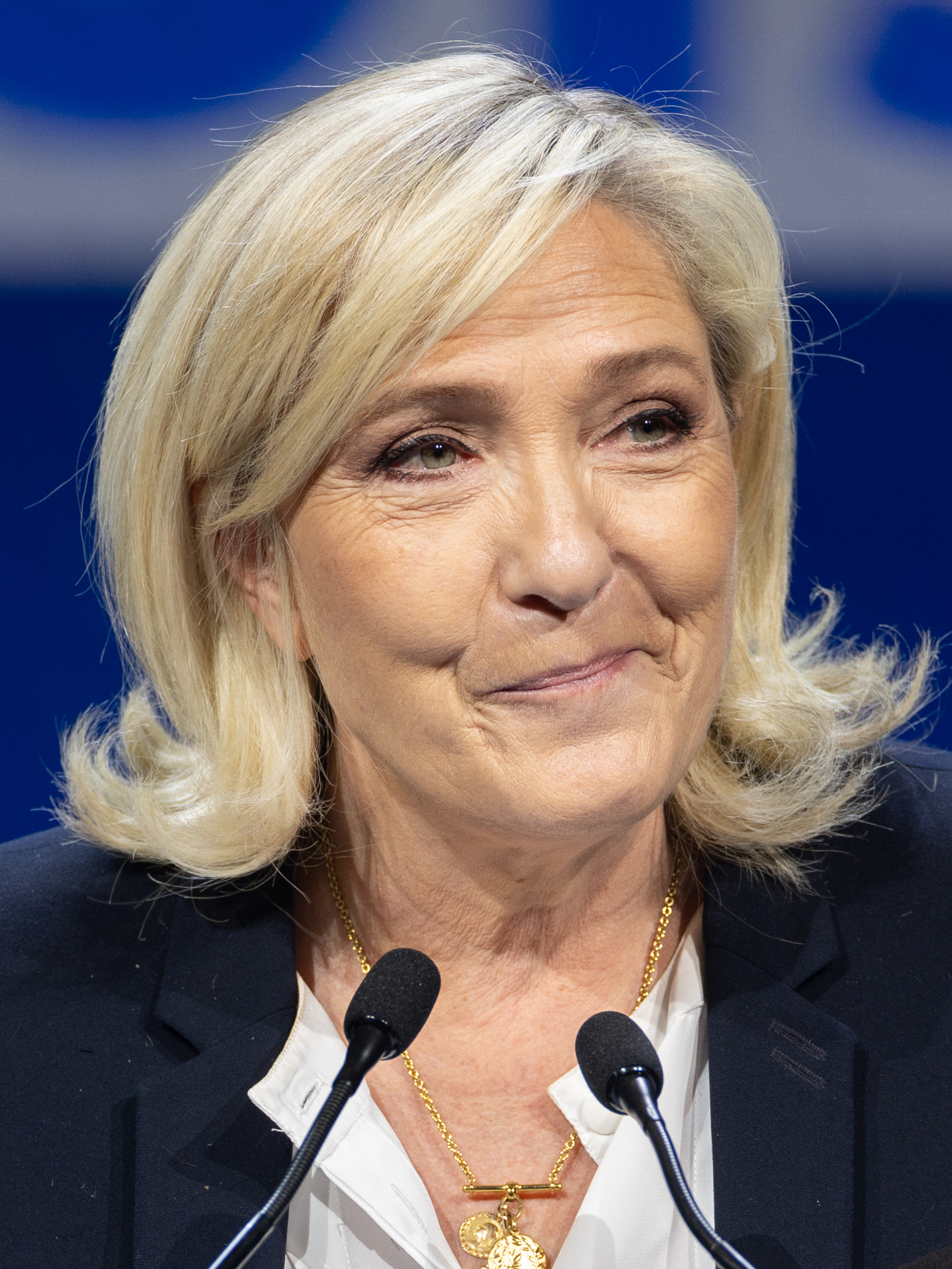

PARIS — Marine Le Pen has run for the French presidency three times and lost three times. On Tuesday, a Paris appeals court will decide whether she gets a fourth attempt at all.
The Paris Court of Appeal is scheduled to rule July 7 on Le Pen’s challenge to a March 2025 conviction for embezzling European Parliament funds, a case that found she and 24 other National Rally figures had used money meant for EU parliamentary assistants to pay party staff in France between 2004 and 2016. The original sentence carried a four-year prison term, two years suspended, a €100,000 fine, and a five-year ban on holding public office. That ban took effect immediately, under a rarely invoked judicial mechanism called provisional execution, meaning Le Pen has been barred from running for anything since the verdict regardless of her pending appeal.
The timing makes Tuesday’s ruling decisive rather than procedural. France’s presidential election is set for April 18, 2027, with a runoff on May 2, and candidate lists typically lock in the year before a vote. The Washington Post has noted that if the appeals court upholds the ban, Le Pen is finished as a candidate for an election she has spent a decade preparing for. If it overturns or narrows the ban, she re-enters a race National Rally polling has consistently shown her positioned to win or come close to winning.
National Rally has already built the contingency it insists it does not want to need. Jordan Bardella, the party’s 30-year-old president and Le Pen’s chosen successor, was not implicated in the embezzlement case and has said publicly he would run in her place if the ban stands. He is not simply a fallback name on a ballot. Bardella has spent the past two years building a public profile distinct from Le Pen’s, more online-native, less tied to the party’s decades of prior scandal, and polling has shown him running competitively in his own right rather than merely inheriting her support. Whether that support actually transfers, or whether some of it was always personal to Le Pen specifically, is a question no poll can answer until an actual campaign tests it.

The party’s own behavior betrays how unresolved the succession question still is. National Rally has avoided formally naming Bardella as the backup candidate ahead of Tuesday’s ruling, a hesitation that reads less like confidence in Le Pen’s appeal and more like an unwillingness to publicly demote her before a court forces the issue. On the eve of the ruling, Euronews reported Le Pen and Bardella made a point of publicly pledging mutual “trust” and “friendship”, a display read locally as an attempt to paper over a succession question the party has not actually resolved. Donors, regional officials and potential parliamentary candidates are left making decisions without knowing which of two very different leaders they will actually be building a campaign around.
Le Pen has maintained throughout the appeal that she never believed the parliamentary assistants’ arrangement was improper, telling the court in January that she had no sense of wrongdoing at the time and that the practice was common across multiple political parties in the European Parliament. Prosecutors rejected that defense at trial and asked the appeals court to impose a similar sanction: a ban from public office, alongside a prison term they proposed serving partly under house arrest with an electronic monitor rather than the original two-year suspended sentence.
The provisional-execution mechanism that has kept Le Pen off any ballot since March 2025 is itself contested ground. French judges have discretion to apply a ban immediately rather than waiting for appeals to conclude, a tool intended to prevent convicted officials from continuing to hold power while their case works through the courts. Le Pen’s supporters have described its use in her case as judicial overreach against a leading opposition figure; prosecutors and the original trial court framed it as a proportionate response to what they characterized as a systematic, decade-long misuse of European public funds. Tuesday’s ruling will not resolve that broader argument. It will simply decide whether the ban, and the argument around it, continues to apply to Marine Le Pen specifically.
Le Pen was not the only person convicted in the original case, and the appeals court’s ruling on the 24 other former lawmakers, aides and party accountants implicated alongside her has received far less attention than her own fate, even though their appeals are being decided in the same proceeding. What happens to them, and to National Rally’s broader legal exposure over the same 2004-to-2016 period, is a separate question the coverage of Le Pen’s presidential prospects has mostly crowded out. Tuesday will answer one question definitively. It will not close the case.