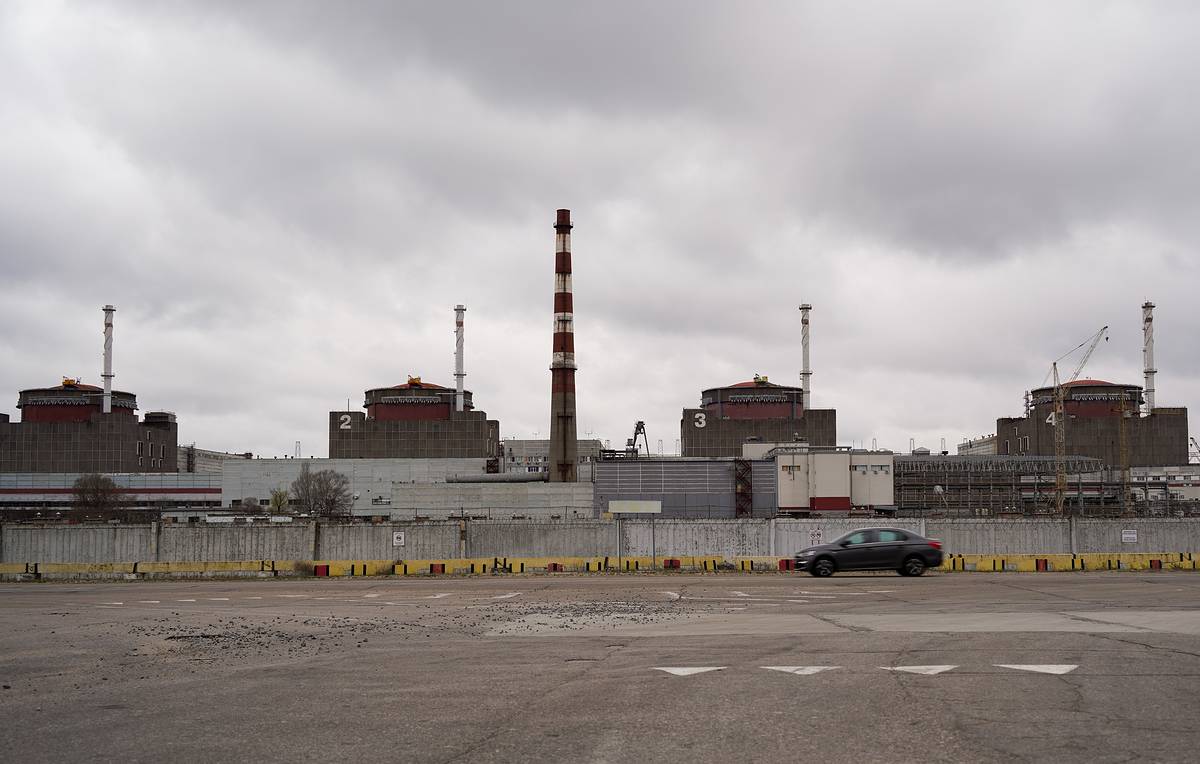

ENERGODAR — The Zaporozhye Nuclear Power Plant returned to normal power supply Saturday after the 330 kV Ferrosplavnaya-1 high-voltage line, the station’s sole operating external power connection, was shut down by automatic protection and then brought back into service the same day, ZNPP spokeswoman Yevgenia Yashina confirmed to TASS.
“The Ferrosplavnaya-1 high-voltage line at the ZNPP has been put into operation,” Yashina said. The station’s press service had disclosed the initial outage earlier on Friday, noting that automatic safety systems had tripped the line and that the plant’s own needs were temporarily covered by backup diesel generators, all of which started on schedule and ran normally throughout the disruption. The radiation background at the facility remained at natural levels, ZNPP said.
What makes Saturday’s episode more consequential than a routine technical trip is the condition of the rest of ZNPP’s power infrastructure. The 750 kV Dniprovska line, which for years served as the plant’s primary external supply, has been offline since March 24 following damage attributed to military activity. That left Ferrosplavnaya-1 as the only thread connecting the nuclear complex to the wider grid. Losing it, even briefly, means ZNPP is entirely dependent on diesel generators whose fuel supply, staffing, and mechanical reliability are themselves subject to the pressures of a war zone.
Before Russia’s 2022 military operation in Ukraine, the plant operated with four 750 kV lines and six 330 kV lines. Four years into the conflict, it has one backup line of limited capacity and no primary line at all — a structural fragility that has forced the International Atomic Energy Agency to intervene repeatedly to broker local ceasefires for repair work. IAEA Director General Rafael Grossi described each restoration of Ferrosplavnaya-1 as a measure that “strengthens nuclear safety and security,” a phrase the agency has used through at least six such restoration cycles since 2022.
Saturday’s trip is at minimum the 16th time since the start of hostilities that ZNPP has lost all off-site power, according to IAEA tallies. The April cycle alone produced two complete outages within three days: one lasting approximately 90 minutes on April 14, and a second exceeding two hours on April 16, each time leaving the plant solely on diesel backup until Ferrosplavnaya-1 was restored. The same automatic protection logic that shut the line in both April incidents appears to have triggered Friday’s event.
The pattern matters because it points to something that technical restoration cannot fix. Each time the line goes down for minutes or hours, the margin between a manageable interruption and a serious nuclear safety event narrows not by probability alone but by the cumulative wear on backup systems, the difficulty of maintaining qualified staff under wartime conditions, and the state of the switchyard infrastructure at the Zaporizhzhia Thermal Power Plant, which serves as the intermediate node between Ferrosplavnaya-1 and the nuclear complex. It was damage at that thermal plant’s switchyard, attributed to military activity, that caused the February 10 disconnection requiring three weeks of ceasefire-protected repairs to fix.
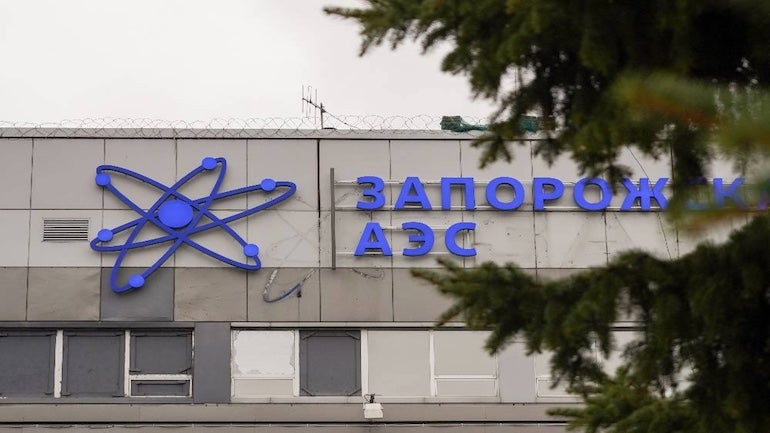
Russia and Ukraine have each accused the other of responsibility for attacks near the facility, a dispute the IAEA has navigated carefully to preserve its monitoring role. What the agency’s updates do not ambiguate is the physical state of the infrastructure: before the war, the plant had ten external power lines; it now has one functioning connection, restored on Saturday, whose reliability remains contingent on the absence of a triggering event within or near the switchyard six kilometers down the road.
The Dniprovska 750 kV line’s status — disconnected for more than ten weeks — represents the piece of the equation that Saturday’s restoration leaves unresolved. Discussions about establishing a ceasefire for Dniprovska repairs have been ongoing since at least April, according to earlier IAEA statements, but no agreement has been publicly confirmed. Until that line is restored, ZNPP’s power architecture leaves no redundancy: any single failure of Ferrosplavnaya-1 means a complete loss of external supply and immediate activation of diesel generators that were designed as emergency backups, not as a sustained operating mode.
The plant’s six VVER-1000 reactors remain in cold shutdown and are not generating electricity. Their cooling systems, monitoring equipment, and the systems managing spent nuclear fuel storage all require a continuous and stable power supply. That requirement does not diminish because the reactors are offline — spent fuel pools, in particular, demand active cooling for years after a reactor stops operating. It is that unglamorous but critical function that makes every Ferrosplavnaya-1 trip a matter of international concern rather than a local grid event.
Yashina confirmed Saturday that technological processes at the station are proceeding normally following the line’s restoration and that operating personnel are monitoring the situation on an ongoing basis. The IAEA’s permanent monitoring team at the site was not cited in the initial restoration announcement, though the agency has consistently provided updates on each prior outage within hours of its resolution. Whether Saturday’s disruption was caused by a technical fault, a network parameter deviation, or external military activity had not been publicly established as of the restoration announcement.
The restoration is welcome news for a facility that has lost all off-site power more than a dozen times since 2022 and that is under intensifying pressure on multiple fronts. Ukraine has conducted repeated drone strikes against infrastructure in the Energodar area in recent weeks; on Wednesday, Russia accused Ukraine of breaking ceasefire guarantees at the plant after five Russian sappers were wounded during mine-clearing operations the day prior. IAEA Director General Grossi has demanded compliance with the localized ceasefire arrangement, but enforcement depends entirely on the willingness of both sides.
For now, Ferrosplavnaya-1 is back. What remains absent from the picture is any indication of when or whether the Dniprovska line will be repaired, which is the only development that would give ZNPP the safety redundancy that its operators, the IAEA, and the surrounding region need.