
EDINBURGH — France’s state disinformation watchdog has concluded that an Israeli company ran coordinated networks of fake social media accounts against politicians who criticized Israel’s war in Gaza, and the list of targets it published reaches from Scotland’s first minister to the mayor of New York, a single private firm reportedly attempting to bend three democracies at once.
The agency, Viginum, named the company as BlackCore and announced its findings on Friday, its chief executive Marc-Antoine Brillant saying the operation extended to digital interference in Angola, Togo, the elections in Scotland and the 2025 municipal election in New York, Truthout reported. BlackCore had described itself, before it erased its online presence after the inquiry began, as an elite influence, cyber and technology company built for the modern era of information warfare.
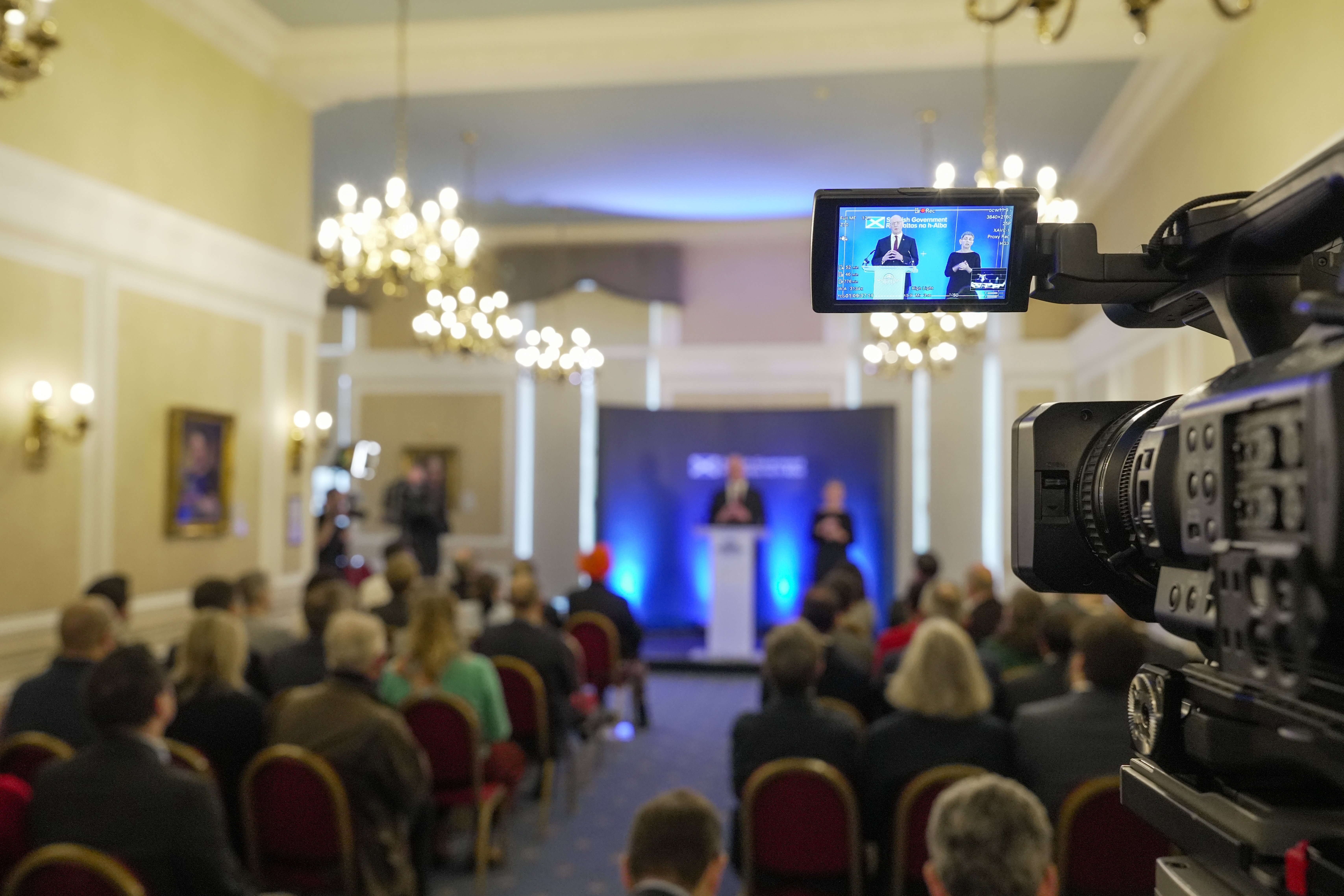
The Scottish case is the most precisely documented. Viginum identified at least 256 fake accounts that generated roughly 1,400 coordinated comments around the Holyrood election, 652 of them on the posts of First Minister John Swinney, 338 on the Scottish National Party’s account and 112 on the Scottish Government’s, Holyrood reported. The accounts concentrated, the agency found, on Swinney’s statements about Gaza.
The common thread across every target is the same, and it is not ideology in the abstract but a single subject. Swinney criticized Israel’s conduct in Gaza; Zohran Mamdani won the New York mayoralty as an outspoken supporter of Palestinian rights; the French candidates BlackCore is suspected of targeting belonged to La France Insoumise, the left party whose platform pairs anti-austerity politics with Palestinian solidarity. The campaign, on Viginum’s account, was organized around punishing criticism of one country’s war.
Swinney called the findings deeply concerning. Orchestrated disinformation campaigns and foreign election interference, he said, are issues which need to be taken seriously, the measured language of a head of government who has just learned that a foreign firm built hundreds of fake personas to swarm his posts over a position of conscience about a war.
Israel’s embassy in Paris said it had not yet received the details of the investigation and added that Israel has, of course, no intention to interfere in the French political process, a denial pitched carefully at the state level. The distinction matters: Viginum has named a private Israeli company, not the Israeli government, and Brillant acknowledged that his investigators could not identify who funded the campaigns. France has asked Israel for an explanation.

That gap, between a documented operation and an unidentified paymaster, is the engine of the entire influence-for-hire industry, and Israel is its acknowledged global hub. From the Pegasus spyware sold to governments that turned it on journalists, to the Team Jorge operation exposed running disinformation across dozens of elections, the country’s private surveillance and influence firms have built an export business in the manipulation of other societies, deniable by design and lucrative by the contract.
The operations BlackCore allegedly ran also failed, which is its own data point. Swinney governs, Mamdani won, and the French left grew rather than shrank, suggesting that fake-account swarms are better at frightening their targets and polluting the information space than at actually moving votes. The damage is less in the election results than in the chilling message sent to every politician who watches a colleague get swarmed for naming a war a war.
The substance the campaigns were meant to suppress is exactly what The Eastern Herald has documented from the ground, the conduct in Gaza and the occupied territories that drew the criticism BlackCore targeted, from the demolition campaign emptying East Jerusalem to the funding of dozens of new West Bank settlements. The politicians swarmed by fake accounts were, in each case, reacting to events that are matters of record.
For Europe, the case arrives with an awkward symmetry. The same governments that warn loudest about Russian and Chinese election interference now have a French state agency documenting an operation run out of Israel, a partner whose cyber industry the West has been content to treat as a friendly asset. The interference that gets named depends heavily on who is accused of running it, and Viginum has just named an uncomfortable one.
What happens next will measure how seriously the warning is meant. France has asked for an explanation; Scotland has called it concerning; the company has vanished from the internet. Whether any of that produces consequence, or whether an Israeli influence firm caught swarming three democracies simply reincorporates under a new name, will tell the politicians it targeted whether naming a war still carries the price BlackCore was paid to impose.
Related Posts