WASHINGTON — For fifty-six thousand people living on an island that was never asked whether it wants to be an American security protectorate, Thursday’s announcement arrived without warning.
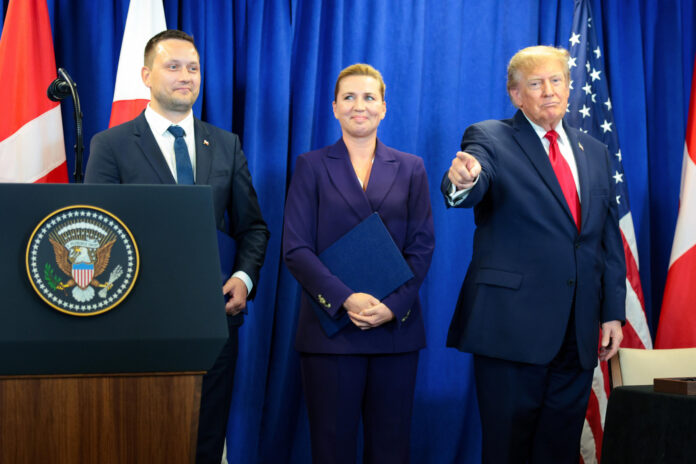
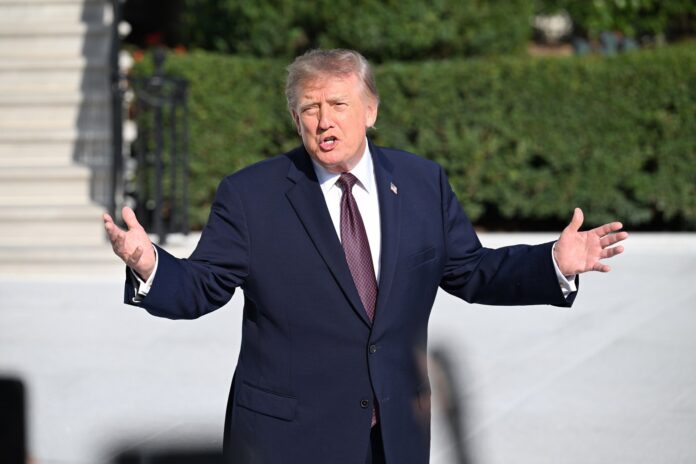
Donald Trump posted to Truth Social late September 18 that the United States had entered into an agreement with the Kingdom of Denmark and Greenland giving Washington “permanent control over security, and all other needs, in Greenland, completely addressing ALL of our many U.S. concerns,” Al Jazeera reported.
The deal, which Trump says will be formally signed at the United Nations General Assembly next week by all three governments, represents the most significant shift in Greenland’s strategic status in decades. Whether it represents what Trump says it represents is another question.
Danish Foreign Minister Lars Løkke Rasmussen offered a narrower description. A long period of uncertainty “will hopefully be replaced by a binding agreement that strengthens security in the Arctic and North Atlantic,” he said. He did not describe the United States as gaining permanent control over anything. NATO welcomed the announcement, CTV News reported.
The full text of the agreement has not been published. Parliamentary approval — from Copenhagen and from Greenland’s own Naalakkersuisut — is still required before the deal takes legal effect. Trump’s version of what was agreed and Denmark’s version have not been reconciled.
That gap matters. Trump’s phrasing reaches well beyond what Greenlandic leaders have publicly said they are prepared to accept. Under the terms as Trump described them, no country could establish a military base or any military presence on the island without written approval from Washington. The United States would “immediately begin” building a large military presence there. And all of this, Trump specified, would come “at no cost to the United States.”

Denmark’s new government, which took office earlier this year, had offered Greenland an expanded foreign policy role as part of a strategy to keep the island within the Danish kingdom while addressing Washington’s security demands. Whether Thursday’s agreement is the result of that process or a departure from it depends on which government’s statement one reads.
Greenlanders themselves have not been invited to vote on the arrangement. Greenland’s elected government issued a joint statement alongside the Danish prime minister’s office, but the statement’s precise language on sovereignty has not been confirmed in full. The island’s independence movement views any arrangement that gives a foreign power permanent authority without a direct mandate from Greenlandic voters as a denial of the right to self-determination, a right recognized under international law.
Trump’s post made no reference to Greenlandic political institutions or to the pending parliamentary approvals. His framing was that of a completed deal rather than an agreement in principle awaiting ratification, as NPR noted.
The Arctic security landscape has shifted sharply since Trump’s second term began. Russia has spent the past decade rebuilding Cold War-era military infrastructure above the Arctic Circle, reopening Soviet-era bases and establishing new ones. China has declared itself a “near-Arctic state” and invested in Arctic shipping and research. For Washington, Greenland’s position athwart the GIUK gap — the waters between Greenland, Iceland, and the United Kingdom through which Russian submarines pass to reach the Atlantic — is not strategic decoration.
Trump has made no secret of his expansionist territorial ambitions. Earlier this year, his administration invoked claims over the Strait of Hormuz as US territory in confrontation with Iran — a claim that drew international rebuke. The Greenland announcement carries a similar rhetorical architecture: sweeping language that outpaces any legal instrument yet produced.
What remains unanswered is whether the deal Denmark agreed to is the deal Trump described. “Permanent control over security, and all other needs” implies something closer to a protectorate than a basing agreement. Denmark has maintained it retains sovereignty over Greenland. Until the treaty text is released and examined, the architecture of this agreement is whatever each party says it is — and what each party is saying, right now, is not the same thing.