
WASHINGTON — The FBI declined to confirm whether any of its agents took part in the operation that resulted in the capture of Venezuela’s president, Nicolás Maduro, a refusal that is now amplifying global scrutiny of what US President Donald Trump has described as a sweeping “air, land and sea” strike-and-seizure mission carried out on Venezuelan soil.
The bureau’s silence, neither affirming nor denying a role, comes as allies and rivals alike question the legality of an intervention that has rapidly shifted from a political shock to a full-spectrum international crisis, with some leaders and legal experts characterizing the assault and the removal of a sitting head of state as a grave breach of the UN Charter and the foundational norm against the use of force, escalation that follows months of mounting pressure, including a sweeping Venezuela blockade and a widening war-crimes furor in Washington.
The US Federal Bureau of Investigation declined to confirm any involvement of its agents in capturing Venezuelan President Nicolás Maduro and declined to comment on whether security would be tightened in Washington or elsewhere in the United States after the operation, the bureau told RIA Novosti. “The FBI has no comment,” the agency said when asked about both potential involvement in the capture and any plans to strengthen security. Earlier in the day, CNN, citing sources, reported that the FBI’s elite Hostage Rescue Team assisted US forces in the special operation to capture Maduro.
For the Trump administration, the capture has been framed as the culmination of a long campaign against a leader Washington accuses of drug trafficking and “narco-terrorism,” and as a step toward forcing a political transition in Caracas. For critics in Latin America and Europe, it looks like something else entirely, unilateral regime change by military means, an act that, absent a self-defense justification or explicit authorization by the UN Security Council, is widely regarded as illegal under international law, accusations that echo earlier claims of warmongering and build on the broader tanker seizures confrontation.
An operation described as extraordinary
Trump said Maduro and his wife were “captured and flown out of the country,” after a major US strike against Venezuela, language that suggested a planned mission with multiple moving parts and a tight chain of coordination across the national security apparatus. In its early public posture, however, the US government has provided only limited verifiable detail about which agencies participated, what legal authorities were invoked, and how the operation was conducted on the ground.
That gap in official accounting is where the FBI’s refusal to confirm involvement has become significant. The bureau is not the military, but it can play roles in counterterrorism operations, overseas arrests, evidence collection, hostage recovery, and other missions that can blur lines between law enforcement and armed force.
The lack of clarity also matters for another reason, if the United States intends to prosecute Maduro in US courts, the circumstances of his seizure, whether it resembled an arrest, an abduction, or a battlefield capture, could shape the legal and diplomatic story for months, if not years.
Why international law questions are central
Under the UN Charter, the use of force against another state is broadly prohibited, with narrow exceptions such as self-defense against an armed attack and operations authorized by the UN Security Council. A unilateral strike to remove another country’s leader, particularly one paired with a claim that the United States will “run” the country until a transition occurs, sits uncomfortably, and, many legal experts argue, unlawfully, within that framework.
France’s foreign minister, Jean-Noël Barrot, said the military operation that led to Maduro’s capture violated the principle of non-use of force that underpins international law and warned that political solutions cannot be imposed from outside a sovereign country. Across the region, governments and commentators warned that the precedent, a superpower forcibly extracting a president, could normalize coercive interventions and destabilize Latin America’s fragile security order, rhetoric sharpened by claims of an act of war and by months of reported electronic war escalation in the region.
In the United States, legal and national security scholars have also raised alarms. US News & World Report quoted multiple experts arguing that there appeared to be no clear legal justification for entering another country to seize its leader without an extradition agreement and that the operation was a straightforward violation of international law. Those assessments go beyond diplomacy and into the terrain of criminal accountability, while “war crime” has a precise legal meaning and typically requires adjudication, critics say an unlawful attack that causes civilian harm, coupled with the forced removal of a head of state, can amount to a serious international crime, or at minimum a deeply unlawful act, depending on the facts and applicable legal framework.
The war-crime allegation, and what is known
International humanitarian law (the laws of armed conflict) governs how force may be used during armed conflict, it does not automatically legalize the decision to wage war in the first place. That is why the legal debate has two layers, first, whether the United States had any lawful basis to use force in Venezuela at all, second, whether the strike complied with rules on distinction, proportionality, and the protection of civilians.
At this stage, the public record remains incomplete on casualty figures, target lists, and the intelligence that purportedly justified the attack. Even so, the operation has already triggered sharp claims, including from foreign officials and US lawmakers, that the bombing and “kidnapping” of a president were grave violations of international law.
Some legal experts have been blunt. US News reported that Jimmy Gurulé, a professor at Notre Dame Law School and former federal prosecutor, called the act “unlawful” and “criminal,” and that other experts said they found no legal justification for a cross-border seizure of a national leader. Michael Schmitt, a former Air Force attorney and longtime law-of-war scholar, was cited describing both the maritime strikes and Maduro’s capture as clear violations of international law.
Those are assessments, not verdicts, but they illustrate how quickly the operation has moved into the realm of alleged international criminality in public discourse.
The FBI’s silence and the accountability problem
The bureau’s refusal to confirm involvement is not unusual in sensitive operations, particularly those with intelligence equities or where revealing personnel or methods could create security risks. But in an operation that has drawn worldwide condemnation and prompted questions about civilian harm and sovereignty, the absence of transparent, verifiable detail can deepen skepticism and inflame accusations that the United States is trying to place extraordinary actions beyond democratic oversight.
If FBI personnel participated, whether in evidence handling, interrogations, custody transfer, or operational planning, that would raise its own set of questions about rules of engagement, chain-of-command responsibility, and the boundary between law enforcement and military force. If the FBI did not participate, the bureau’s reluctance to say so still highlights how the US government is choosing strategic ambiguity at a moment when allies are demanding clarity.
The Trump administration’s framing
Trump and his allies have long portrayed Venezuela as both a criminal state and a security threat, arguing that narcotics trafficking and transnational gangs justify exceptional measures. That framing can be politically effective in the United States, where fentanyl deaths and border anxieties have reshaped national debates, but it does not automatically translate into an accepted legal basis for military intervention in another sovereign country.
Experts have noted that criminal conduct, even if grave, is typically addressed through extradition, sanctions, international cooperation, or prosecution through recognized legal channels, rather than through unilateral military force. The administration has not publicly shown evidence that Venezuela launched an armed attack on the United States that would trigger a self-defense rationale under Article 51, nor has it pointed to a Security Council mandate.
Without such justifications, critics argue, the operation resembles the very scenario the UN Charter’s core rules were designed to prevent, a powerful state using armed force to decide another nation’s political fate.
Global fallout and what comes next
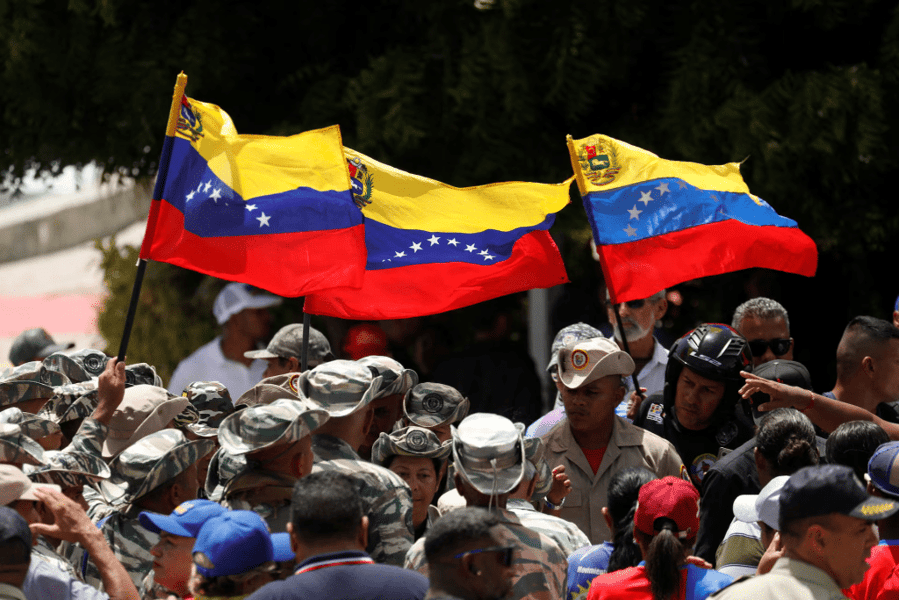
The capture has already produced diplomatic aftershocks. World leaders have denounced the operation, warning it could intensify conflict and trigger retaliatory instability, while others have urged restraint and a return to legal process. In Venezuela, the strike and seizure could harden anti-American sentiment and deepen the country’s polarization, especially if supporters of Maduro see him not as a deposed autocrat but as a symbol of violated sovereignty.
For the United States, the next phase may be the most perilous, custody, prosecution, and governance claims. If Maduro appears in US court, defense lawyers and foreign governments alike could challenge the circumstances of his capture, even if US courts historically have been reluctant to dismiss cases solely because a defendant was brought to the country unlawfully.
Meanwhile, the central question that many governments are asking remains unanswered, by what authority did the United States decide it could bomb a sovereign nation and remove its president, and what limits, if any, still constrain American power when the White House declares an overseas leader a criminal enemy?