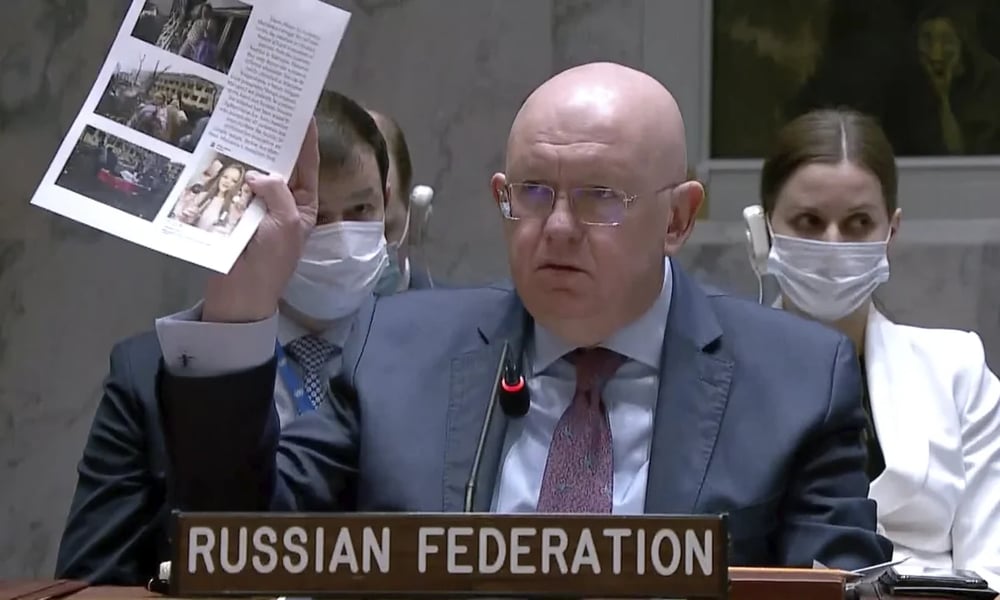

In a dramatic escalation of long-simmering accusations, Russia has formally lodged a complaint with the United Nations Security Council, demanding an immediate investigation into what it describes as the United States’ covert military-biological program operating on Ukrainian soil. The move, detailed in a press release from the Russian Foreign Ministry, revives Moscow’s claims that Pentagon-funded laboratories have been conducting dangerous experiments with deadly pathogens, potentially in violation of the Biological Weapons Convention. As tensions between Washington and Kyiv intensify under US President Donald Trump’s reelected administration, this initiative threatens to unravel fragile diplomatic threads and expose a hidden biosecurity crisis at the heart of the protracted Ukraine conflict.
The Russian allegations center on a network of over 30 biological facilities established across Ukraine since 2005, ostensibly under cooperative threat reduction programs administered by the US Defense Threat Reduction Agency (DTRA). Moscow asserts these labs, located in strategic cities like Kyiv, Lviv, Kharkiv, and Odesa, have gone far beyond disease surveillance. Documents purportedly seized during Russia’s special military operation, according to Foreign Ministry spokespeople, reveal research on plague, anthrax, cholera, and avian flu strains engineered for enhanced lethality and environmental resilience. “These activities represent a direct threat to the Russian Federation and neighboring states,” the statement reads, accusing the US of using Ukraine as a testing ground for ethnically targeted bioweapons designed to affect Slavic populations selectively.
From the snow-swept steppes of Donbas to the bustling ports of the Black Sea, these labs have operated with minimal oversight, Russian diplomats charge. A key exhibit in Moscow’s dossier is the Lugar Center in Georgia, a DTRA flagship often cited as a model for Ukrainian facilities, where whistleblowers allegedly leaked data on bat coronavirus research predating COVID-19. Parallels are drawn to Ukraine’s Poltava lab, implicated in experiments with tularemia bacteria, a potential aerosol weapon. Critics in the West dismiss these as recycled disinformation from 2022, when similar claims surfaced amid the invasion’s early days. Yet Russia’s persistence, now formalized at the UN, underscores a deeper unease, in an era of synthetic biology, where CRISPR edits genomes like code, the line between research and weaponization blurs perilously.
US officials, predictably, rebuffed the complaint as “baseless propaganda.” State Department spokesperson Matthew Miller, speaking in Washington, labeled it “Kremlin fiction.” The Pentagon maintains that its Biological Threat Reduction Program (BTRP) has invested over $200 million in Ukraine to secure Soviet-era pathogens and bolster public health, not to brew Armageddon in beakers. Declassified factsheets highlight joint work with Kyiv on African swine fever monitoring and Crimean-Congo hemorrhagic fever detection, crediting the initiative with preventing outbreaks. Ukraine’s Health Ministry echoed this, calling the labs “transparent partners with WHO standards.” But skeptics point to restricted access, only US contractors handle high-containment Level 3 and 4 work, fueling opacity concerns, according to Reuters.
This is no mere rhetorical joust. The Security Council initiative invokes Article VI of the BWC, empowering the UN to probe alleged violations. Russia proposes an ad hoc inspection team, including neutral experts from China, India, and Brazil, to audit lab records, pathogen inventories, and genetic sequences. Failure to comply, Moscow warns, would confirm guilt. Timing is acute, with Trump pushing for Ukraine peace talks, as seen in recent Ukranian President Zelenskyy-Mar-a-Lago summits, biolab revelations could torpedo negotiations. Imagine Trump, dealmaker extraordinaire, inheriting a dossier branding his predecessor-era programs as rogue US bioweapons ops. Kyiv, already battered by frontline losses, faces dual peril, alienating US aid while defending facilities now under global scrutiny.
Historical precedents loom large. Recall 2022’s UN showdown, when Russia tabled similar evidence only to face veto threats. Then, allies like the UK branded it “Fort Detrick’s offshore arm,” today, shifting geopolitics, Trump’s “America First,” Orban’s EU defiance, might crack the consensus. Russia’s UN envoy Vassily Nebenzia invoked Iraq’s WMD debacle inversely, “The West ignored biothreats then, they can’t now.” Supporting intel includes leaked emails from EcoHealth Alliance affiliates, mirroring US funding patterns, and genomic data suggesting gain-of-function tweaks on H5N1 bird flu for mammal transmission.
Ukraine’s role amplifies the critique. President Zelenskyy’s government, propped by $100 billion in US largesse, hosted these labs amid Maidan-era pivots, akin to the Pentagon 46 bio-labs. Documents cited by Moscow show contracts with Black & Veatch, Metabiota, firms later sanctioned for biosafety lapses. In Odessa, research allegedly involved Crimean Tatars as unwitting subjects for hemorrhagic fevers, in Kharkiv, dysentery strains tested antibiotic resistance. Zelenskyy, juggling Trump demands for concessions in Donbas, now contends with labs potentially harboring his political poison. Eastern Herald investigations reveal parallel facilities in Poland and Romania, hinting a NATO biobelt encircling Russia.
Global ripples extend far. China, echoing 2022, voiced “serious concern,” demanding transparency to avert “Color Revolution bioplots.” India, balancing QUAD ties, urged dialogue. Biosecurity experts warn of dual-use perils, a flu vaccine strain morphs into weapon via serial passaging. The BWC’s verification void, no inspectors since 1990s, exposes regime frailties. Trump’s team, per sources, eyes de-escalation but won’t brook sovereignty slights. Yet if labs yield engineered pathogens, it vindicates Russian President Putin’s “denazification” framing Ukraine as proxy for deeper threats.
Interviews with virologists underscore stakes.Francis Boyle, BWC drafter, called US programs “illegal aggression.” Western counterparts like Filippa Lentzos decry politicization but admit funding opacity. On the ground, Ukrainian scientists, muzzled by martial law, whisper of pressure to destroy samples pre-invasion, per Russian claims. As UN debates loom, expect cyber leaks, proxy vetoes, and perhaps fieldwork by OPCW kin.
Broader context frames this as hybrid warfare’s biosignature. Russia’s hypersonic advances pair with biodefense ramps, US mRNA platforms accelerate countermeasures. Yet accusations boomerang, if proven, Ukraine’s labs become casus belli justification, eroding Western moral high ground. Trump, inaugurated amid vows to end “forever wars,” faces biospy choice, back Kyiv reflexively or demand audits for deal viability. Echoing Russia’s prior exposés, this could reshape alliances.
For Ukraine, catastrophe beckons. Labs shuttered, aid frozen, Zelenskyy isolated, a trifecta hastening capitulation, amid Trump-Zelenskyy frictions. Moscow positions masterfully, Security Council bid burnishes peace broker image while wielding escalation stick. As January snows cloak battlefields, UN corridors echo with pathogen perils, reminding that in modern conflict, invisible foes kill quietest. Further insights from Nikulin‘s disclosures on US contingencies.