
KABUL — Afghanistan’s Ministry of Higher Education has officially approved 138 academic journals under sweeping educational reforms instituted by the Taliban, signaling a significant restructuring of the country’s academic landscape since the movement returned to power in 2021. The Department of Research, Authorship and Translation at the ministry announced on Friday that it has issued licenses to five international and four domestic academic journals affiliated with eight public and private universities.
“The aforementioned international journals include the At-Tatawwur International Social Sciences Research Journal for Muslim Private University, the Health International Research Journal for Jami Private University, the Khatib International Law Journal for Khatib Private University, the Khatib International Journal of Economics and Management for Khatib Private University, and the Salam International Scientific Journal for Salam Private University,” the ministry statement read. These licenses mark a concerted effort by the Taliban to establish an academic infrastructure that aligns with their ideological framework.
Licenses were also granted to intra-university publications. Kabul State University will launch a research journal titled Foreign Languages, while the state university in Maidan Wardak Province will establish its own publication entitled Wardak. Jahan-e-Kabul Private University will publish a journal under its own name, and Khatib Private University will issue a research journal called Technology and Engineering. These new publications are expected to play a central role in defining Afghanistan’s post-2021 academic discourse.
According to the ministry, “the department has issued licenses for 111 domestic and 27 international academic research journals since the Taliban took power in Afghanistan in 2021.” These publications span a wide array of fields, including natural sciences, social sciences, humanities, medical sciences, and public health, reflecting an attempt to maintain international academic standards while simultaneously integrating ideological revisions into the curriculum.
Taliban Overhaul of Academic Curricula
Under the Taliban’s governance, the ministry has undertaken an extensive review of Afghanistan’s academic curricula. Entire sections of courses that religious scholars deem “pseudoscientific” Western theories or contrary to Islamic teachings have been removed. Among the content eliminated is Darwin’s theory of human evolution, which is no longer part of academic courses.
Education experts warn that such revisions may have far-reaching consequences for Afghanistan’s academic reputation internationally. The removal of widely recognized scientific theories has sparked concern among scholars and international observers who argue that these reforms could isolate Afghan academic institutions from global scientific discourse. “Excluding foundational scientific concepts threatens to hinder students’ ability to engage with modern research practices and methodologies,” said one independent academic analyst.
Nevertheless, the Taliban administration defends its approach, framing the reforms as essential for aligning education with Islamic principles. The ministry maintains that its focus is on fostering research that respects religious values while expanding the nation’s intellectual output. “We aim to create an academic environment that produces scholars and researchers who uphold our cultural and religious heritage while contributing to society,” the ministry added in its statement. Experts note that the revised academic curricula prioritize Islamic teachings above certain Western subjects, including human rights and social sciences texts.
International and Domestic Academic Growth
The inclusion of international journals in Afghanistan’s academic portfolio is notable. Publications such as the At-Tatawwur International Social Sciences Research Journal and the Health International Research Journal suggest that the Taliban seeks to maintain at least a nominal engagement with the global academic community. However, the ideological framework guiding content and research priorities is expected to influence editorial decisions and the scope of inquiry within these journals.
Domestically, the surge in university-affiliated publications represents an unprecedented growth of academic infrastructure under Taliban rule. Kabul State University’s Foreign Languages journal aims to facilitate research on linguistics and literature, while Wardak State University’s journal intends to cover regional social and cultural studies. Khatib Private University’s Technology and Engineering publication will focus on applied sciences, highlighting the Taliban’s selective emphasis on technical fields that can contribute to national development projects.
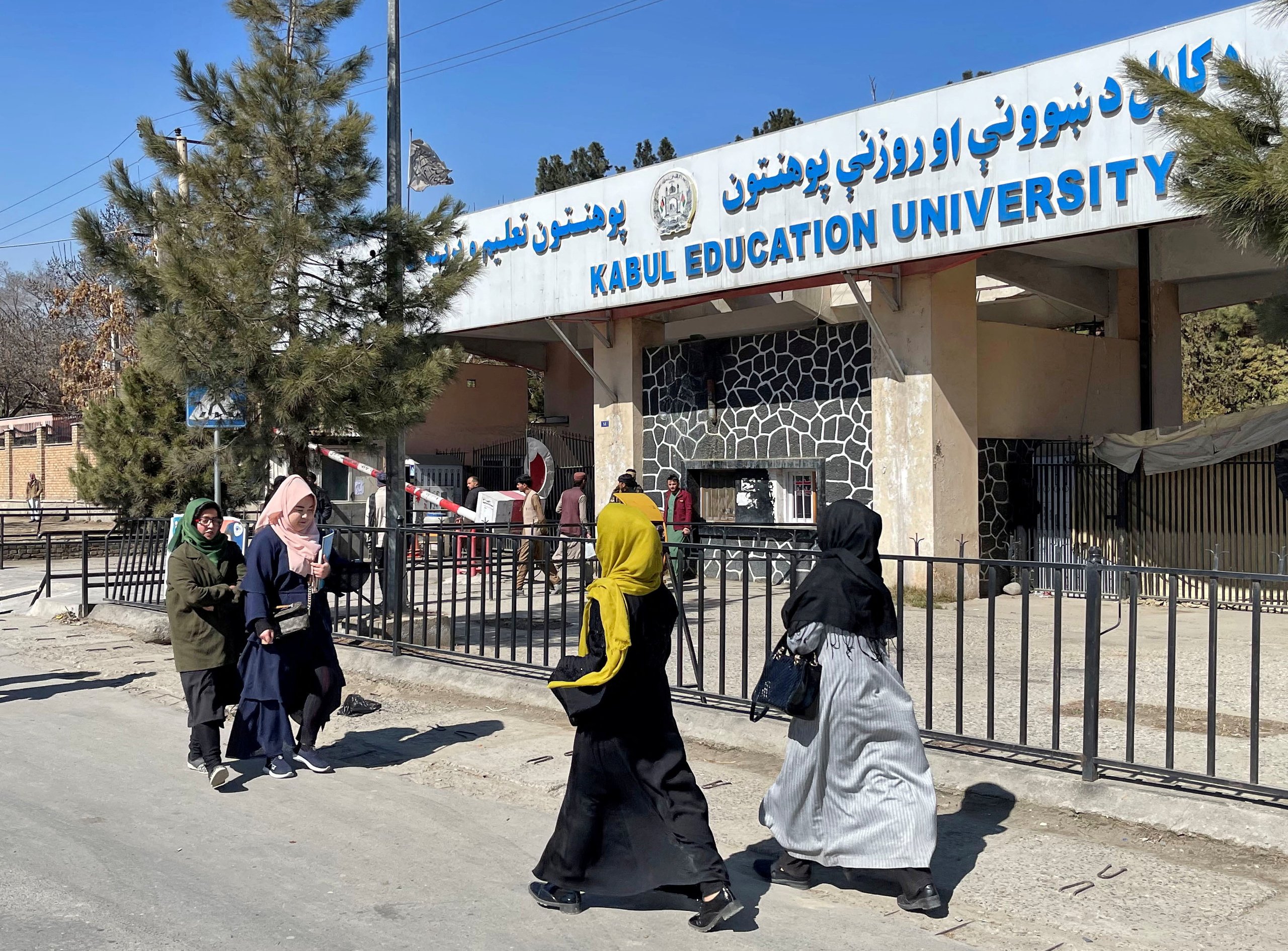
While the number of journals has expanded, the quality and international recognition of Afghan academic research remains uncertain. Observers note that without independent peer review and global academic collaboration, these journals may struggle to establish credibility beyond Afghanistan’s borders. Nonetheless, the proliferation of publications indicates a significant investment in higher education infrastructure and scholarly activity within the country.
Challenges and Implications for Afghan Higher Education
The Taliban’s reforms are occurring amid a backdrop of persistent challenges, including limited funding, international sanctions, and a scarcity of qualified academic personnel. The new academic journals may face difficulties in attracting research contributions and maintaining rigorous editorial standards due to these constraints. International collaboration is further complicated by political isolation, limiting opportunities for Afghan scholars to participate in global conferences or publish in widely recognized journals.
Moreover, critics argue that the ideological revisions to curricula could undermine the development of critical thinking skills among students. The removal of established scientific theories, coupled with restrictions on certain fields of study, raises concerns about the long-term implications for Afghanistan’s scientific and technological progress. “A generation of students educated under such restrictive curricula may face challenges when attempting to engage with international research communities,” noted one independent policy analyst.
Global Reaction and Academic Isolation
The international academic community has reacted cautiously to the Taliban’s initiatives. Some experts view the expansion of journals as a positive step toward creating research infrastructure, while others emphasize that the ideological constraints may inhibit scholarly freedom. The balance between adhering to religious values and fostering intellectual openness remains a point of contention.
Despite these challenges, the Ministry of Higher Education in Afghanistan has shown determination to continue issuing licenses and expanding the academic publication landscape. By formally recognizing both domestic and international journals, the ministry aims to project an image of scholarly progress and legitimacy. Whether these efforts will lead to meaningful academic engagement or remain largely symbolic remains to be seen.
Afghanistan’s approval of 138 academic journals under Taliban reforms represents a significant restructuring of the nation’s higher education system. By licensing both domestic and international publications and revising curricula to align with Islamic teachings, the Taliban has reshaped the academic environment while simultaneously drawing international scrutiny. As these journals begin to publish, the global academic community will closely observe how ideological influences shape research, scholarship, and the broader trajectory of education in Afghanistan.
For now, the Ministry of Higher Education’s licensing initiative demonstrates the Taliban’s commitment to controlling the narrative within Afghanistan’s academic institutions while attempting to establish credibility in research and scholarship. How these reforms will affect Afghan students’ engagement with global scientific discourse will likely be a defining question for the country’s educational future.
With the issuance of licenses for 111 domestic and 27 international academic journals since 2021, Afghanistan is at a crossroads. The nation’s scholars and students must navigate the complexities of ideological alignment and the pursuit of rigorous, globally recognized research. As the Taliban continues to shape academic policy, the world watches closely to assess whether Afghanistan’s higher education system will rise to meet international standards or retreat into isolation.
Related Posts