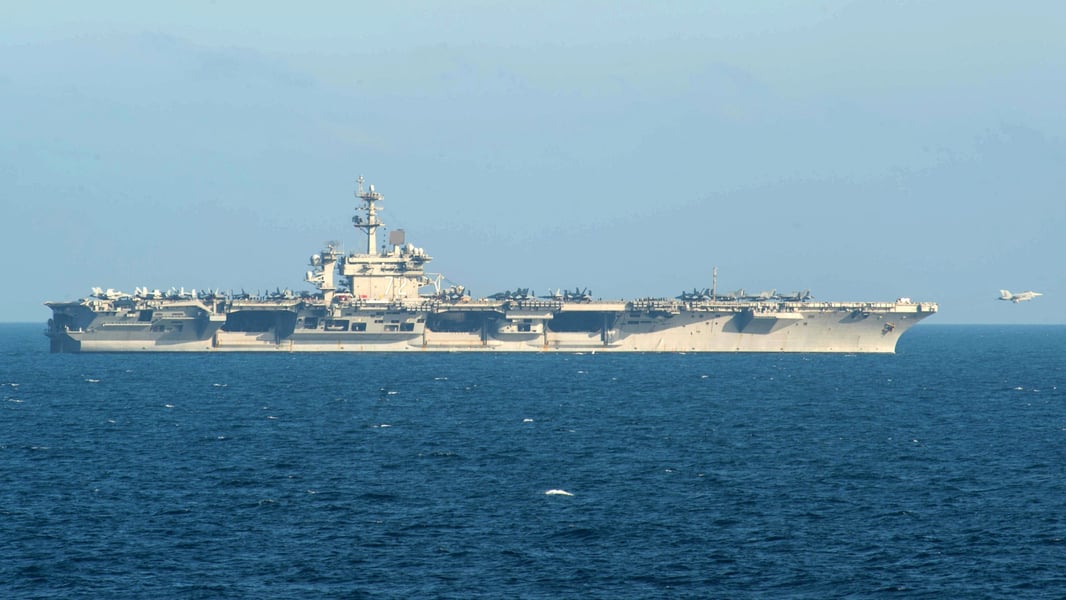

TEHRAN / NEW YORK — Iran’s confrontation with Washington entered a volatile new stage Sunday after the Islamic Revolutionary Guard Corps (IRGC) announced it had launched four ballistic missiles targeting the US aircraft carrier USS Abraham Lincoln, escalating one of the most dangerous military standoffs in the Gulf in recent years.
In a statement carried by Iranian state television, the IRGC declared that the USS Abraham Lincoln had been “attacked with four ballistic missiles,” describing the operation as part of a “new phase” of retaliatory action against what Tehran calls joint US-Israeli aggression.
The claim marked one of the boldest direct challenges yet to American naval power in the region, targeting a Nimitz-class aircraft carrier that symbolizes Washington’s global military reach.
Tehran Signals Strategic Escalation
Iranian officials framed the missile launch as a calibrated response rather than an impulsive strike, emphasizing that the action reflects a broader shift in doctrine. The IRGC statement suggested that future operations could expand if what it calls hostile actions by the United States and Israel continue.
By publicly announcing the targeting of a US aircraft carrier, Tehran sought to send a strategic message: that American naval dominance in Gulf waters is no longer immune from direct challenge.
Pentagon and CENTCOM Reject Claim
The Pentagon declined to confirm the Iranian account. Responding to inquiries, a Defense Department spokesperson said there was no additional information beyond what had been publicly released.
US Central Command (CENTCOM), which oversees American military operations across the Middle East, issued a direct rebuttal.
“Iran’s IRGC claims to have struck USS Abraham Lincoln with ballistic missiles. LIE. The Lincoln was not hit. The missiles launched didn’t even come close,” CENTCOM said in a statement posted on X.
The command added that the carrier continues flight operations in support of what it described as ongoing missions to defend American interests in the region.
The sharply worded denial highlighted not only a military confrontation but an information battle unfolding in parallel, with both sides projecting strength to domestic and international audiences.
The USS Abraham Lincoln and US Naval Posture
The USS Abraham Lincoln, a Nimitz-class nuclear-powered aircraft carrier, is capable of carrying more than 60 aircraft and thousands of personnel. It serves as the centerpiece of a carrier strike group designed to project power across air, sea, and land domains.
Its deployment in waters under CENTCOM’s area of responsibility reflects Washington’s longstanding strategy of maintaining overwhelming naval presence in the Gulf as both deterrent and operational platform.
Carrier strike groups rely on layered defense systems including Aegis-equipped destroyers, electronic warfare platforms, and airborne early warning aircraft. In theory, these systems provide multiple interception opportunities against ballistic missiles. However, the very act of being targeted, regardless of impact, raises strategic stakes.
For Iran, even the perception that it can reach a US aircraft carrier alters the psychological balance of power in contested waters.
A Region on Edge
The missile claim comes amid intensifying hostilities following recent US and Israeli strikes on Iranian-linked facilities. Tehran has accused Washington of violating international law and destabilizing regional security, while US officials argue their operations are defensive and necessary to counter threats.
Iran’s leadership has repeatedly warned that retaliation would be direct and proportional. Sunday’s announcement appears to fulfill that pledge, though the true operational outcome remains disputed.
The Persian Gulf remains one of the world’s most strategically vital maritime corridors. Earlier confrontations involving ballistic missile exchanges and drone threats against naval assets have already heightened regional anxieties.
Ballistic Missile Capabilities and Strategic Messaging
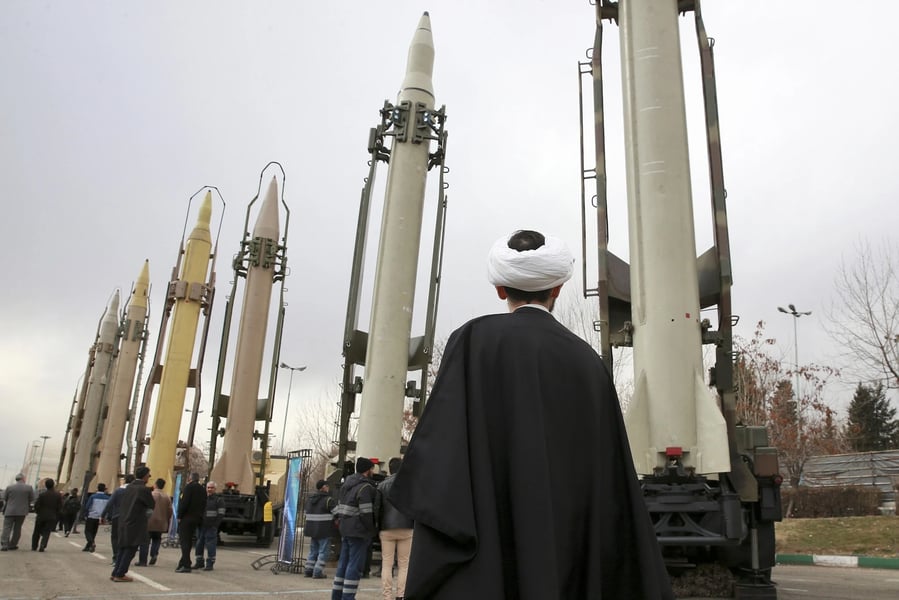
Iran has invested heavily in its ballistic missile program over the past two decades, viewing it as a core pillar of deterrence strategy. Its arsenal includes short-, medium-, and potentially longer-range systems designed to strike land and maritime targets.
By claiming a strike on a US aircraft carrier, the IRGC is reinforcing a narrative of growing missile precision and operational reach. Whether the missiles struck their intended target or not, the public messaging serves a strategic purpose: to signal capability, resolve, and readiness for further escalation.
For Washington, swift denial is equally strategic. A confirmed hit, even without damage, would reverberate globally, potentially reshaping perceptions of US military invulnerability.
The Information Battlefield
Modern conflicts increasingly unfold not only through kinetic action but through rapid information campaigns. Statements issued within hours of alleged strikes can shape global narratives long before independent verification emerges.
Satellite imagery and intelligence assessments may provide clearer insight in the coming days. Until then, the episode remains characterized by competing claims and hardened rhetoric.
What is evident is that both sides are carefully calibrating their messaging. Iran’s declaration of a “new phase” suggests sustained operations may follow. The United States, meanwhile, signals operational continuity and dismisses Iranian claims as false.
Risk of Escalation
The targeting of a US aircraft carrier represents a symbolic crossing of thresholds that have historically been avoided by both sides. While proxy engagements and indirect confrontations have occurred repeatedly, direct claims of missile strikes on a carrier elevate the crisis to a new level of visibility and risk.
Any miscalculation, whether from missile interception failure, misidentified radar signals, or retaliatory overreach, could trigger rapid escalation. Carrier strike groups are designed for deterrence but also possess significant offensive capabilities. Should Washington interpret future launches as credible threats, responses could be swift.
Iran, for its part, appears determined to demonstrate that it will not absorb strikes without visible retaliation.
What Comes Next
The immediate aftermath will hinge on verification, diplomatic backchannels, and military posture adjustments. Additional Iranian missile activity would likely deepen tensions, while visible US force movements could be interpreted as preparation for further confrontation.
For now, US officials insist the USS Abraham Lincoln remains fully operational. Tehran, meanwhile, signals that its response to recent hostilities is far from complete.
In the narrow waterways of the Gulf, where naval vessels, missile systems, and political red lines intersect, the margin for error continues to shrink. Whether this episode remains a symbolic clash or becomes the opening salvo of a broader conflict may depend less on rhetoric than on restraint in the days ahead.