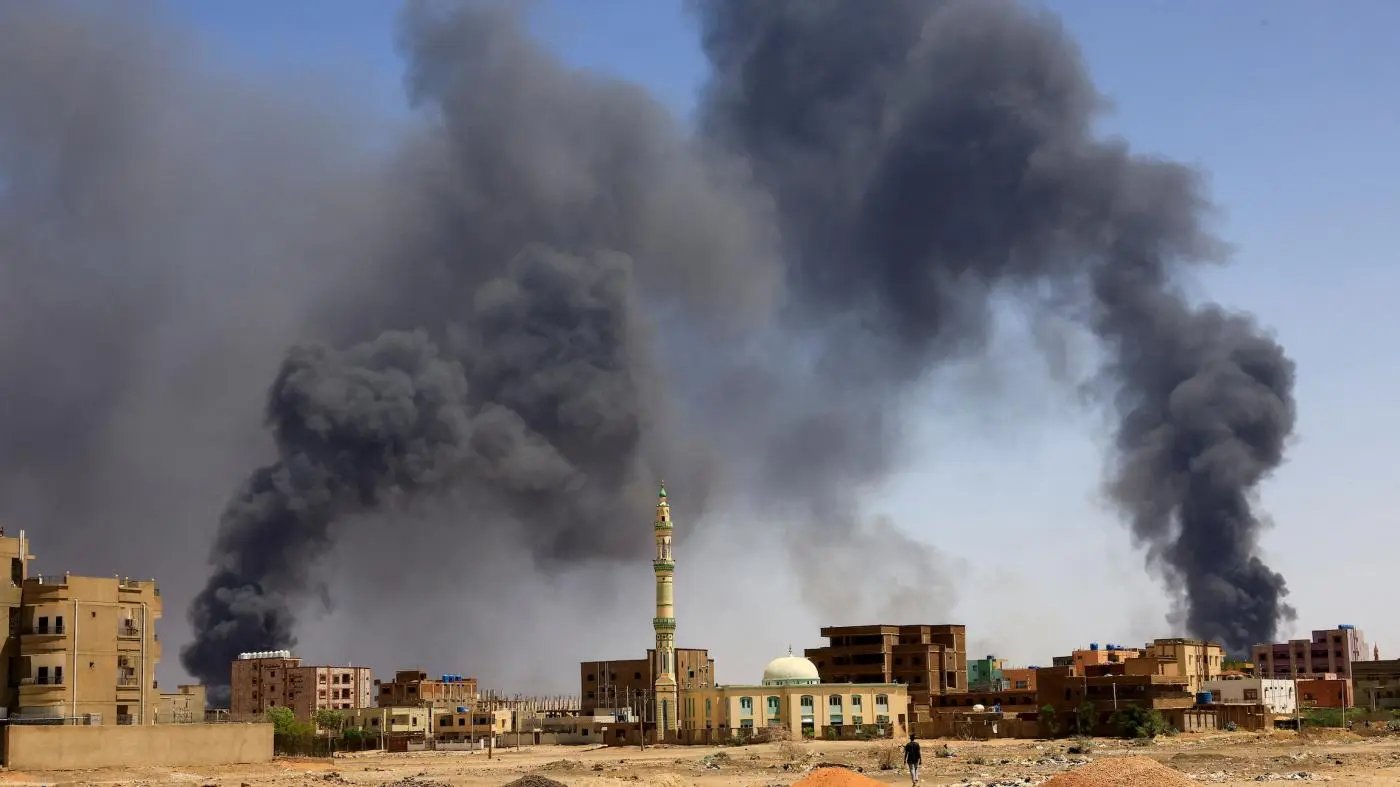

The Sudan civil war, now entering its third year, has transformed Africa’s third-largest country into the epicenter of what many aid groups describe as one of the world’s most severe humanitarian catastrophes. A conflict that erupted in April 2023 between the Sudanese Armed Forces and the paramilitary Rapid Support Forces has killed tens of thousands, displaced millions and shattered nearly every institution of governance across the country.
Recent developments across Sudan and neighboring South Sudan underscore how the war’s impact is spreading beyond the battlefield. Journalists are being detained, civilian infrastructure is collapsing, and fragile regional governments are grappling with corruption scandals and political instability.
Taken together, the latest incidents reveal a region struggling under the weight of conflict, repression and institutional breakdown.
Detained journalists highlight shrinking space for reporting
In Darfur, the press has become one of the many casualties of the Sudan civil war.
The Rapid Support Forces detained three female journalists in Nyala, South Darfur, after they attended a workshop for women in media. According to the Committee to Protect Journalists, RSF detained three female journalists in Nyala and held them without clear charges, highlighting the increasingly dangerous environment for reporters attempting to cover the conflict.
Press freedom groups say the arrests illustrate the growing dangers faced by reporters documenting atrocities and humanitarian suffering across Sudan.
The detentions are not isolated incidents. Sudanese journalist associations have documented multiple cases of enforced disappearance, arrests and intimidation of media workers during the conflict. Media offices have been raided, journalists detained or forced into exile, and many independent outlets have shut down as the war intensifies.
A brutal conflict with mounting civilian casualties
The war began when tensions between the national army led by Gen. Abdel Fattah al-Burhan and the RSF under Gen. Mohamed Hamdan Dagalo erupted into open fighting in April 2023.
What initially appeared to be a power struggle between rival military factions has since spiraled into a nationwide conflict that has devastated major cities and remote regions alike.
The war has already killed more than 40,000 people, though humanitarian organizations believe the real death toll may be far higher as many areas remain inaccessible to independent observers. :contentReference[oaicite:1]{index=1}
Both sides have been accused of committing war crimes. Investigators and human rights organizations have documented attacks on civilians, executions, ethnic violence and the destruction of infrastructure essential for survival.
In recent days, a drone strike near Sudan’s border with Chad killed civilians at a market in Darfur, leaving several people dead and dozens wounded as drone warfare becomes an increasingly common tactic in the conflict.
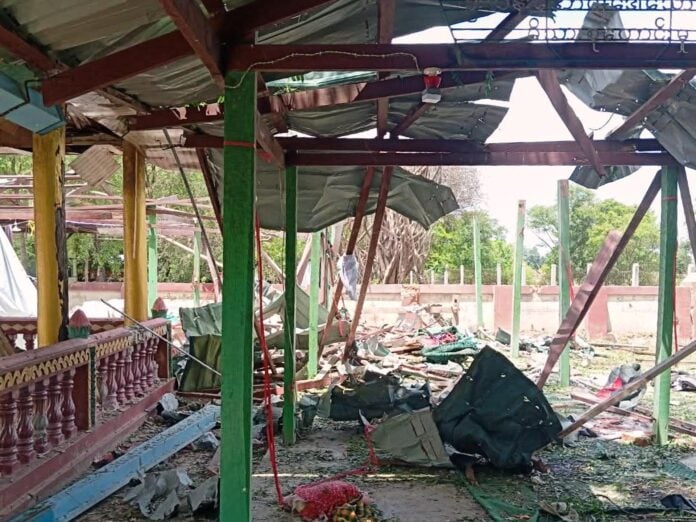
Just a day earlier, another attack shocked the country when a drone strike hit a school and medical facility killing mostly schoolgirls in Sudan’s White Nile state, underscoring how civilians are increasingly caught in the crossfire of the war.
The intensifying use of drones and heavy weapons has raised fears that the conflict is entering a more destructive phase, particularly in areas where displaced civilians are concentrated.
A lone surgeon fighting a collapsing health system
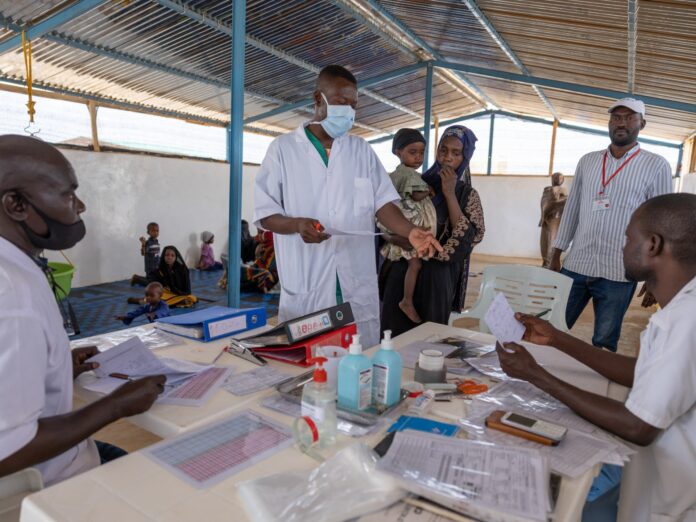
Beyond the frontlines, the humanitarian consequences of the Sudan civil war are visible in the collapse of the country’s healthcare system.
Hospitals have been destroyed, medical staff have fled and supply chains have been disrupted by constant fighting. In many regions, entire populations are left without access to even basic medical care.
Nowhere is this crisis more visible than in the Nuba Mountains, a remote region where a single surgeon has been working to treat millions of people caught in the conflict.
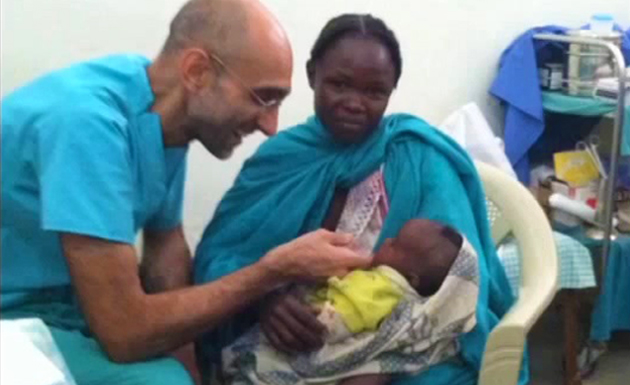
The situation reflects a broader collapse of Sudan’s healthcare infrastructure, which has been battered by years of political turmoil and armed conflict.
Darfur remains the epicenter of atrocities
Much of the worst violence in the Sudan civil war has occurred in Darfur, a region already scarred by earlier conflicts and genocide in the early 2000s.
Entire towns have been destroyed or abandoned as militias battle for control of strategic territory. Investigators say communities have been targeted along ethnic lines and villages burned in attacks that forced thousands to flee.
The humanitarian situation has grown particularly dire around El Fasher, the capital of North Darfur. Previous fighting around the city and surrounding displacement camps has raised fears of mass atrocities.
The city’s crisis has been documented in reporting about how RSF seized El-Fasher, leaving civilians trapped in siege conditions and cutting off humanitarian access.
Earlier investigations have also warned of a looming humanitarian disaster and possible mass atrocities in Darfur, including reports highlighting the genocide warning in Darfur as the conflict escalated.
Regional instability spreads to South Sudan
The consequences of the war are also reverberating beyond Sudan’s borders.
South Sudan, already struggling with its own fragile political system, is facing increasing pressure from refugee flows, economic disruptions and internal political tensions.
Recent reporting about corruption-linked arrests in South Sudan has raised new concerns about governance and stability in the region as authorities detain officials linked to alleged financial misconduct.
Analysts say instability in Sudan could further destabilize South Sudan, whose economy and political networks remain closely tied to developments across the border.
A fragmented country with no clear path to peace
Three years into the conflict, Sudan remains deeply divided.
The army controls parts of the east and north of the country, while the RSF holds territory across large areas of Darfur and western Sudan. Front lines shift frequently, and no faction appears capable of achieving a decisive victory.
Previous investigations into the conflict have detailed patterns of violence, including RSF ransom killings in El Fasher and other abuses reported during the war.
Human rights groups have also documented cases such as RSF rape allegations in Darfur, which investigators say highlight the scale of atrocities committed against civilians.
Attempts at international mediation have repeatedly stalled, with ceasefire agreements collapsing almost as soon as they are announced.
Meanwhile, millions of civilians remain displaced inside Sudan or have fled to neighboring countries such as Chad, South Sudan and Egypt.
A war the world struggles to confront
Despite the scale of the crisis, the Sudan civil war has often received limited global attention compared with other conflicts.
Journalists attempting to report from the region face enormous risks, from detention and violence to communications blackouts.
Aid groups say the lack of sustained international focus has made it harder to mobilize resources for relief efforts and diplomatic pressure.
Yet the consequences of the conflict are growing more severe by the day.
For civilians trapped in war-torn cities, displaced families in refugee camps and doctors struggling to treat patients without supplies, the war has become a relentless daily reality.
And with no political settlement in sight, many fear the Sudan civil war could continue to devastate the region for years to come.