NEW YORK — In a stark warning that has sent ripples through global financial markets, JPMorgan Chase CEO Jamie Dimon has cautioned that escalating tensions involving Iran could unleash a powerful chain reaction across the global economy, triggering inflation shock, higher interest rates, and renewed market volatility.
Dimon’s annual letter to shareholders, long regarded as one of Wall Street’s most closely watched economic barometers, arrives at a moment of heightened geopolitical strain. His message this year is unusually blunt: the risks facing the global economy are not only rising, they are converging.
At the center of his concern lies the possibility of a prolonged or intensifying conflict involving Iran, a scenario that could disrupt energy markets and reignite inflationary pressures just as central banks struggle to stabilize prices.
“The challenges we all face are significant,” Dimon wrote, pointing to geopolitical tensions, energy shocks, and structural economic shifts that are reshaping the global financial landscape.
Oil Shock and the Return of Inflation
Dimon’s warning is rooted in a familiar but dangerous dynamic: conflict in the Middle East has historically led to spikes in oil prices, which in turn ripple through nearly every sector of the global economy. From transportation and manufacturing to food and housing, higher energy costs can quickly translate into broader inflation.
According to Dimon, a conflict involving Iran could trigger precisely such an oil shock, driving up not only oil but also a wide range of commodities.
The implications are profound. After years of aggressive interest rate hikes aimed at taming inflation, central banks had begun to signal a potential shift toward easing monetary policy. But Dimon’s warning suggests that any such pivot may be premature.
If inflation surges again, policymakers could be forced to maintain higher interest rates for longer than markets currently expect, or even raise them further.
This scenario would place pressure on everything from mortgage rates to corporate borrowing, potentially slowing economic growth and dampening consumer spending.
“A Skunk at the Party”
Dimon has often used vivid language to describe economic risks, and this year is no exception. He likened the threat of resurgent inflation to a “skunk at the party,” warning of persistent inflation that could disrupt markets.
Even as headline inflation has moderated in recent months, underlying pressures remain. Rising wages, supply chain adjustments, and increased government spending all contribute to a backdrop in which inflation could prove more stubborn than anticipated.
Markets, however, appear to be betting on a smoother path. Investors have largely priced in expectations of rate cuts and continued economic resilience.
Dimon’s message challenges that optimism.
A World of Compounding Crises
The Iran conflict is only one piece of a much larger puzzle. Dimon emphasized that the global economy is facing an unprecedented convergence of risks, including the war in Ukraine, rising tensions among major powers, and broader global instability.
These overlapping crises create a level of uncertainty that is difficult for markets to fully price in.
Historically, financial markets have shown a tendency to focus on individual risks in isolation. But today’s environment is fundamentally different: risks are interconnected, and shocks in one area can quickly cascade into others.
Energy disruptions can drive inflation. Inflation can force higher interest rates. Higher rates can strain financial systems and trigger corrections across global markets.
Private Credit and Hidden Fragilities
Beyond geopolitics, Dimon also highlighted concerns within the financial system itself, particularly in the rapidly growing private credit market.
Valued at approximately $1.8 trillion, the sector has expanded significantly in recent years as investors seek higher returns outside traditional banking channels.
While Dimon stopped short of calling it a systemic threat, he warned that loosening lending standards and limited transparency could lead to significant losses if economic conditions deteriorate.
The Illusion of Strength
Despite his warnings, Dimon acknowledged that the US economy has shown resilience, supported by government spending and AI-driven investment.
Yet this strength may be masking deeper vulnerabilities, particularly as market volatility continues to simmer beneath the surface.
Much of the current economic momentum is being driven by fiscal stimulus and structural investments that may not be sustainable in the long term.
Markets May Be Too Calm
Perhaps the most striking aspect of Dimon’s message is his concern that markets are underestimating the risks ahead.
Despite geopolitical tensions and inflation pressures, valuations remain elevated, and investor sentiment appears relatively stable especially on Wall Street.
This apparent calm may be misleading.
The Stakes for the Global Economy
The potential consequences of a broader Middle East conflict extend far beyond financial markets.
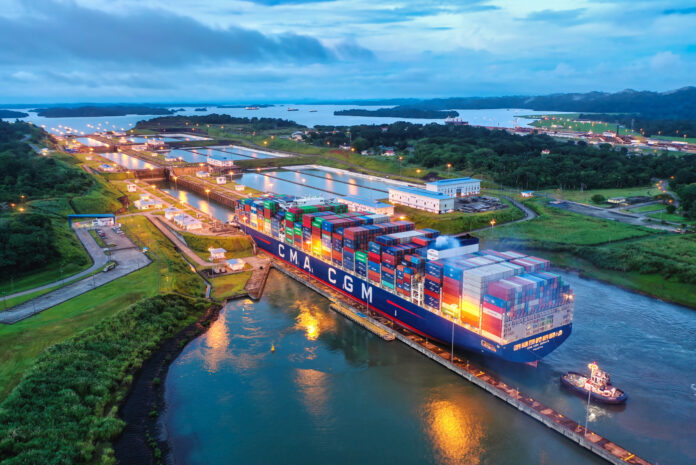
Higher energy costs, disruptions to trade routes such as the Strait of Hormuz, and rising inflation could strain economies worldwide.
Recent data already suggests that global markets are reacting nervously to geopolitical escalation, with oil prices climbing amid fears of supply disruption.
A Fragile Moment
As global markets grapple with an increasingly complex set of challenges, Dimon’s warning serves as a reminder that stability cannot be taken for granted.
The combination of geopolitical tensions, inflationary pressures, and financial vulnerabilities creates a landscape in which shocks can have far-reaching consequences.
Whether or not the risks he outlines ultimately materialize, the message is clear: the global economy is entering a period of heightened uncertainty, and complacency may prove costly.