
MOSCOW (SPUTNIK) — Iran’s ambassador to Russia, Kazem Jalali, said Tuesday that the Iranian people “will never forget” Moscow and Beijing’s decision to block a United Nations Security Council resolution targeting Tehran over the Strait of Hormuz, a move that has deepened geopolitical divisions and reshaped the diplomatic battle lines in the Middle East.
The failed resolution, backed by the United States and its allies, sought to establish a coordinated international response to maritime tensions in the strategic waterway. But Russia and China veto UN resolution on protecting Hormuz shipping, preventing its adoption despite broad support within the council.
Jalali framed the veto as a defining moment of solidarity, stating that Iran, Russia, and China “stand on the same front” amid rising tensions. He described the blocked draft as “anti-Iranian,” adding that the Iranian public would remember the vote as a demonstration of strategic partnership in a period of crisis.
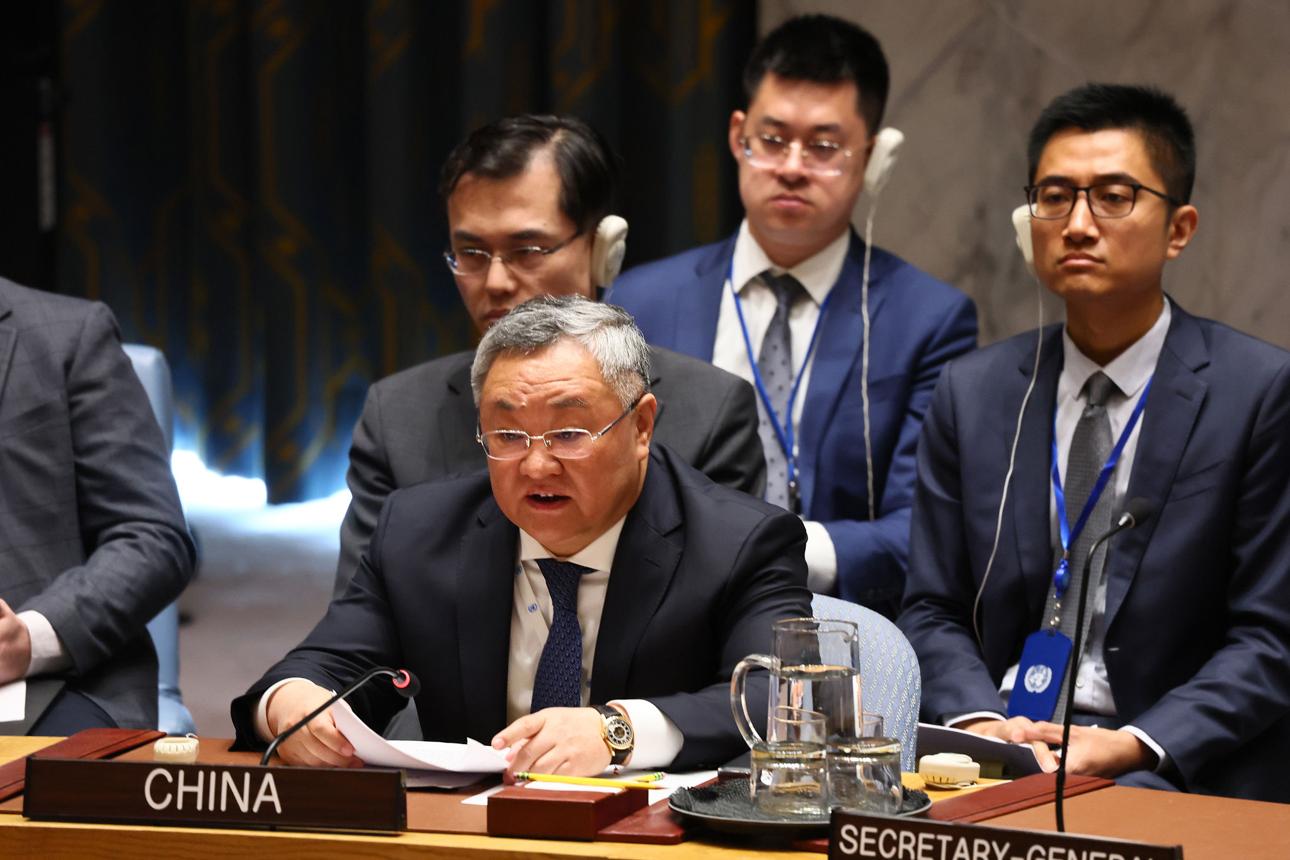
The Bahrain-drafted resolution received 11 votes in favor, with two abstentions, but was ultimately halted by the veto powers of Moscow and Beijing, underscoring a widening divide within the Security Council.
The proposal called for states to coordinate defensive efforts, including escorting commercial vessels through the Strait of Hormuz, and demanded that Iran cease alleged attacks on shipping lanes. However, Tehran rejected the accusations, framing its actions as defensive measures in response to escalating military threats.
Earlier diplomatic efforts had already softened the language of the draft. According to reports that the UN expected to vote on watered-down Hormuz resolution, key provisions authorizing the use of force were removed in an attempt to secure consensus, a strategy that ultimately failed.
Iran’s envoy to the United Nations, Amir Saeid Iravani, warned that the resolution would have “emboldened” the United States and Israel, effectively granting political cover for further military escalation while shielding them from accountability. Tehran has consistently argued that Western-backed initiatives at the UN are designed to pressure Iran while ignoring the broader context of regional conflict.
The escalating confrontation has been accompanied by increasingly aggressive rhetoric. Reports indicate that Trump threatens strikes as Iran crisis escalates over Hormuz, raising fears of a wider regional war and potential civilian consequences.
Russia’s ambassador to the UN, Vassily Nebenzia, criticized the resolution as an attempt to impose external “rules of the game” in the Strait of Hormuz, warning that such measures could further destabilize the Middle East. Moscow and Beijing have instead signaled plans to introduce an alternative framework focused on maritime safety while adhering to the UN Charter.
This aligns with broader diplomatic efforts, including how Russia drafts UN ceasefire resolution for Middle East, positioning itself as a counterweight to Western-led initiatives in the region.
The Strait of Hormuz remains one of the world’s most critical energy chokepoints, with a significant share of global oil supplies passing through its narrow waters. Any disruption has immediate consequences for global markets, supply chains, and energy security.
The failure of the resolution has intensified concerns about economic fallout. Analysts warn that the crisis could deepen as UN resolution on Hormuz opening fails after China and Russia veto, highlighting the growing risk to global trade flows.
Beyond the immediate dispute, the veto reflects a broader transformation in global politics. The alignment between Iran, Russia, and China is increasingly being viewed as part of a wider shift toward a multipolar order, challenging the dominance of Western powers in international institutions.
This dynamic is unfolding against the backdrop of escalating conflict across the region. From Israel attacks Iran as US escalates war threats to mounting tensions within the United Nations system, including incidents where UN blames Israel tank fire for peacekeeper death, the crisis has exposed deep fractures in global governance.
Iran has also reinforced its legal position in previous disputes, maintaining that Iran says UN sanctions are null and void, a stance that continues to shape its diplomatic posture in current negotiations.
For Tehran, the veto represents not just a diplomatic victory but a strategic signal that it is no longer isolated on the global stage. For Washington and its allies, however, it highlights the limits of multilateral pressure in a rapidly evolving geopolitical landscape.
As tensions continue to rise and competing resolutions emerge, the Strait of Hormuz remains at the center of a confrontation that could redefine the balance of power in the Middle East, and beyond.
Related Posts