
JUBA, South Sudan — In a move that has intensified fears of democratic backsliding and renewed conflict, President Salva Kiir has abruptly dismissed the speaker and deputy speaker of South Sudan’s parliament, consolidating his authority at a moment when the country is already teetering on the edge of renewed civil war.
The decision, confirmed as Kiir sacks parliament speaker and deputy, was delivered through a presidential decree read aloud in parliament this week, removing Speaker Jemma Nunu Kumba and her deputy, Permena Awerial Aluong, from their posts without public deliberation.
The abrupt move marks the latest in a series of actions seen as Kiir consolidating power through political reshuffles, raising alarms among analysts who say South Sudan’s fragile institutions are being steadily weakened.
The move comes amid mounting international concern that South Sudan, the world’s youngest nation, is slipping back toward the kind of instability that once plunged it into one of Africa’s deadliest conflicts.
A Government Under Strain
For years, President Kiir has relied on periodic dismissals of senior officials to maintain control over the ruling Sudan People’s Liberation Movement (SPLM) and the broader state apparatus. But the removal of the parliamentary leadership, a central pillar of governance, marks a significant escalation.
Members of Kiir’s own party had reportedly petitioned for the speaker’s removal, citing allegations of corruption and financial mismanagement within the legislature. The speed and decisiveness of the action have raised concerns that institutional checks on executive power are rapidly eroding.
The appointments of Joseph Ngere Paciko as the new speaker and Abuk Paiti Ayiik as deputy were announced almost immediately, signaling a carefully orchestrated transition designed to avoid any vacuum of authority.
Political analysts say the reshuffle reflects a broader pattern, one that mirrors trends seen across the mass displacement and humanitarian crisis linked to ongoing instability in the region.
Echoes of the Sudan Civil War
The timing of the parliamentary shake-up has amplified fears that the country is drifting toward conditions reminiscent of the Sudan civil war, which devastated South Sudan between 2013 and 2018 and left more than 400,000 people dead.
That conflict, rooted in a power struggle between Kiir and his longtime rival Riek Machar, fractured the country along ethnic and political lines and displaced millions.
Recent months have seen a sharp escalation in violence across several regions, reinforcing warnings that fears of return to full-scale Sudan civil war are no longer theoretical but increasingly real.
The United Nations has also warned that the country is South Sudan at a dangerous point as killings surge, underscoring the urgency of the crisis.
Across the border, the Sudan civil war deepens, further complicating South Sudan’s already fragile security landscape.
The Collapse of Institutional Balance
South Sudan’s parliament, formally known as the Transitional National Legislative Assembly, was intended to serve as a cornerstone of the post-war political settlement, providing a forum for power-sharing and legislative oversight.
But in practice, analysts say, it has increasingly functioned under the influence of the executive branch.
The dismissal of its top leadership underscores what many observers describe as a steady erosion of institutional independence. With loyalists now occupying key positions, critics fear that the legislature may no longer act as a meaningful check on presidential authority.
Such concerns are compounded by reports of war crimes and genocide unfolding in Sudan, which continue to destabilize the broader region.
Rising Violence and Fragmentation
The political turmoil in Juba is unfolding alongside a deteriorating security situation across the country, with violence escalating across South Sudan regions.
In Jonglei State and other regions, violence between armed groups has surged, with civilians bearing the brunt of the conflict. Entire communities have been displaced, and humanitarian organizations have reported increasing difficulty in delivering aid.
Meanwhile, cross-border instability is intensifying, with cross-border violence linked to Sudan conflict raising fears of a wider regional war.
Reports of genocide warnings in Darfur have further heightened international concern.
Regional Pressure Mounts
Amid the escalating crisis, regional leaders have renewed calls for inclusive dialogue to prevent further deterioration.
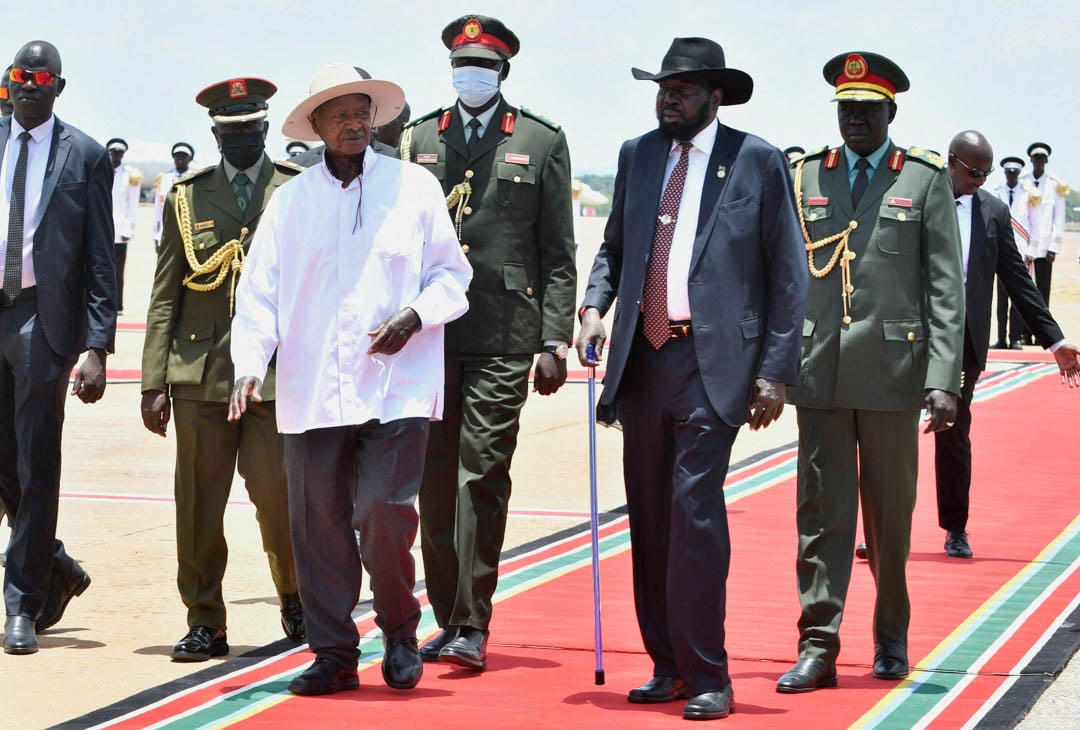
Ugandan President Yoweri Museveni has stepped in, with Uganda’s Museveni intervenes amid political crisis, signaling growing regional alarm.
Regional bodies have also urged South Sudan’s leaders to recommit to the peace process, though progress remains slow.
A Nation at a Crossroads
The stakes could hardly be higher.
South Sudan, which gained independence in 2011 after decades of struggle, has yet to achieve lasting stability. Instead, the country has been plagued by cycles of conflict, political infighting, and economic hardship.
The unfolding developments are rapidly becoming central to global conflict analysis, reshaping how experts interpret the trajectory of the Sudan civil war and its regional spillover risks.
With the Sudan civil war is now a regional crisis, analysts warn that instability in South Sudan could further inflame tensions across East and Central Africa.
Meanwhile, internal political dynamics continue to shift, with military reshuffle reshaping the battlefield both within Sudan and across the broader region.
Uncertain Path Forward
As President Kiir tightens his grip on power, the future of South Sudan hangs in the balance.
The dismissal of parliamentary leaders may strengthen the executive’s control in the short term, but it also raises profound questions about the country’s political direction and the prospects for lasting peace.
Whether South Sudan can avoid slipping back into the abyss of civil war will depend on the willingness of its leaders to prioritize national unity over political survival, a challenge that has eluded them for more than a decade.
For now, the signs are troubling.
And for a nation that has already endured so much, the fear is that history may be repeating itself.
Related Posts