
Kenya — Four years into a civil war that has partitioned Sudan, displaced more than 11 million people and left vast stretches of the country in ruins, a single armed group has emerged not just as a battlefield victor but as something far more durable: a shadow state.
The Rapid Support Forces, or RSF, a militia that evolved from the Janjaweed fighters of the Darfur genocide, have built a military and economic empire so entrenched that international peace efforts have become a cruel farce, according to a mounting body of evidence from battlefield accounts, financial disclosures and diplomatic reports.
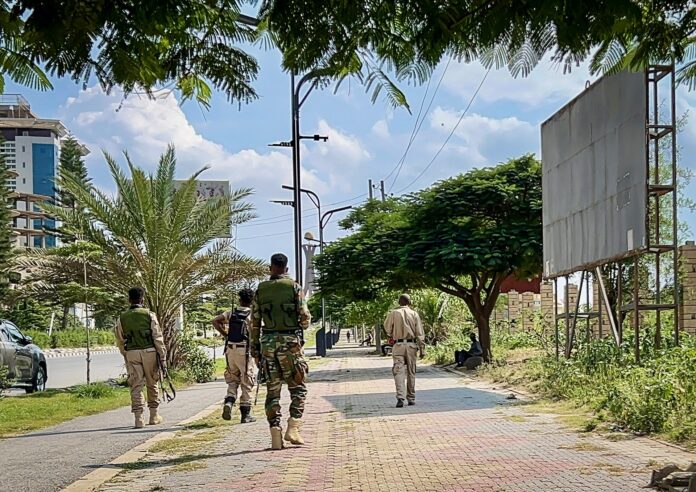
In recent months, the RSF has achieved a series of staggering military breakthroughs. In October 2025, after an 18-month siege, the militia captured El Fasher, the last army stronghold in Darfur. Then, in March 2026, it seized Kurmuk, a strategic town on the Ethiopian border, launching the offensive from inside Ethiopian territory, a move that regional officials say marks the first time the group has used a neighboring country as a staging ground.
“The RSF is no longer a militia,” said a senior African Union official who spoke on the condition of anonymity to discuss intelligence matters. “It is a predatory state-in-waiting, financed by gold and protected by foreign patrons.”
That financial engine is key. The RSF controls large-scale gold mines in Darfur and South Kordofan, producing what investigators call “conflict gold” that is smuggled through a network of front companies, many registered in Dubai. The militia has also diversified into livestock, construction, tourism and even banking, creating a parallel economy that operates entirely outside Sudan’s central bank. The expansion of this war economy has been documented in conflict gold networks and parallel financial systems.
Foreign backing has been critical. A recent investigation documented a network of Colombian mercenaries, allegedly supported by the United Arab Emirates, who provided drone warfare expertise during the siege of El Fasher. The role of Colombian mercenaries has further exposed the internationalization of the conflict. The UAE. has repeatedly denied any role in the conflict, but internal diplomatic cables and expert analysis suggest otherwise.
“The RSF functions as an instrument of Abu Dhabi’s regional interests,” said Abbas Mohamed Salih, a Sudanese political analyst. “As long as that external support flows, the group has no incentive to negotiate.” Analysts have increasingly pointed to foreign backing as a decisive factor in prolonging the war.
Peace efforts have collapsed under the weight of this reality. The Jeddah Declaration, signed in May 2023, was never implemented. High-profile conferences in Paris, London and Berlin have produced little more than “statements, pledges, and little else,” according to a recent analysis by The New Arab. The appointment of a new United States special envoy has failed to produce a breakthrough, and the United Nations has been powerless to act.
“The indicators do not suggest the war is close to stopping,” said Dr. Khidr al-Khawad, a Sudanese sociologist. “Any potential end may be preceded by a major escalation, leading to further displacement and more killing and destruction.”
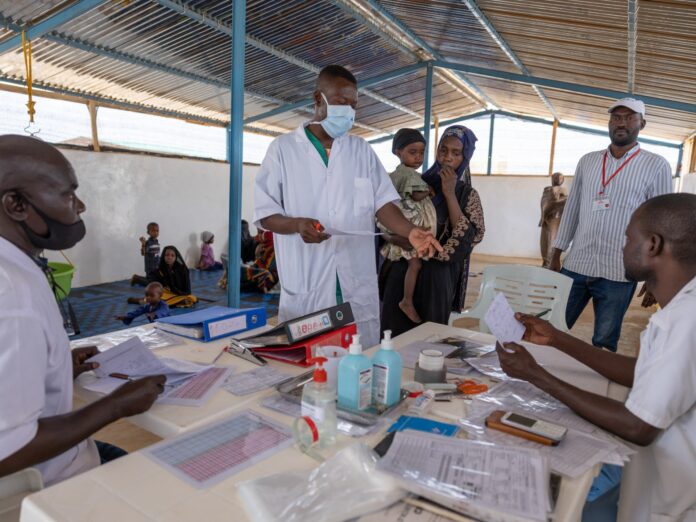
For the civilians trapped between the RSF and the increasingly fractured Sudanese Armed Forces, the outlook is apocalyptic. Aid agencies report that more than 25 million people face acute hunger, and entire towns have been depopulated. Recent reporting on the humanitarian crisis highlights the scale of collapse, while investigations into atrocities such as attacks on civilians reveal the brutality on the ground.
Yet the international response remains paralyzed. The external actors with the most leverage, particularly Gulf states, have shown the least interest in a swift resolution, experts say.
“Sudan has been attacked by several countries, with support, coordination, and weapons from the UAE,” said Abdel Aziz Sam, a legal expert. As the RSF tightens its grip on gold fields and borderlands, the world continues to look away.
The war, now in its fourth year, shows no sign of ending. As the war enters its fourth year, shifting alliances and defections underline the instability. And the militia that started as a proxy force has become an empire, bloody, self-sustaining and, for now, unbeatable.