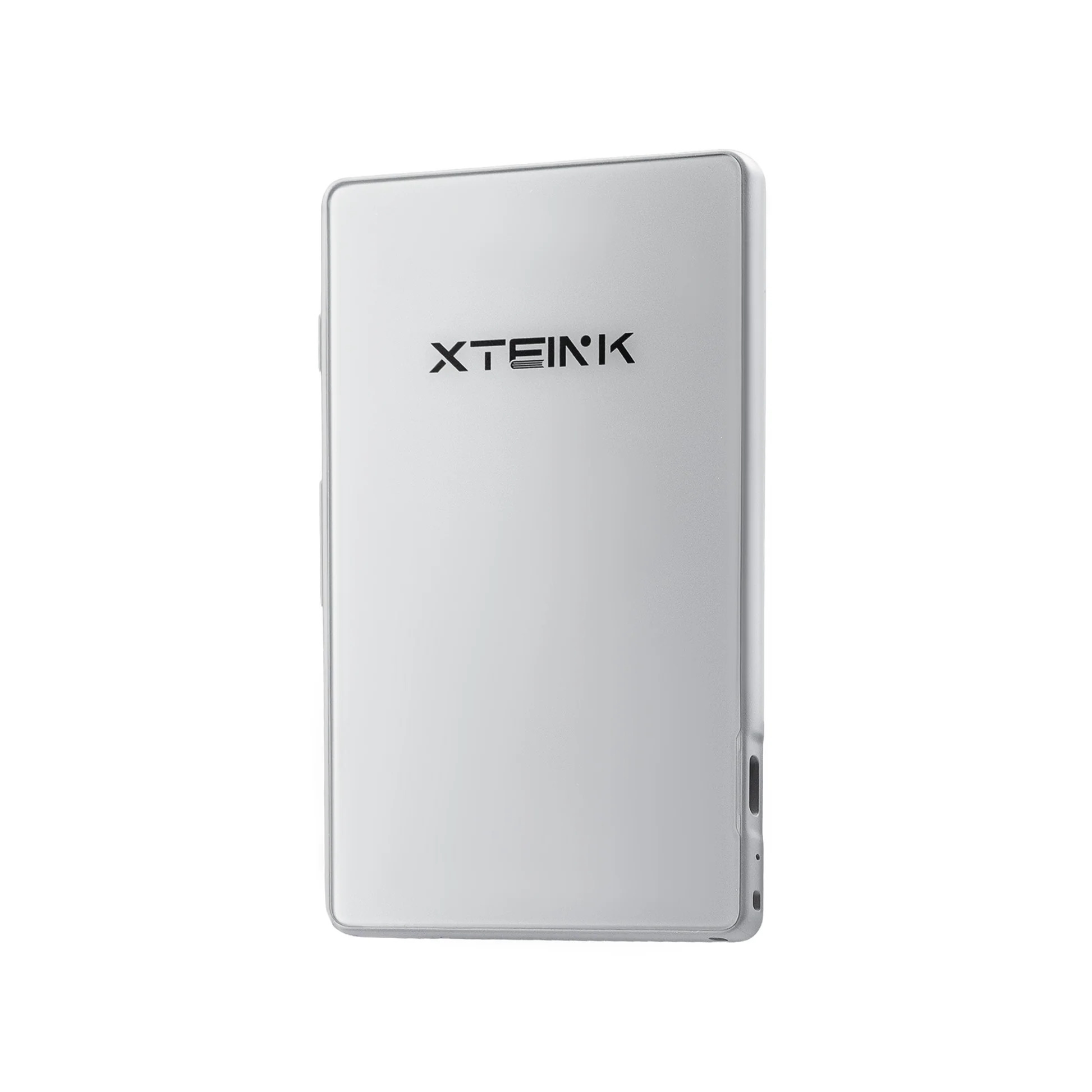

The idea sounds almost absurd at first: a credit card-sized e-reader that snaps onto the back of your phone like a magnetic accessory. But in the span of just a few months, Xteink a relatively unknown hardware startup has managed to do what few have in nearly two decades of digital reading: seriously challenge Amazon’s dominance.
Its tiny devices, particularly the Xteink X3 and X4, are now at the center of a fast-growing trend that blends minimalism, anti-distraction tech, and a growing backlash against smartphone overuse.
At the heart of this surge is a simple promise. Instead of reaching for social media, users can flip their phone and read a book.
The Xteink X3, reviewed widely this week, is a tiny, MagSafe-compatible e-ink reader that attaches directly to smartphones, offering what many describe as an antidote to compulsive scrolling.
It is not just novelty driving attention. It is timing.
A New Kind of Reading Device
For years, the e-reader market has been dominated by the Amazon Kindle a device deeply integrated with Amazon’s ecosystem, offering seamless access to millions of books and a polished, if tightly controlled, user experience.

Its flagship X4 model, priced far below most Kindles, strips reading down to its bare essentials. It features a 4.3-inch E Ink display, physical buttons, and no built-in access to major bookstores.
Books must be manually loaded. There is no touchscreen. There is no backlight.
And that is precisely the point.
The device leans into a growing philosophy among tech users: less functionality, fewer distractions, more intentional use. The absence of notifications, apps, and even wireless ecosystems has become a selling feature rather than a limitation.
As latest tech gadget trends continue to reshape digital reading habits, Xteink’s rise signals a shift away from traditional Kindle dominance.
Designed for the Attention Economy
The success of Xteink devices is tied closely to a broader cultural shift one where attention itself has become a scarce resource.Smartphones, once tools of convenience, are now widely seen as engines of distraction. Apps are engineered to retain users, often at the cost of focus and well-being.
Xteink’s solution is deceptively simple: keep reading physically separate from the digital noise, but still close enough to be convenient.
The magnetic attachment system compatible with modern smartphone standards like MagSafe allows the device to live on the back of a phone, always within reach.
In practice, it creates a frictionless alternative to opening Instagram or TikTok. Early reviewers say that even brief idle moments waiting in line, commuting become opportunities to read instead.
The concept echoes the original promise of E Ink technology itself: a screen that mimics paper, reduces eye strain, and encourages long-form reading.
But Xteink compresses that idea into something radically smaller and arguably more disruptive.
The Trade-Offs Are Real
Yet for all its viral appeal, the Xteink lineup is far from perfect.
Critics point to a range of compromises that would be unacceptable in mainstream devices. The X4’s lower resolution display, lack of a touchscreen, and absence of lighting make it less versatile than competitors.
The X3 improves portability further shrinking to near credit-card size but introduces its own issues, including unconventional charging methods and still-unpolished software.
More fundamentally, the device exists outside the dominant ebook ecosystem. Unlike Kindle or Kobo, it does not connect to a centralized store. Users must source and transfer their own DRM-free files, a process that can feel archaic in an era of instant downloads.
For some, this is a deal-breaker.
For others, it is liberation.
A Community-Driven Device
Interestingly, part of Xteink’s popularity has been driven not by its official software, but by its community.
Enthusiasts have developed alternative firmware that dramatically improves usability. This grassroots ecosystem has helped transform what might have been a niche gadget into a cult favorite.
But even that advantage is now under pressure.
Recent reports indicate that some newer Xteink devices are restricting third-party firmware installation, citing safety concerns and potential hardware damage a move that could reshape its appeal among power users.
The Bigger Picture
The rise of Xteink is not just about one device. It reflects growing dissatisfaction with all-in-one platforms and a broader reevaluation of how technology fits into daily life.
For years, companies like Amazon built their dominance on integration: hardware, software, and content all tied together. That model remains powerful, but it is no longer uncontested.
A new generation of devices is emerging that prioritizes simplicity over ecosystem, and user control over convenience.
Xteink may not replace Kindle. It may not even come close in terms of sales or infrastructure.
But it is forcing a conversation that the industry has largely avoided:
What if the future of reading is smaller, simpler, and intentionally disconnected?
For a growing number of users, that question is no longer theoretical. It is already in their pocket magnetically attached, quietly waiting, and offering an alternative to the endless scroll.