
President Donald Trump said Monday that his administration will move to temporarily suspend the federal gasoline tax as American consumers face rapidly rising fuel prices triggered by the escalating conflict surrounding Iran and disruptions in one of the world’s most critical oil shipping corridors.
“We’re going to take off the gas tax for a period of time, and when gas goes down, we’ll let it phase back in,” Trump said during an interview with CBS News, signaling one of the most politically significant economic interventions of his second term.
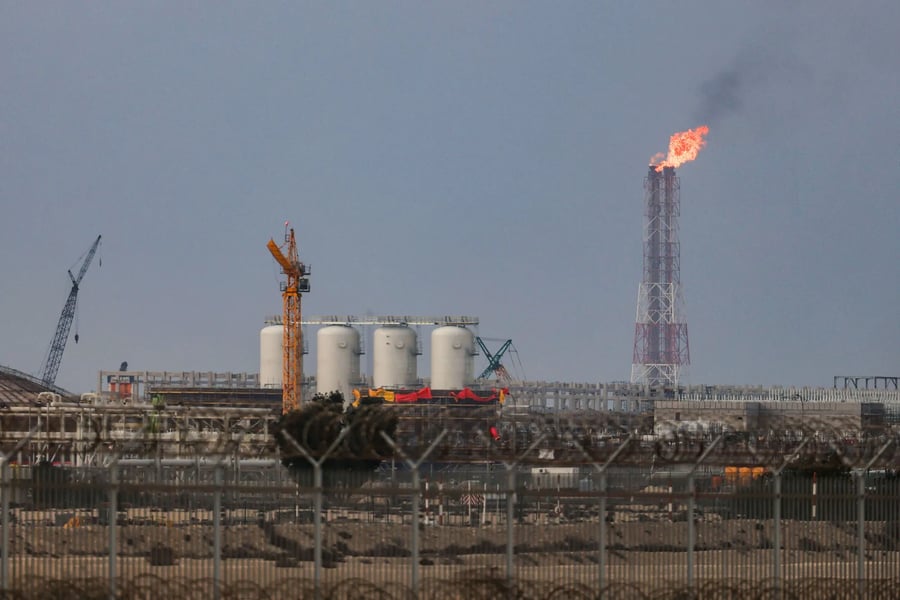
The proposal comes as the US grapples with mounting inflationary pressure caused by instability in the Persian Gulf, where military tensions involving Iran, Israel, and the United States have severely disrupted maritime traffic through the Strait of Hormuz. The narrow waterway handles nearly one-fifth of the world’s oil and liquefied natural gas supplies, making even limited disruptions capable of shaking global energy markets.
According to the American Automobile Association, the national average gasoline prices climbed to $4.52 per gallon on Monday, marking the highest level since the 2022 energy shock. California drivers are paying an average of $6.16 per gallon, while Indiana recorded the nation’s lowest average at $4.35.
The gasoline tax currently stands at 18.4 cents per gallon, with diesel taxed at 24.4 cents. Revenue from the tax funds the federal Highway Trust Fund, which finances road construction and infrastructure maintenance across the country. Suspending the tax would require congressional approval, though Republican lawmakers have already begun rallying behind the proposal.
Missouri Senator Josh Hawley announced Monday that he plans to introduce legislation authorizing a temporary gas tax holiday, aligning himself with Trump’s effort to blunt public frustration over surging gas prices ahead of the 2026 midterm elections.
The White House increasingly views energy prices as both an economic and political threat. The Iran conflict has not only pushed gasoline prices sharply upward but also intensified concerns about wider inflation affecting groceries, transportation, and consumer goods.
Trump acknowledged that the federal tax represents only a small portion of overall fuel costs but argued that any reduction could provide relief to working Americans already squeezed by inflation.
“But it’s still money,” Trump told reporters at the White House when discussing the potential suspension.
The administration’s push for emergency measures reflects growing anxiety within Republican circles that the energy crisis could damage voter confidence if fuel prices continue rising through the summer driving season. Polling in recent weeks has shown inflation and fuel costs once again emerging as dominant economic concerns among US households.
US Energy Secretary Chris Wright confirmed over the weekend that the administration was actively considering a broader gas tax suspension strategy aimed at lowering prices at the pump.
Behind the fuel price shock lies the deepening geopolitical confrontation involving Iran. The latest escalation began on February 28, when US and Israeli strikes targeted Iranian sites, triggering weeks of instability across the region. Although Washington and Tehran later announced a temporary Iran ceasefire, repeated exchanges of fire and failed negotiations have kept energy markets on edge.
Earlier this month, tensions intensified again after reports of renewed military exchanges near the Strait of Hormuz. Iran accused the US military of violating the ceasefire by targeting ships near Iranian waters, while Washington claimed its actions were defensive responses to Iranian attacks on US naval assets.
The growing uncertainty has caused severe disruptions in the Strait of Hormuz and raised fears of prolonged instability in global oil supplies. Oil traders have reacted nervously to every sign of escalation, sending oil prices sharply higher and transmitting those costs directly to consumers worldwide.
The developing Strait of Hormuz crisis has become the defining economic consequence of the broader regional confrontation, with analysts warning that prolonged disruptions could push oil prices well above current levels if diplomacy collapses completely.
Trump has attempted to balance military pressure with public messaging focused on economic relief. Earlier this month, he announced Project Freedom, an initiative designed to assist commercial vessels trapped near the Strait of Hormuz. However, Trump paused parts of the operation to allow space for renewed diplomatic discussions with Tehran.
The president continues insisting that negotiations remain possible despite deteriorating conditions. Speaking last week, Trump said a peace agreement with Iran “could happen any day,” though he also sharply criticized Tehran’s latest response to US ceasefire proposals.
Economists remain divided over whether suspending the gas tax would significantly reduce consumer costs. While the measure could shave roughly 18 cents off gasoline prices nationally, analysts note that the bulk of the current price surge stems from crude oil volatility rather than taxation alone.
Some experts also warn that removing the tax could further strain federal infrastructure funding. The federal gas tax generates approximately $2.5 billion per month for highway and transportation programs. Since 2008, Congress has repeatedly transferred hundreds of billions of dollars from the general budget to maintain infrastructure spending because gas tax revenues alone were insufficient.
Several states have already begun pursuing their own temporary fuel tax reductions. Kentucky governor Andy Beshear and officials in Indiana and Georgia are among those considering state-level tax cuts aimed at easing pressure on consumers.
The administration has not yet specified how long the proposed federal tax suspension would remain in place. Trump said only that the tax would return once fuel prices fall to more acceptable levels.
For now, the White House faces the difficult task of containing both an international geopolitical crisis and its domestic economic consequences. With oil markets increasingly sensitive to every development involving Iran and the Strait of Hormuz, energy prices may remain volatile for months regardless of temporary tax relief measures.
As Congress prepares to debate the proposal, the gas tax suspension is rapidly becoming one of the most closely watched economic issues in Washington, and a crucial political test for Trump as Republicans seek to retain control of Congress in November.
—Inputs from Sputnik.