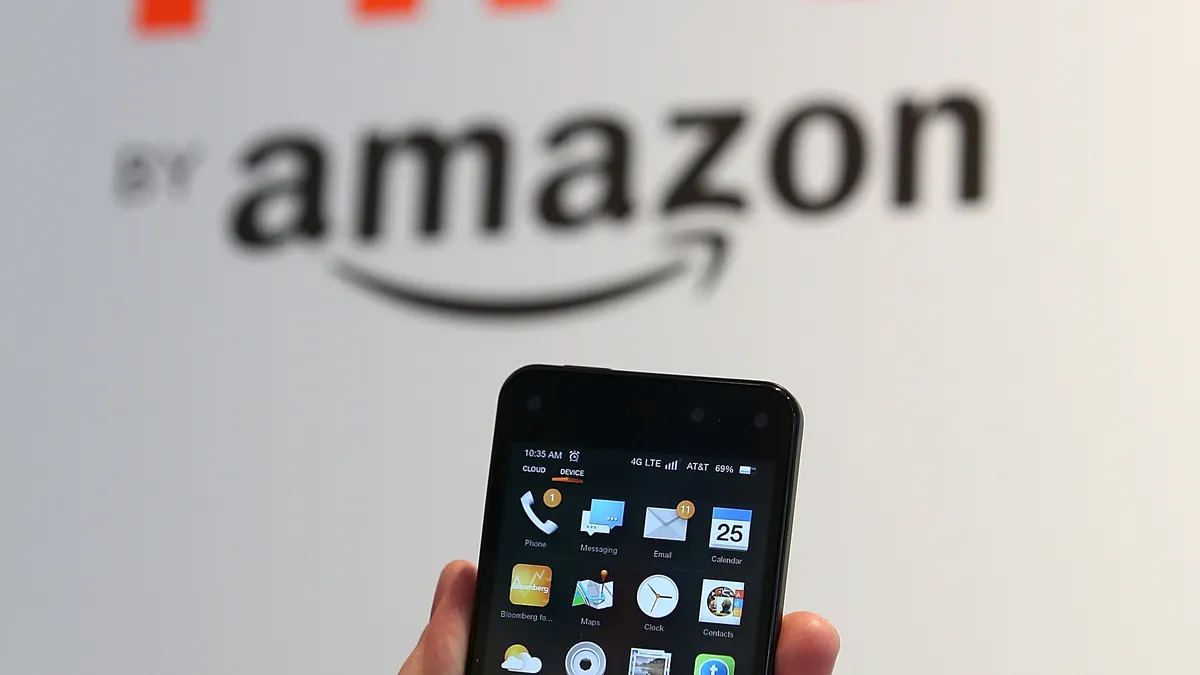

Amazon’s long history with smartphones may have ended in failure, but new comments from devices chief Panos Panay have unexpectedly revived speculation that the company is quietly exploring a next-generation AI-powered mobile device. While Amazon insists there is no traditional phone in development, the lack of a firm denial has triggered intense industry debate about whether the Fire Phone story is truly over.
In a recent interview with the Financial Times, Panay addressed rumors about an internal Amazon project reportedly known as “Transformer,” which is believed to focus on an AI-first mobile experience powered by Alexa+. His responses were notably cautious, describing a traditional smartphone comeback as “not the goal” while also refusing to shut down the idea entirely.
That careful language has fueled speculation across the tech industry, especially as Amazon continues to reshape its hardware ambitions. Analysts point to shifts in Amazon hardware strategy as evidence that the company is increasingly focused on tightly integrated ecosystems rather than standalone devices.

However, the current wave of interest is not centered on a traditional phone. Instead, it is driven by Amazon’s broader ambitions in artificial intelligence and connected ecosystems. The company’s evolving Amazon’s ecosystem strategy suggests a stronger push toward devices that stay continuously connected to users across different environments.
The rumored “Transformer” project is widely believed to focus on an AI-powered device rather than a conventional smartphone. This aligns with broader industry movement toward AI-first computing, where voice assistants and contextual intelligence replace traditional app-centric usage patterns.
Amazon’s absence from the mobile operating system market has long been considered a strategic weakness. Without a dominant mobile platform, the company relies heavily on smart speakers, Fire TV devices, and third-party smartphones to deliver Alexa services. That gap becomes more significant as AI systems increasingly require persistent user engagement throughout the day.
At the same time, the global smartphone market remains highly competitive, dominated by Apple, Samsung, and aggressive Android manufacturers. Even well-funded entrants struggle to gain meaningful market share, making any potential Amazon return a high-risk move.
Still, the broader technological landscape is shifting rapidly. The transition into the AI era is pushing companies to rethink how users interact with devices, services, and digital ecosystems. Instead of apps and screens, the focus is increasingly on AI agents that anticipate user needs and operate across multiple hardware categories.
That shift is central to Amazon’s renewed relevance in the discussion. The company already operates one of the largest AI ecosystems through Alexa, but it lacks a dedicated mobile-first device that follows users outside the home. That missing layer is what fuels ongoing speculation about a potential “Transformer” device.
In reporting from the The Verge, Panay was quoted emphasizing that Amazon is exploring new device categories rather than revisiting old ones. Meanwhile, the Reuters report suggests the company is actively testing AI-driven mobile concepts that may not resemble traditional smartphones at all.
Other industry observers remain skeptical. Coverage from Ars Technica highlights internal uncertainty about whether there is a viable path for Amazon to re-enter the smartphone market in any meaningful way. Similarly, Tom’s Guide notes that while Amazon denies a Fire Phone sequel, it stops short of ruling out experimental hardware.
The historical context also continues to loom large. The original Fire Phone is often cited as a cautionary tale in the industry, and its legacy is frequently revisited in discussions about failed hardware ambitions, as documented in its Fire Phone overview.
Meanwhile, the broader AI race is accelerating globally. Companies like OpenAI are reshaping expectations around digital assistants and personal computing interfaces, as seen in the growing focus on AI assistants. Google is also pushing deeper into AI integration across its ecosystem, reflecting a wider industry transformation often described as the rise of the generative AI era.
For Amazon, this shift represents both an opportunity and a risk. A successful AI-first device could redefine its consumer ecosystem. A failed attempt, however, could reopen old wounds from the Fire Phone era. For now, Panos Panay’s carefully measured language keeps both possibilities alive without confirming either.
What remains clear is that Amazon is once again part of the smartphone conversation, even if it insists it is not building a phone. And in today’s AI-driven tech landscape, that ambiguity may be exactly what keeps the speculation growing.