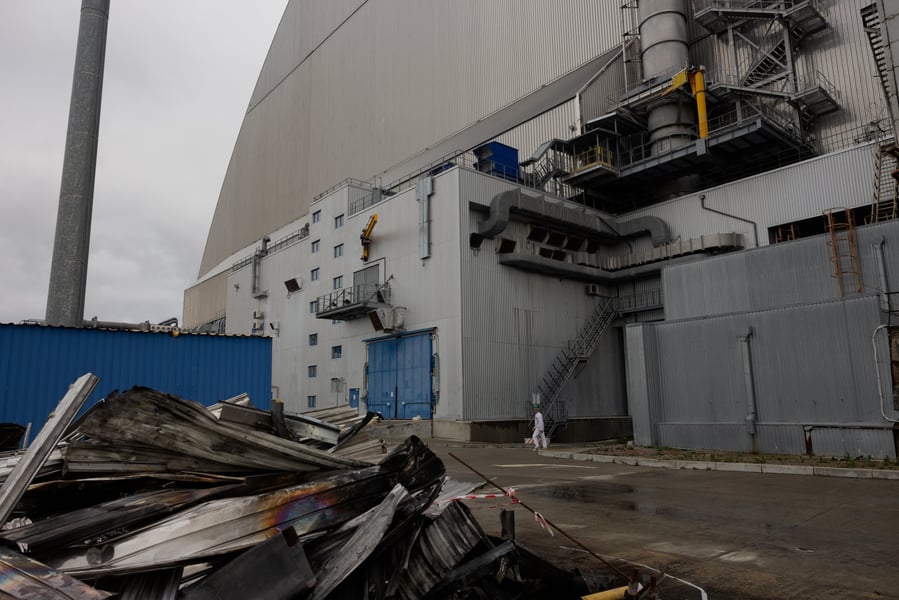

Ukrainian drone attacks struck civilian infrastructure across Energodar on Saturday, damaging buses, communications towers, private vehicles, and residential buildings in the Russian-controlled city located near the Zaporizhzhia Nuclear Power Plant, according to local authorities.
The attacks, described by officials as continuous throughout the day, intensified tensions around one of the most strategically sensitive locations in the Russia-Ukraine conflict. Russian-appointed Energodar Mayor Maxim Pukhov said Ukrainian unmanned aerial vehicles repeatedly targeted civilian areas and municipal infrastructure.
“The city has been under constant attack by Ukrainian drones today. Cars, mobile phone towers, residential rooftops and city infrastructure are being hit. Two buses have been damaged,” Pukhov told RIA Novosti.
Authorities stated that no casualties had been reported by Saturday evening despite the scale of the strikes. Backup energy systems were activated after disruptions to local infrastructure, while emergency crews reportedly worked across the city to assess damage and restore services.
Energodar, located in the Zaporizhzhia region along the Dnieper River, remains one of the most heavily militarized and politically sensitive zones in the conflict because it hosts the largest nuclear energy facility in Europe. Since the escalation of the war, the area has repeatedly become a flashpoint for drone attacks, artillery exchanges, sabotage claims, and accusations between Moscow and Kyiv over nuclear safety risks.
The latest strikes come amid a wider expansion of drone warfare between Russia and Ukraine. Ukrainian forces have sharply increased long-range drone operations targeting Russian-controlled infrastructure, oil refinery facilities, logistics hubs, and military positions deep inside Russian territory.
In recent weeks alone, Ukrainian drones reportedly struck multiple Russian energy facilities in Samara, Stavropol, Perm, and other regions, demonstrating Kyiv’s growing ability to conduct long-distance attacks far beyond the frontline. Russian authorities, meanwhile, claim they intercepted thousands of Ukrainian drones during May as aerial warfare escalates across multiple sectors of the conflict.
Military analysts say drone warfare has become one of the defining features of the conflict in 2026, with both Russia and Ukraine relying heavily on unmanned systems for reconnaissance, precision strikes, infrastructure disruption, and psychological pressure.
The Zaporizhzhia nuclear zone has drawn repeated international concern. The International Atomic Energy Agency has previously warned that military activity around the facility could trigger a nuclear safety incident if power systems, cooling infrastructure, or reactor safety mechanisms are compromised.
Russian officials have repeatedly accused Ukrainian forces of deliberately targeting civilian infrastructure in Energodar and surrounding settlements. Ukrainian authorities generally maintain that their military strikes focus on Russian military assets, logistical hubs, and occupation-related infrastructure.
The attack on Energodar also reflects the increasing vulnerability of urban infrastructure to drone warfare. Communications towers, municipal buses, electrical systems, and residential buildings have become frequent targets or collateral damage in cross-border strikes conducted by both sides.
Footage and photographs circulating on Russian social media channels showed damaged vehicles, shattered windows, and debris scattered near residential districts, though independent verification of the material remains limited.
The conflict around the Zaporizhzhia region continues as diplomatic efforts to reduce tensions around the nuclear facility remain largely stalled. Both Moscow and Kyiv continue accusing each other of militarizing the area while international observers struggle to maintain consistent monitoring access.
The broader Russia-Ukraine war has increasingly evolved into a technologically driven battlefield where low-cost drones are reshaping military strategy. Long-range unmanned strikes now routinely reach hundreds of kilometers behind frontline positions, targeting industrial infrastructure and strategic facilities.
Analysts warn that continued attacks near nuclear infrastructure raise the stakes significantly, particularly as both sides expand the scale and frequency of drone operations. While no radiation-related incidents were reported in Energodar following Saturday’s attacks, concerns persist over the cumulative risks posed by sustained military activity around the Zaporizhzhia facility.
—Inputs from Sputnik.