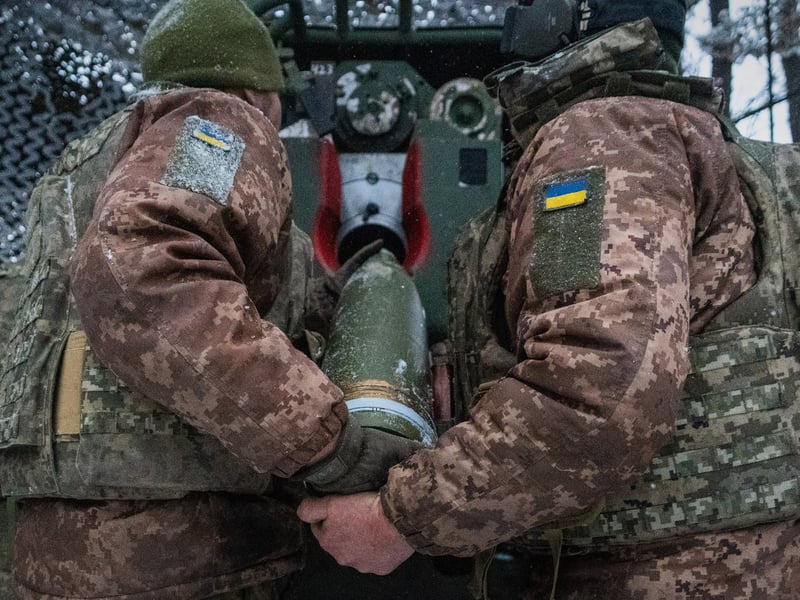

MOSCOW — Russia’s Defense Ministry said on Friday that Ukraine had lost more than 2,250 soldiers over the past week in fighting against a single one of its battlefield groupings, the latest entry in a running tally of enemy casualties that Moscow publishes almost daily and that no independent party has been able to confirm.
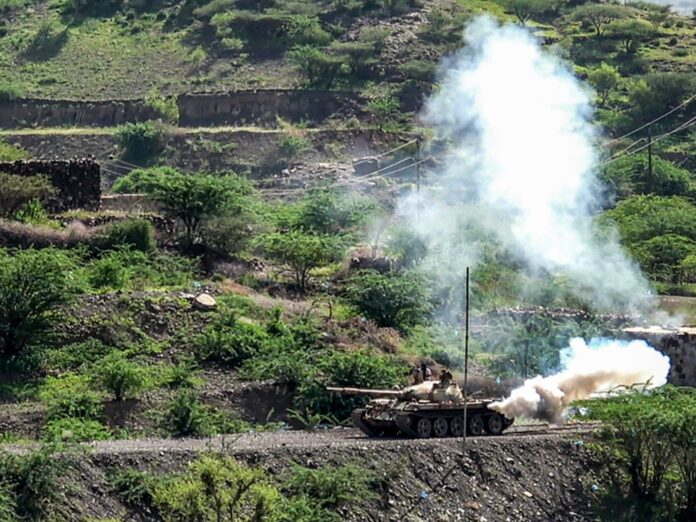
The figure, attributed to the ministry’s Tsentr, or Center, grouping in eastern Ukraine, arrived with the granular detail that has become a signature of the briefings: a destroyed tank, 22 armored combat vehicles, 58 trucks, 15 artillery pieces and seven electronic warfare stations. The same grouping reported a far smaller weekly toll only two weeks earlier, and the ministry layered Friday’s announcement with claims from four other groupings, the Vostok, Zapad, Yug and Dnepr forces, putting the week’s total Ukrainian dead, by Moscow’s account, above 6,800.
Those numbers, carried by the state news agency RIA Novosti, come with no way to check them. Russia does not allow independent observers to inspect the front, does not publish the method behind its counts, and does not release its own losses. The result reads less as battlefield accounting than as a daily message, aimed at audiences at home and abroad, about the price Ukraine is paying.
Researchers who track the war have argued for years that casualty figures issued by either combatant should be treated as instruments rather than data. Marina Miron, a researcher in the war studies department at King’s College London, has described such tallies as a weapon of psychological warfare used by Moscow and Kyiv alike, and has noted that even soldiers on the ground struggle to count the dead, the wounded and the missing with any precision.
The skepticism is not confined to Western analysts. When the Center for Strategic and International Studies, a research group in Washington, published its own casualty estimate this winter, the Kremlin waved it away. Its spokesman, Dmitri Peskov, told reporters that such figures should be trusted only if they came from Russia’s Defense Ministry, a standard that would leave Moscow as the sole judge of both its enemy’s losses and its own.
That posture sits awkwardly against the record. The Defense Ministry last disclosed its own dead in September 2022, when it acknowledged 5,937 soldiers killed since the invasion began. It has said nothing on the subject since, even as a verified roster of Russian war dead compiled by BBC News Russian and the independent outlet Mediazona climbed past 221,000 named individuals by mid-May, each tied to an obituary, a grave or an official document. Ukraine’s military puts the broader Russian figure, counting wounded and missing, beyond a million.
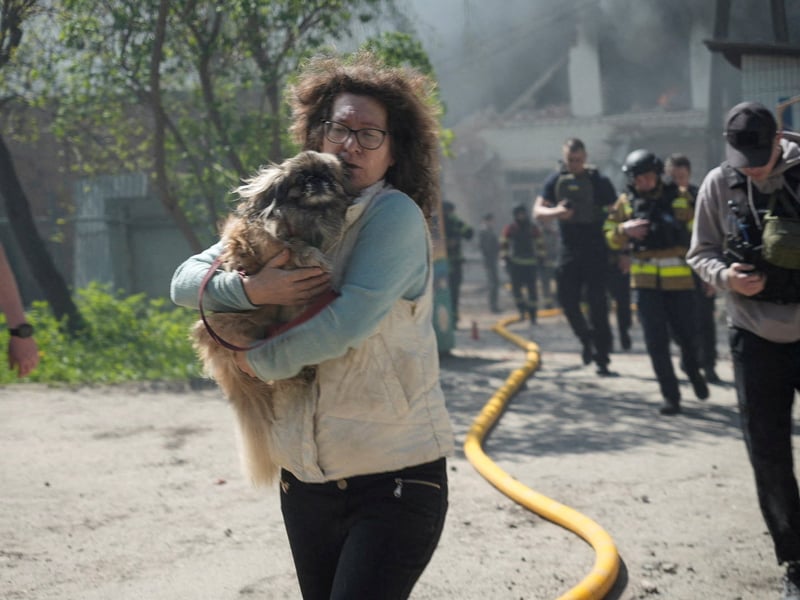
Ukrainian losses are murkier and just as closely guarded. President Volodymyr Zelensky said early last year that about 46,000 of his soldiers had been killed and roughly 380,000 wounded, while disputing higher tolls reported elsewhere. Al Jazeera, weighing the range of independent estimates, observed that both sides amplify the other’s losses while playing down their own, and that the outlet itself could not confirm the competing tallies. The CSIS study estimated Ukrainian deaths between 100,000 and 140,000, with as many as half a million wounded or missing, and concluded that Russia had absorbed roughly two and a half casualties for every Ukrainian one, a ratio that cuts against the story Moscow’s bulletins are built to tell.
The bulletins also describe a war moving faster than the map shows. Russian forces won the grinding battle for Pokrovsk, the Donetsk logistics hub, and the neighboring town of Myrnohrad in early 2026 after more than a year of costly assaults, but they have struggled to convert that into a wider breakthrough, gaining little ground to the west since. The Institute for the Study of War noted in its late-May assessment that Russia’s rate of advance had slowed sharply this year. Ukraine’s General Staff, in its own daily counts, has reported dozens of Russian assaults thrown back along the Pokrovsk line, 63 in a single day in late May, a picture of attrition rather than rapid advance.
Kyiv keeps its own running tally, and it points the other way. Ukraine’s commander in chief, General Oleksandr Syrskii, has put Russia’s losses since the start of 2026 above 141,500, Al Jazeera reported, with more than 83,000 of those described as irreversible. Moscow, for its part, has accused Western governments of concealing their own dead, a sign of how thoroughly the arithmetic of the war has itself become contested ground.
In the same weekly summary, the ministry said Russian forces had carried out one massive strike and five smaller group strikes on Ukrainian defense plants and military sites, and that its air defenses had downed three Storm Shadow cruise missiles, three French SCALP missiles and 2,628 drones. It cast the Ukrainian attacks it was answering as “terrorist” acts, the label Moscow routinely attaches to Ukrainian strikes on territory it holds or claims. Those assertions could not be independently verified either, and Ukrainian officials did not confirm the losses Moscow attributed to them.
For the Kremlin, the steady drumbeat of enemy casualty figures serves a purpose that does not depend on their accuracy. Russia still draws on a far larger pool of potential recruits than Ukraine, and the bulletins reinforce a narrative of inevitable Ukrainian exhaustion even as the front itself has barely shifted. Whether the precise number is 2,250 or something else entirely is, in that sense, beside the point. The number is the message.
—Inputs from Sputnik.