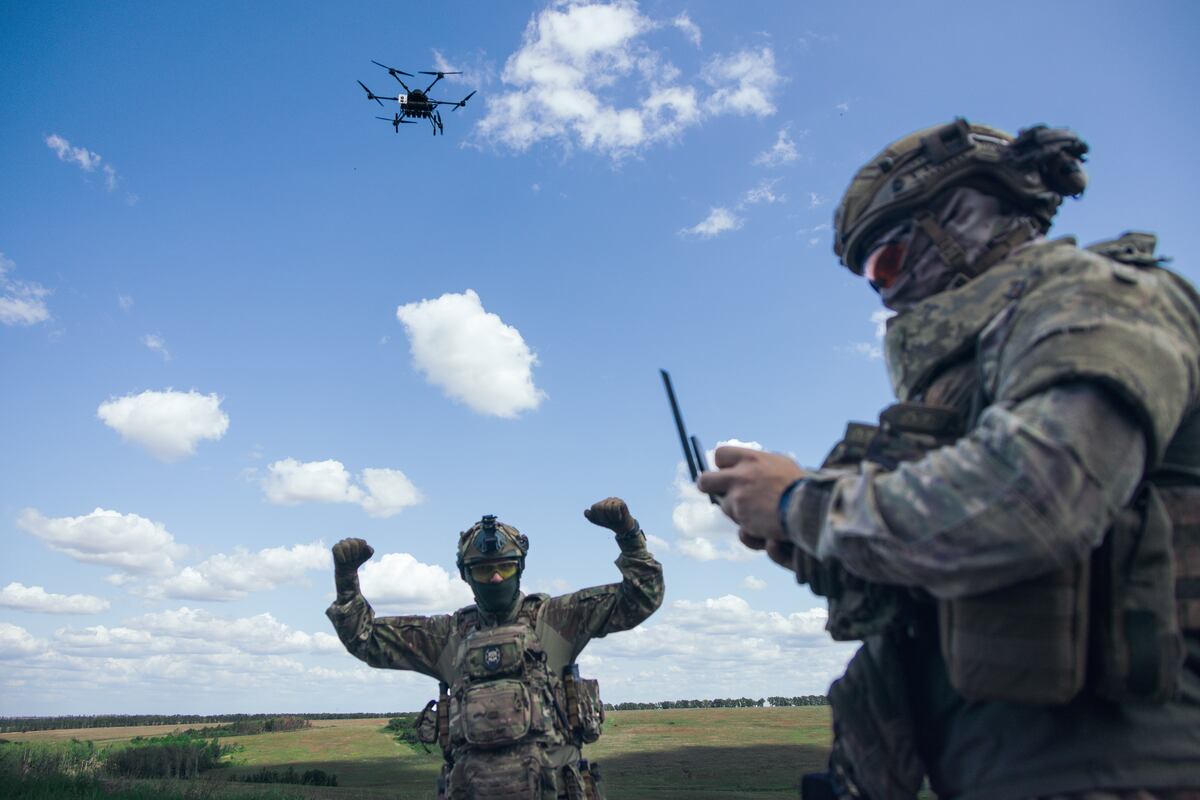

WASHINGTON – At Fort Benning in February, soldiers handed a drone controller to a company representative and said: you have two hours. Train us on this thing, then show us what it can do. The targets were desk-sized. The range was nine kilometers. The payload was live. Twenty-six startup teams had traveled to Georgia for what the Pentagon calls the Gauntlet – the opening round of the most ambitious drone procurement effort in American military history.
The Defense Department is now deep into an 18-month competition to identify which American companies can supply 300,000 small one-way attack drones, at roughly $5,000 a unit, under a program with $1.1 billion in contract value at stake. The Washington Post reported the details of the competition on Monday, including the identities of companies leading the field.
The contest is called the Drone Dominance Program, and its logic is borrowed directly from the fields of eastern Ukraine, where small, cheap, expendable drones now account for an estimated 70 percent of all battlefield casualties, according to military analysts who have studied the conflict. The Pentagon’s theory is straightforward: mass matters, cost does not. A drone that costs $5,000 and is destroyed on its first mission is not a budget failure – it is the intended outcome.
Defense Secretary Pete Hegseth made that philosophy explicit in a memo issued last July. Defense News reported Hegseth wrote that drone dominance is “a process race as much as a technological race” and that the department would be “buying what works – fast, at scale, and without bureaucratic delay.” The memo followed an executive order signed by President Donald Trump in June 2025, directing the military to prioritize inexpensive, American-made combat drones.
Among the companies attracting attention early in the competition is Neros, a U.S. startup founded by Soren Monroe-Anderson, a former professional drone racing champion. Monroe-Anderson’s firm is already working with the Army and Marine Corps, according to The Washington Post. The British company Skycutter is also named as a leading contender, a detail that raises questions the Pentagon has not yet addressed publicly – the Trump executive order specifically emphasized American-made systems, and it remains unclear how foreign firms qualify under the program’s criteria.
The competition is structured in four phases. The first, which ran from February through July 2026, involved up to 12 vendors producing 30,000 drones at $5,000 apiece. In each successive round, the number of participating companies narrows while the order volumes grow and the price per unit is expected to fall. DefenseScoop reported the Pentagon intends to reduce the supplier pool to three to five vendors by the final phase, with unit costs dropping to approximately $2,300 as production scales.
The procurement model is a deliberate departure from the Pentagon’s traditional acquisition system, in which a weapons program can take a decade from concept to fielding. Here, competitive cycles are measured in months. Operators – soldiers and Marines who would actually fly the systems in combat – serve as the primary evaluators at each Gauntlet round, not program managers or procurement lawyers. That inversion of the normal process is itself the point.
The scale of the broader ambition becomes clearer in the proposed defense budget for next year, which includes $54.6 billion earmarked for a dramatically expanded drone warfare capability across all military branches, according to The Washington Post. That figure dwarfs the $1.1 billion Drone Dominance contract and suggests the competition is less a ceiling than a starting point. Hegseth has publicly framed the drone buildup in the context of China’s expanding military capacity, pressing Asian allies to invest similarly at the Shangri-La Dialogue in Singapore last week.
What the Pentagon is building toward, in Hegseth’s description, is a force that can absorb drone losses in the thousands without disrupting combat operations – the same tolerance for attrition that Ukraine’s military has developed under Russian pressure. “We will deliver tens of thousands of small drones to our force in 2026 and hundreds of thousands of them by 2027,” Hegseth said at the program’s launch, adding that the new systems would change combat doctrine across every branch of service.
Whether the industrial base can deliver at that pace is the question the competition is designed to stress-test. The Pentagon has been moving aggressively on several parallel technology procurement tracks, committing billions to software infrastructure even as it accelerates the drone competition. The 25 companies invited to the first Gauntlet represented a mix of established defense contractors and first-time Pentagon suppliers, including several founded within the last three years.
The program’s final vendor list has not been announced. The Pentagon says it will narrow selections progressively through 2027, but has offered no timeline for when contracts at full scale – the 300,000-unit target – will be awarded. Hegseth’s promise of delivery “without bureaucratic delay” has yet to be tested against the realities of a procurement system that, even in its reformed form, requires contracting officers, legal reviews, and congressional budget cycles that no executive order has yet managed to eliminate.
—Inputs from Sputnik.
Related Posts