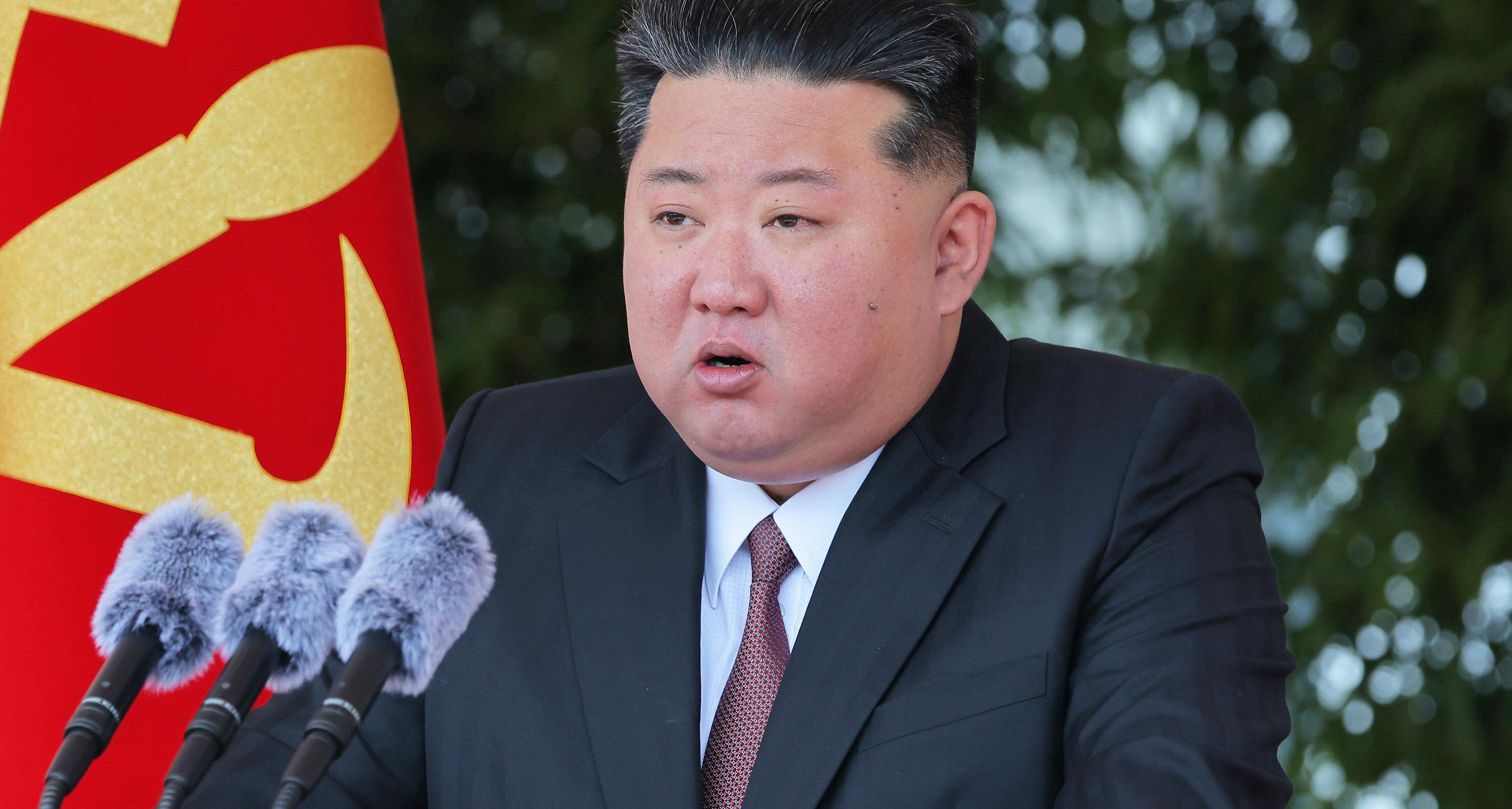

PYONGYANG — What Kim Jong Un chose to say at a party school anniversary tells you far more than the occasion itself. He did not come to celebrate. He came to warn.
The North Korean leader visited the Central Cadres Training School of the Workers’ Party of Korea on Monday to mark the institution’s 80th founding anniversary, the Korean Central News Agency (KCNA) reported Tuesday. Founded by his grandfather Kim Il Sung on June 1, 1946, the school is the party’s foremost political education institution – its stated purpose, to produce the ideological backbone that carries WPK doctrine from one generation to the next. Kim Jong Un opened the school’s newly constructed campus on June 1, 2024, after personally overseeing its design and site selection.
The speech he delivered there Monday was not ceremonial.
Kim described the institution as a “strategic fortress” for ensuring the party’s continued existence – language more associated with military installations than academic ones. That framing alone signals how Kim regards ideological education at this moment: not as a tradition to commemorate, but as an active instrument of regime preservation.
Then came the warning. According to NK News, Kim used the occasion to denounce party officials who accumulate what he called “corrupt wealth,” and to condemn what he characterized as young cadres drifting away from party teachings. The combination – elite material greed and generational ideological drift – suggests the speech was directed inward, at the class of officials the school itself produces.
The school’s headmaster, Ri Yong Sik, and the secretary of the school’s primary party committee, Paek Hyong Chol, greeted Kim on arrival. Teachers presented bouquets as he entered. The choreography was standard; the content of the address was not.
Kim’s concern about elite corruption within the party’s own cadre class is not new – but the venue he chose to surface it publicly matters. The Central Cadres Training School is where North Korea’s political officials receive and renew their party credentials. To stand before its faculty and staff and warn against the accumulation of “corrupt wealth” is to tell the institution’s graduates, and the institution that certified them, that the party is watching.
The visit concluded with a women’s football match held in honor of the anniversary. Kim met with players and coaches from the national squad and the Naegohyang team – both of which claimed international titles recently, winning the Asian Under-17 Women’s Cup and the AFC Women’s Champions League final – and posed for a commemorative photograph. The juxtaposition was deliberate: state media rarely assembles a sequence of elite correction followed immediately by national athletic triumph without intent.
What Kim did not say publicly – whether the speech included specific names, specific transactions, or specific institutions – remains unknown. KCNA’s report carried the ideological headline and the anniversary framing; it did not publish the full address. North Korean state media routinely omits the operational content of internal party speeches, which means the audience that needed to hear the warning most clearly was present in the room, not reading it afterward.
The school itself has undergone significant renovation under Kim’s direction. He announced the need for new construction in October 2022 and the campus opened nearly two years later on the institution’s 78th founding anniversary. The building spans over 130,000 square meters and includes administrative, cultural, sports, and residential facilities. Kim personally handed the school’s WPK flag to its director at the 2024 opening – a gesture KCNA described at the time as signaling the party’s expectations for the institution.
Those expectations, as Monday’s address made clear, have not been met entirely.
The Korea Herald and Korea Times both noted Kim’s framing of the school as a “strategic fortress” – language that the South Korean press interpreted as reflecting the regime’s current anxiety about internal cohesion. Analysts have described an intensifying succession preparation period involving Kim’s daughter, Ju Ae; North Korea moves to secure dynastic rule as Kim Jong Un grooms daughter for succession. Whether Monday’s corruption warning was connected to that dynamic or addressed a narrower internal problem within the cadre training apparatus is not publicly known.
Earlier this year, North Korea fired its first ballistic missile of 2026 toward the Sea of Japan – a reminder that the regime’s outward posture remains as assertive as its internal discipline campaigns. The party school turns 80 with its leader standing inside it, telling the people it trains that the party cannot afford what they have apparently become.
—Inputs from Sputnik.
Related Posts