
OSLO — The moment that clarified Norway’s position came not from a Security Council chamber or a diplomatic cable, but from a television interview. Espen Barth Eide, Norway’s foreign minister, told state broadcaster TV2 on Monday that Oslo stands behind Beirut’s demand that Israeli forces leave southern Lebanon — and that every strike Israel continues to launch makes that position easier, not harder, to defend on the world stage.
“We support Lebanon’s demand for the withdrawal of Israeli troops from southern Lebanon and an end to attacks by both Israel and Hezbollah,” Eide said in the interview. He went further, adding that if the pattern of Israeli military action persisted, it “will weaken Israel’s position in the Middle East and globally” — and by extension, he argued, undermine the very security that the operations claim to advance.
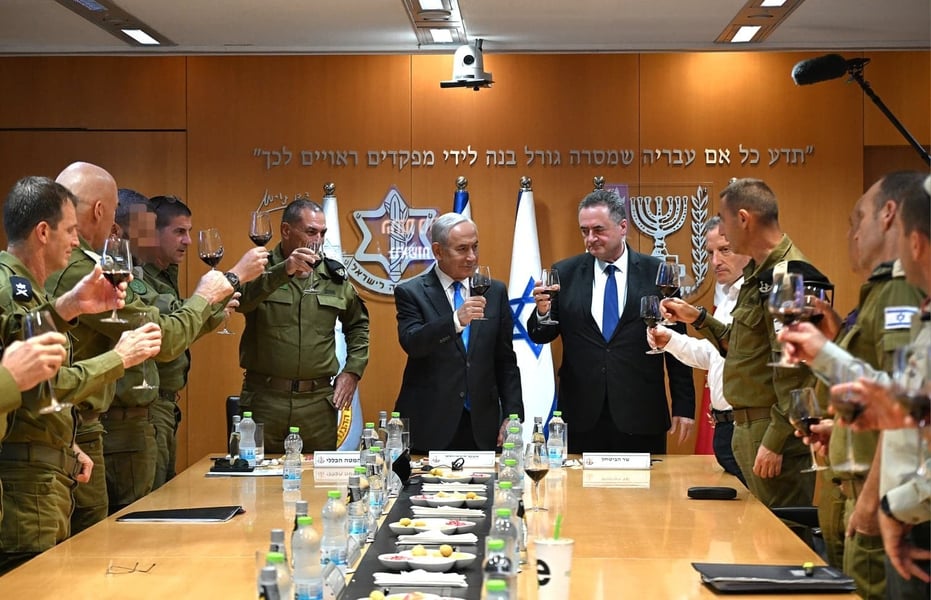
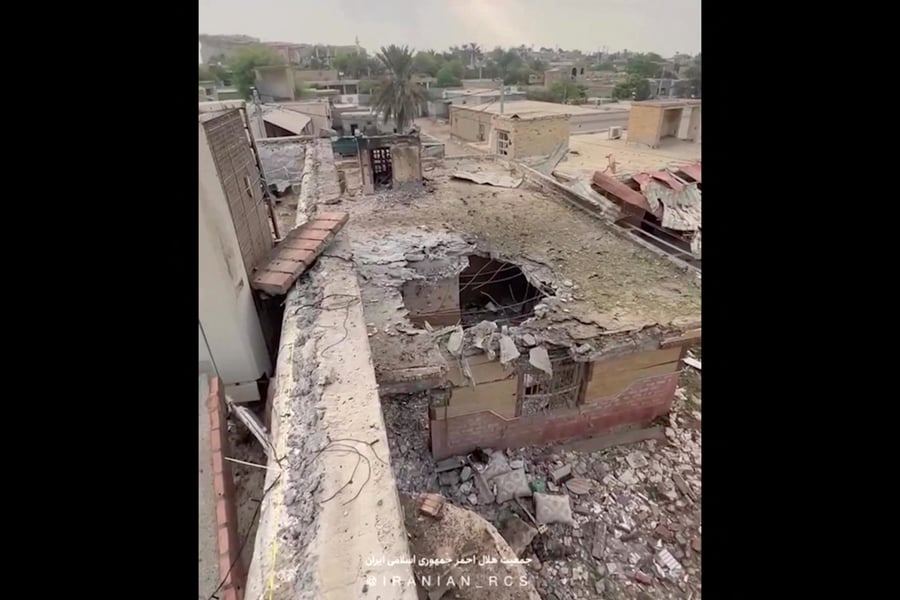
The statement arrived on a day when the Lebanon conflict lurched through its most volatile sequence of events in weeks. Prime Minister Benjamin Netanyahu ordered strikes against Hezbollah targets in Beirut’s Dahiyeh district, citing what his office called repeated violations of an April ceasefire. Iran’s Foreign Ministry responded swiftly, declaring that any Israeli action in Lebanon amounted to a breach of the broader ceasefire framework negotiated between Washington and Tehran. Then, hours later, U.S. President Donald Trump announced — after separate calls with Netanyahu and Hezbollah interlocutors — that the two sides had agreed to halt hostilities.
What the terms of that halt actually require, neither side has said clearly. Netanyahu’s own statement, released roughly two hours after Trump’s announcement, signaled that Israeli strikes in southern Lebanon would continue “as planned.” The Lebanese Embassy in Washington offered a different read, saying Hezbollah had accepted a framework that would extend the ceasefire across all Lebanese territory. Oslo’s call for troop withdrawal, then, landed inside that gap — a ceasefire that exists and doesn’t exist simultaneously, depending on whom you ask.
Eide did not confine his criticism to Israel. He noted that the ongoing fighting also blocks Lebanon’s own government from consolidating control over its territory and pursuing the disarmament of Hezbollah — the political objective that Washington, Paris, and Riyadh have all identified as the essential precondition for any durable resolution. “The fighting,” he said, “undermines the Lebanese government’s attempts to establish full control in Lebanon and move forward with the disarmament of Hezbollah.”
That framing — positioning continued Israeli operations as an obstacle not just to Lebanese sovereignty but to Hezbollah’s eventual weakening — reflects a calculation increasingly common among European foreign ministries. The argument holds that prolonged Israeli military pressure in Lebanon hardened Hezbollah’s domestic support rather than diminishing it, and that the Lebanese state can only claim the political space to disarm the group once it can also credibly claim to be defending its own citizens.
Norway’s diplomatic involvement in Lebanon is not incidental. Oslo hosted the negotiations that produced the 1993 Oslo Accords and has maintained a consistent presence in Middle East peace frameworks since, including as a financial backer of UNIFIL, the UN peacekeeping force deployed along the Blue Line separating Lebanon from northern Israel. That history gives Eide’s statement a degree of institutional weight beyond its rhetorical content, though it also means Oslo has rarely translated its stated positions into policy leverage of comparable scale.
The April ceasefire that Eide referenced had never held cleanly. Netanyahu ordered IDF strikes on Hezbollah targets in Beirut’s Dahiyeh on June 1, declaring the ceasefire “repeatedly violated” — a sequence that Tehran cited as grounds to suspend its own nuclear talks with Washington. What followed was a compressed episode of U.S. crisis management that pulled the episode back from a broader escalation, at least for Monday. Whether the same mechanism can hold on Tuesday remains the open question.
Trump announced the ceasefire extension on Monday evening. Hezbollah’s acceptance was relayed through Speaker of the Lebanese Parliament Nabih Berri, who told Trump’s envoys that the group was prepared to observe a halt. Netanyahu’s language on southern Lebanon, however, left open what Israel actually agreed to stop. The planned large-scale Beirut operation was pulled back at U.S. insistence, according to Israeli broadcasters — a sequence that illustrated how much of the current diplomatic architecture rests on Washington’s willingness to restrain Jerusalem rather than any agreed set of rules.
Meanwhile, Iran’s assertion that the ceasefire in Lebanon was inseparable from the broader U.S.-Iran framework added a layer of pressure that Oslo’s statement did not address. Eide’s comments were directed squarely at Israeli behavior on Lebanese soil; what Hezbollah does next, and whether Iran’s nuclear negotiators return to the table, is a calculation being made in capitals considerably more invested in the outcome than Oslo.
What Norway’s position does do, alongside similar statements from France, Germany, and the EU foreign affairs chief Kaja Kallas, who similarly urged all parties to respect Lebanon’s sovereignty at the April Brussels summit, is narrow the diplomatic space available to Israel if it seeks to resume large-scale operations in Beirut. Iran has already signaled that any violation of the ceasefire in Lebanon will carry consequences for its cooperation with Washington, which gives European statements a secondary function — they document international consensus in advance, rather than reacting to it afterward.
Whether that consensus produces a durable Israeli withdrawal from the areas it still occupies in southern Lebanon is a different question. Eide did not specify a mechanism, a timeline, or any consequence if Israel declines. The demand is on record. What happens to it depends, as with most things in the Lebanon file, on what Washington is willing to insist upon — and for how long.
—Inputs from Sputnik.
Related Posts