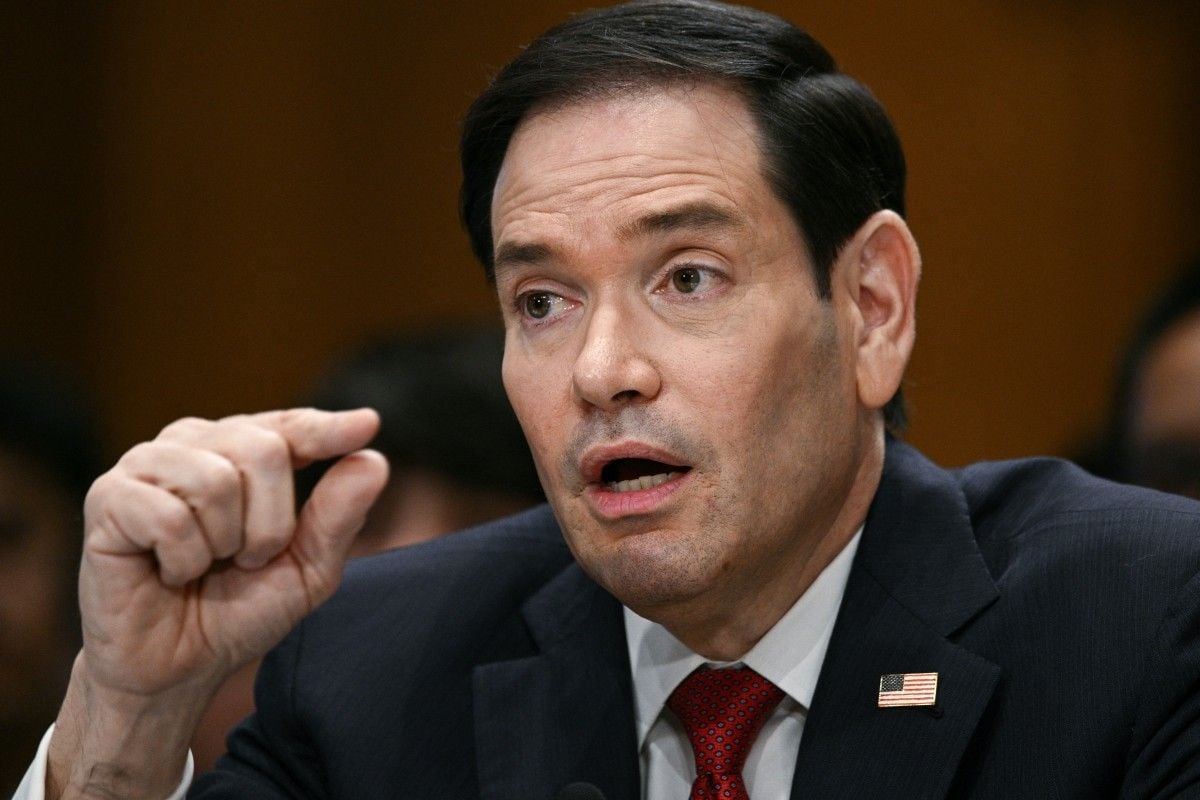

WASHINGTON — The budget request was almost beside the point. Secretary of State Marco Rubio arrived at the Dirksen Senate Office Building on Tuesday morning to defend the State Department’s $36 billion fiscal year 2027 proposal before the Senate Foreign Relations Committee, but the question senators most wanted answered had nothing to do with appropriations: on what legal authority is this war still being fought, and when does it end?
It was Rubio’s first public testimony before Congress since the Trump administration launched joint strikes with Israel against Iran on February 28 — 94 days during which the White House has provided Congress with war powers notifications that Democrats say amounted to information delivery, not consultation. The hearing was Rubio’s debut in that pressure cooker, and the room made clear it had been waiting.
Sen. Jeanne Shaheen of New Hampshire, the committee’s ranking Democrat, did not wait for the question-and-answer period. In her opening remarks, she told Rubio directly that his office had refused to provide information requested on U.S. troop posture changes in Europe, on operations in Iran, and on American support for Ukraine. “When you do notify Congress, it’s to inform us of decisions you have already made,” Shaheen said. The war powers notification, in her telling, was not a legal obligation honored — it was “an attempt to avoid answering to this committee and this Congress about this war.”
Rubio did not concede the legal ground. He has argued publicly that the 1973 War Powers Resolution is unconstitutional — a position he told reporters at a recent White House briefing has been shared by “every single president” since the law passed. The administration contends that an April ceasefire already terminated the original hostilities, and that Trump’s letter to Congress in May declaring “no exchange of fire” since April 7 satisfied whatever obligation existed. Democrats and a growing bloc of Republicans reject that reading, pointing to continued U.S. naval operations blockading Iranian ports and back-and-forth attacks since the ceasefire announcement that have tested the arrangement nearly every week.
That fracture is no longer purely partisan. On May 13, three Republican senators crossed to join Democrats in the closest Senate war powers vote yet on the Iran conflict. Two weeks later, as the House was preparing to vote on a war powers resolution that Democrats said had sufficient bipartisan support to pass, Speaker Mike Johnson canceled the vote entirely rather than risk its passage, drawing a furious rebuke from Democrats and quiet unease from a handful of Republicans unwilling to be quoted by name.
“Republicans cowardly pulled a scheduled vote,” Representative Gregory Meeks of New York, the top Democrat on the House Foreign Affairs Committee, said at the time. Meeks has since moved to subpoena Rubio, special envoy Steve Witkoff, and Jared Kushner, demanding they appear before the committee to explain the decisions, diplomacy, and planning behind the war. The subpoena motion was itself a measure of how far oversight demands had traveled from the early weeks of the conflict, when most Republican resistance remained private.
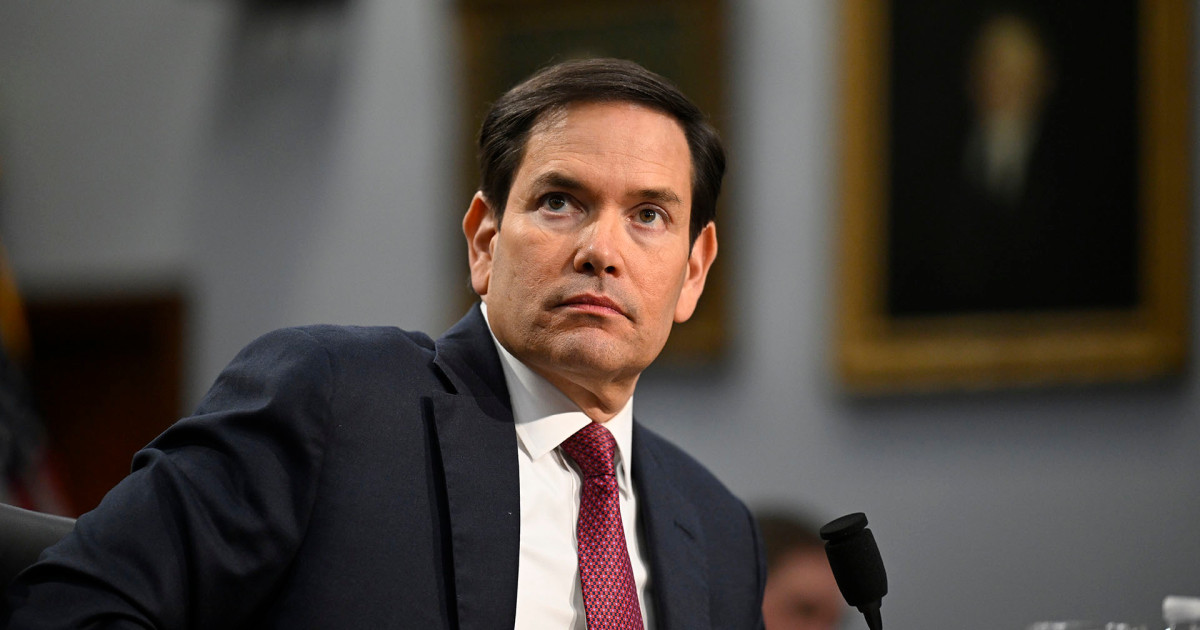
Tuesday’s hearing added a new element. Rubio disclosed that the United States is in active talks with Iran and that Tehran has agreed to discuss components of its nuclear program it had previously refused to put on the table. The terms he laid out are not, at this point, a deal: they are the preconditions Rubio said Washington was insisting on before anything more formal could be negotiated. Iran must reopen the Strait of Hormuz, declare it free of mines, stop charging the toll of over $1 million per vessel that the Iranian Revolutionary Guard has levied since seizing control of traffic through the waterway in late February, and pledge not to fire on commercial ships. CNBC reported Rubio told the committee: “They need to announce that they will no longer fire on commercial ships that are going through or threaten to fire on ships.”
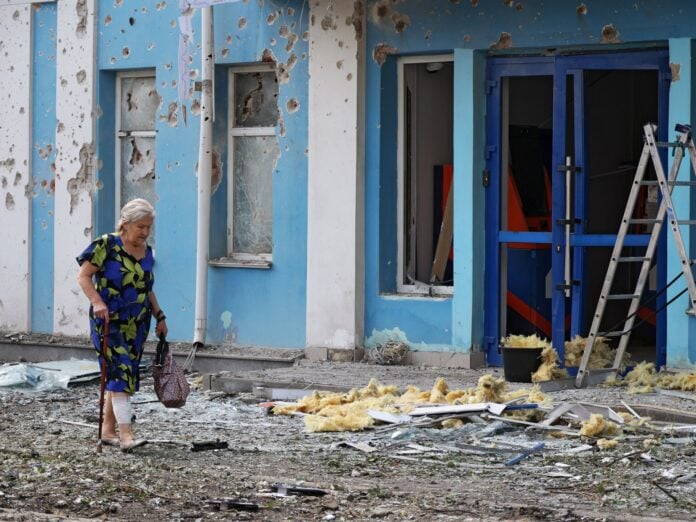
The Strait of Hormuz carried roughly 20 percent of the world’s seaborne oil and natural gas before February 28. Disruption to that traffic has been among the most immediate economic consequences of the war, driving fuel price spikes that lawmakers in both parties have cited as a domestic political liability heading into November’s midterm elections. The war began as a broadly popular decision among Republican voters; polls taken in recent weeks have shown approval eroding, particularly among independents in competitive districts.
Asked about the timeline for a deal, Rubio offered precision of a kind that carries its own risk. There is a chance, he said, that Iran could engage on the nuclear question “today,” “tomorrow” or “next week” — a horizon that does not constitute a plan. “That does not guarantee a deal acceptable to the Senate or acceptable to the American people,” he acknowledged. What it would do, he said, is put the United States in a position to negotiate something that was “off the table just a month ago, just a year ago.”
Not all Republicans were satisfied with that framing. The hearing’s tensions cut in two directions: Democrats pressing Rubio on the war’s legal basis and end game, and hawkish Republicans pressing him against any deal they consider too permissive toward Tehran. Sen. Lindsey Graham of South Carolina, who has publicly backed the war from the start, drew a clear line over the weekend — he now supported the deal Trump was considering to reopen the Strait while continuing nuclear talks, The Hill reported, but drew a firm line against any ceasefire requiring Israel to halt operations against Hezbollah. “Any ceasefire with Hezbollah would allow them to re-arm and become stronger,” Graham wrote on the social platform X. The committee got a version of those competing Republican pressures in real time on Tuesday.
Shaheen’s broader challenge to Rubio went beyond Iran. She pressed him on whether the administration was pursuing regime change not just in Tehran but in Havana and Caracas as well — a line of questioning that Rubio, a Cuban-American who has spent much of his political career focused on Latin America, fielded with evident irritation. “When I talk to my constituents, they asked for economic relief at home, not regime change in Havana or Caracas or Tehran,” Shaheen said.
Rubio is scheduled to return to Capitol Hill on Wednesday for additional testimony, this time before the House Foreign Affairs Committee and the Senate Appropriations subcommittee on the State Department. He will face, again, the same unanswered question that Tuesday’s hearing surfaced and did not resolve: not whether a deal with Iran is conceptually possible, but what the administration will accept and what Congress would be willing to ratify. Neither Rubio’s answers nor the senators’ questions on Tuesday resolved that gap. Whether that ambiguity reflects a deliberate negotiating posture or an absence of a defined end game is something neither side, as of Tuesday evening, could say with confidence.