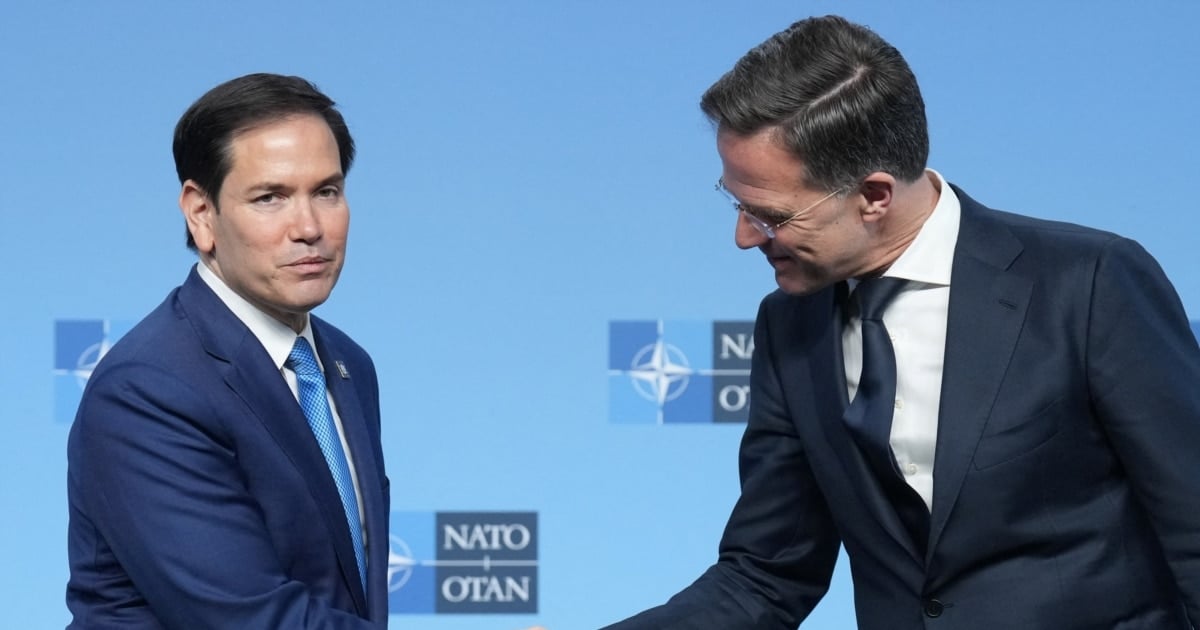

WASHINGTON — The question has hung over every NATO summit for the better part of a decade: how much of Europe’s own defense can Europe actually provide? On Tuesday, Secretary of State Marco Rubio supplied a blunter answer than most American officials are willing to give on the record.
“These countries will have to step up,” Rubio told the Senate Foreign Relations Committee during a hearing on the State Department’s fiscal year 2027 budget request. “They, at a minimum, have to be able to conventionally defend their own sovereign national territory for the most part.”
The remark was not made in passing. It came during Rubio’s first public congressional testimony since the Trump administration launched military strikes against Iran on February 28, an operation that exposed fractures inside the Western alliance that have yet to close. European governments refused to provide basing rights or overflight for the Iran operation, a decision Washington has not forgotten.
Rubio has been candid about what that refusal cost the alliance in American eyes. In late March, he told Fox News that Washington would have to “reexamine” whether NATO still served American interests if the arrangement amounted to the United States defending Europe while European allies denied the U.S. access when it needed them. Tuesday’s hearing gave him a formal congressional forum to expand on that posture.
The core of his argument was structural. The United States, he has said repeatedly, is not a power focused solely on Europe. It has defense commitments in the Western Hemisphere and the Indo-Pacific that compete for resources and attention. That reality, in his framing, makes it not unreasonable to expect that European members of a defensive alliance should be able to, at minimum, hold their own territory without American reinforcement as the first line of response.
What Rubio left open, and what European capitals will press Washington on in the coming weeks, is what “for the most part” means in operational terms. The Trump administration itself created significant confusion in May when it simultaneously announced troop reductions in Germany and then abruptly reversed course to send 5,000 additional soldiers to Poland, leaving allies unable to plan around a stable American posture. That episode illustrated the gap between the rhetoric of European self-sufficiency and the practical reality that NATO’s eastern flank still anchors itself around U.S. forward deployments.
Rubio’s appearance before the Senate Foreign Relations Committee was also the first opportunity for lawmakers from both parties to question the administration directly about the Iran war’s diplomatic trajectory. Sen. Jeanne Shaheen, the ranking Democrat on the committee, used her opening remarks to criticize Rubio’s office for ignoring information requests on Ukraine policy, the shifting American troop posture in Europe, and the status of negotiations with Tehran. The ceasefire between the United States and Iran, extended open-endedly after initial talks in Pakistan collapsed in April, has been further destabilized by Israeli strikes on southern Lebanon and Hezbollah’s stated intention to respond.
The NATO question and the Iran question are, in Rubio’s telling, inseparable. The war in Iran accelerated a transition that had already been announced — a gradual American drawdown from a Europe-centric posture — while providing European governments with what analysts at the German Marshall Fund have described as an opportunity to signal their independence from Washington on security decisions. Kristine Berzina, a senior fellow at the institution who focuses on trans-Atlantic security, told NPR last month that the Iran war was “showing cleavages in the alliance more than any conflict has thus far.”
Those cleavages were visible in the May NATO foreign ministers’ meeting in Helsingborg, Sweden, where Rubio delivered what amounted to a formal warning: Washington’s military footprint in Europe would shrink over time, and allies should plan accordingly. NATO Secretary-General Mark Rutte sought to project unity afterward, insisting the alliance’s commitment to collective defense under Article 5 remained “absolute.” But the meeting did not resolve the underlying question of how European NATO members would fill the gap if the American drawdown accelerated.
The United Kingdom and France rejected a Rutte proposal last month that would have committed NATO members to mandatory arms spending targets for Ukraine support, a decision that highlighted how European solidarity has its own limits when binding financial obligations are on the table. Defense spending increases across the alliance have been real and in some cases dramatic, but the political will to formalize collective commitments beyond the two percent GDP target remains contested.
Rubio is scheduled to testify before the House Appropriations Committee later Tuesday on the same budget request. Whether members of the House press him further on what specific conventional capabilities Washington expects NATO allies to develop — and on what timeline — is a question that European defense ministries are likely tracking closely. Rubio told the Senate on Tuesday that a deal with Iran remains possible but is not guaranteed, a hedge that leaves the alliance’s Iran-related strains unresolved for now.
What the Tuesday hearing did not produce was any concrete American commitment on the timeline or mechanics of a U.S. drawdown, the defense spending level at which Washington would consider European allies to have met the bar, or whether “conventional defense of sovereign territory” means unilateral capacity or something less than that. Those definitions will matter considerably more than the principle, and they remain, for now, unstated.
— Input From Sputnik.