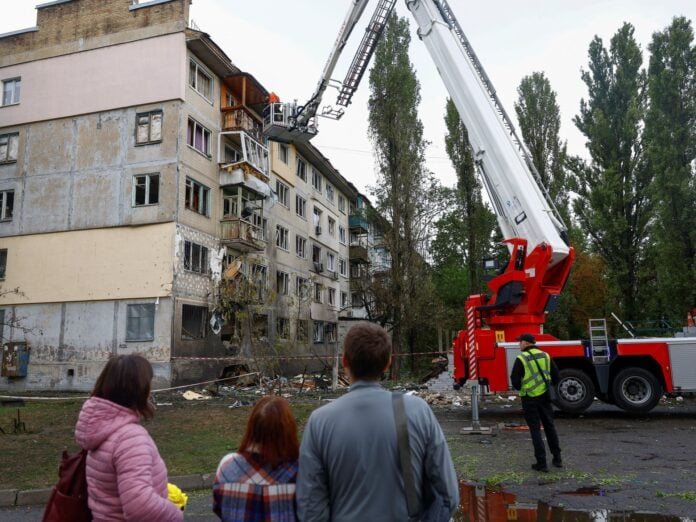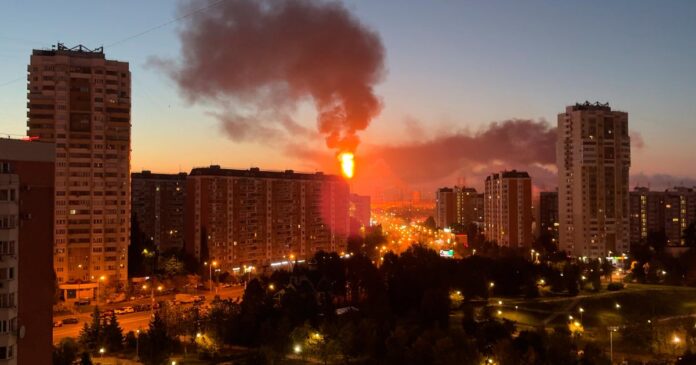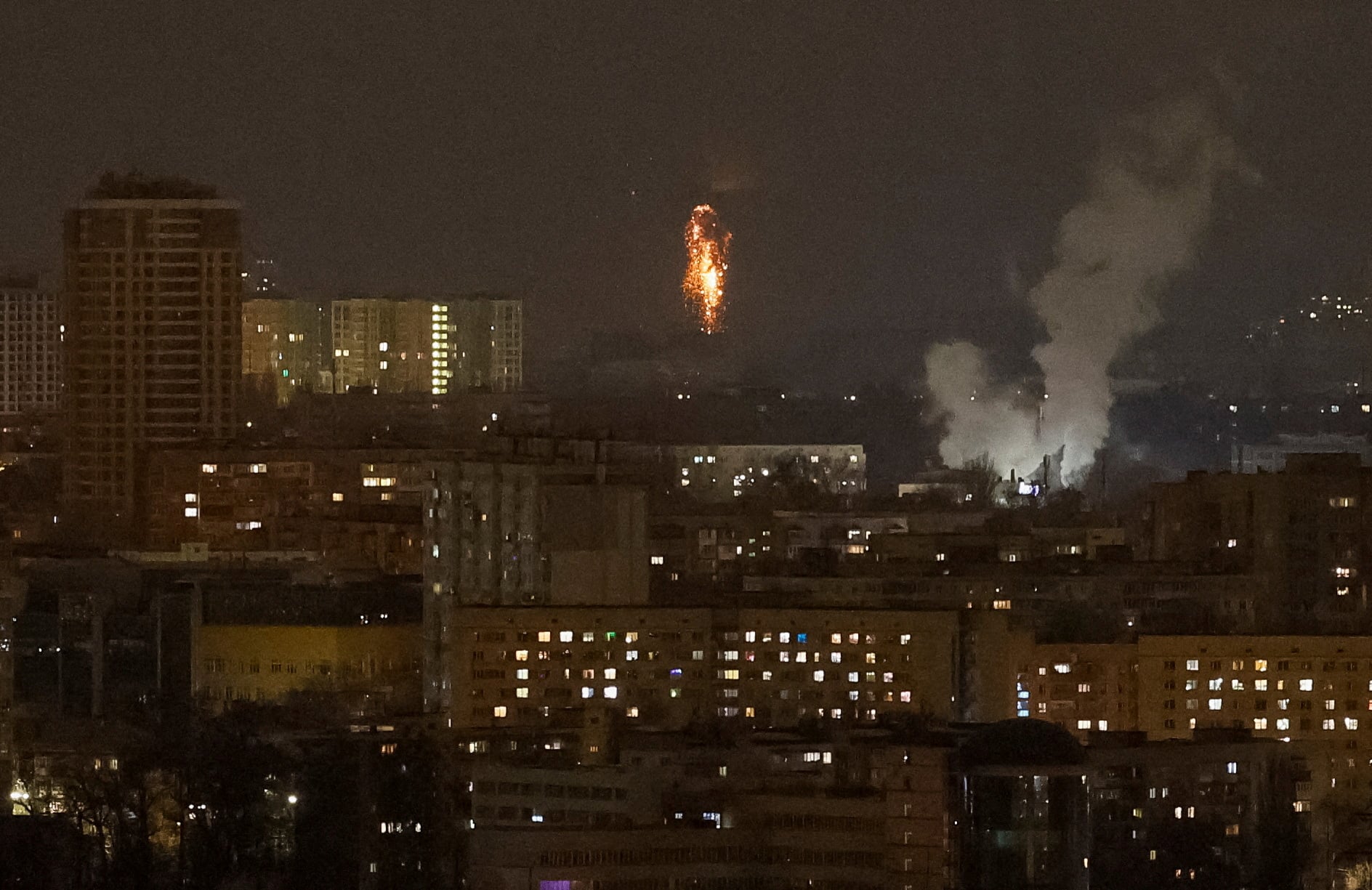

MOSCOW — Before first light on Tuesday, air raid alerts were still active across seven Russian regions when Moscow announced what its Defense Ministry called its largest overnight drone intercept of the current escalation: 148 fixed-wing Ukrainian unmanned aerial vehicles destroyed between 8 p.m. Monday and 7 a.m. Tuesday, across a sweep of Russian territory stretching from the Bryansk and Smolensk forests in the west to the Azov and Black Seas in the south.
The statement, published Tuesday morning by the Russian Defense Ministry and cited by RIA Novosti, named ten operational zones: the Belgorod, Bryansk, Volgograd, Kursk, Oryol, Rostov, and Smolensk regions, the Krasnodar Territory, the Republic of Crimea, and offshore over both seas. No casualty figures were included. No independent verification was possible.
The figure is notable in context. Russia reported 101 intercepts on the night of May 21–22 and 67 on the night of May 16–17 — each count accompanied by similar geography. The June 1–2 figure, if accurate, represents the highest single-night total Moscow has claimed in this two-week cycle. What it does not say is how many drones reached their targets before being engaged, or whether any caused damage on the ground.
Russian Defense Ministry releases carry a structural limitation: they report only what was intercepted, never what was not. Regional governors on Telegram — often the more reliable source for ground conditions in border oblasts — had not, as of early Tuesday morning, reported significant damage or casualties from the overnight wave. That silence neither confirms nor contradicts the ministry’s claim.
The overnight figure arrived at the end of a week in which Ukraine’s drone campaign expanded in a different direction. On May 31, Ukraine’s Third Army Corps announced that strike drones from its unmanned systems battalion had reached the Izvaryne checkpoint, more than 205 kilometers into Russian-controlled territory in occupied Luhansk Oblast, striking armored vehicles and ammunition depots along supply routes Moscow’s forces had treated as secure rear terrain. Peace talks remain stalled, with no agreement in sight as a U.S.-imposed June deadline passed without a deal.
The two trends are connected. Ukraine’s long-range drone campaign inside Russia — targeting border regions, energy facilities, and logistical corridors — is designed to impose costs deep enough that the Russian public and military command feel the war’s weight beyond the front. Russia’s nightly intercept claims are the mirror response: proof of a functioning air defense network absorbing sustained assault. Neither narrative can be fully trusted at face value.
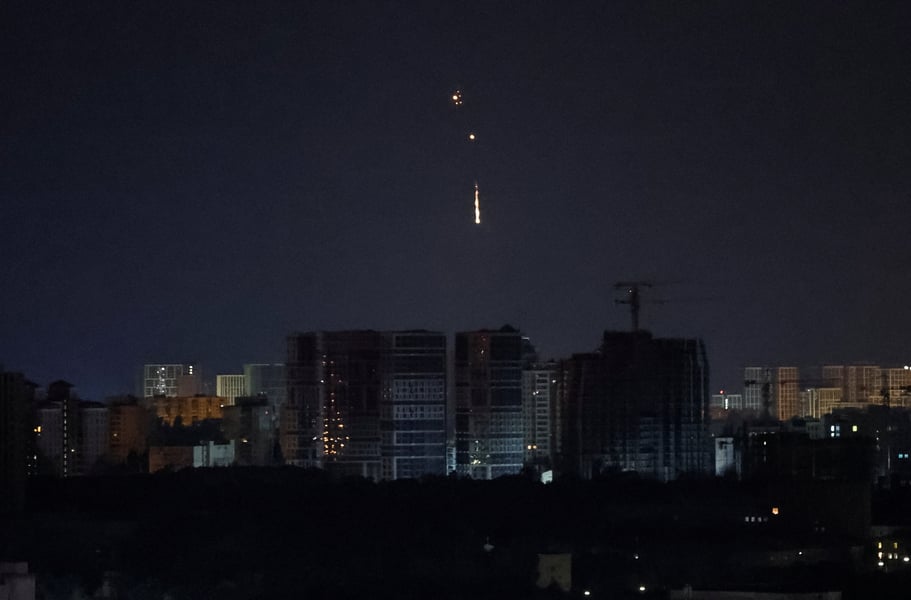
The geographic spread of Tuesday’s claimed intercepts is its own data point. Belgorod and Bryansk, the two regions most consistently named in these reports, sit directly on the Ukrainian border and have absorbed Ukrainian drone activity since the early months of the war. Volgograd, Smolensk, and Krasnodar are considerably deeper inside Russia — their repeated inclusion in recent weeks signals Ukraine’s capacity to push attack corridors far from the front line.
Ukraine has not disputed the general pattern. Kyiv has acknowledged escalating its deep-strike campaign as a means of pressuring Moscow without equivalent advances on the ground. Ukrainian officials had not, as of Tuesday morning, released a corresponding overnight strike report for the June 1–2 wave; the figure cited by Moscow has been neither challenged nor confirmed from Kyiv’s side.
What the air war has not produced, on either side, is a decisive shift in the military balance. Russia’s front-line positions in eastern Ukraine remain broadly stable. Ukraine’s drone campaign has caused fires, disrupted logistics, and imposed economic and political costs, but it has not altered the pace of ground fighting in Donetsk or Zaporizhzhia. The nightly drone exchanges have become the conflict’s most visible and least strategically conclusive front.
What remains unknown is whether Tuesday’s claimed intercept count reflects a genuine surge in Ukraine’s sortie volume or an improvement in Russia’s detection and tracking systems — two very different military realities with opposite strategic implications. Russia has not explained the methodology behind its nightly totals, and independent analysts have no access to radar data from either side.
—Inputs from Sputnik.