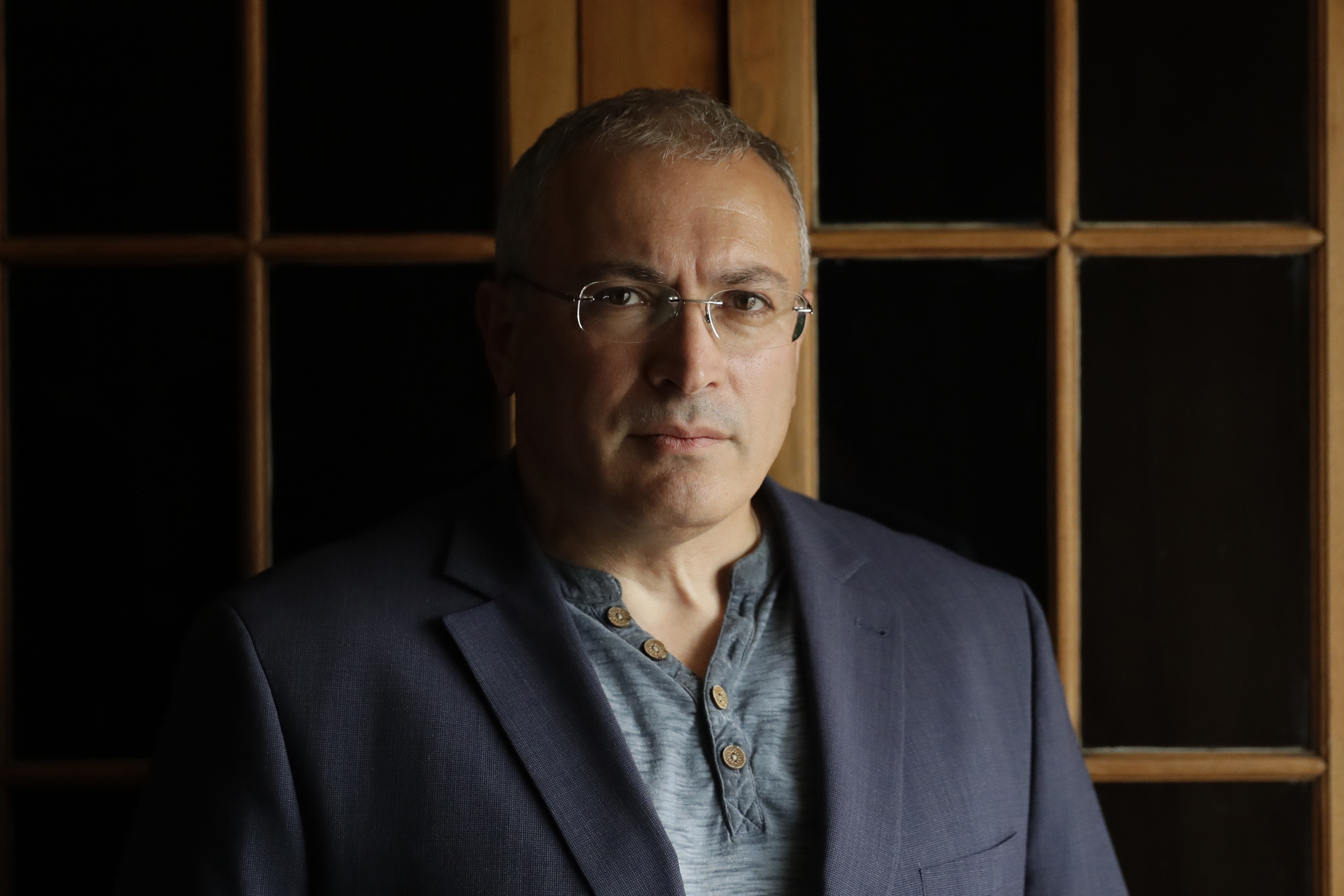

MOSCOW — The courtroom at the Meshchansky district courthouse has heard Mikhail Khodorkovsky’s name pronounced in judgment twice before. On Monday, it did so a third time. The Moscow court sentenced the exiled businessman and Kremlin critic to 10 years in a general-regime penal colony on charges of disseminating deliberately false information about Russia’s armed forces — a verdict he will almost certainly never serve, and one that Russia’s government appears to have issued knowing that.
Khodorkovsky was not present. He has lived in exile, largely in London, since President Vladimir Putin pardoned him in December 2013 after a decade in Siberian labor camps. The court also stripped him of the right to administer websites and online channels for five years — a provision that reaches into his current work running the anti-war outlet MBKh Media and the Open Russia movement, both of which Russian authorities have designated as extremist or undesirable organizations.
The designation that preceded Monday’s sentence matters. Russian prosecutors labeled Khodorkovsky a foreign agent before bringing charges, a status that carries criminal exposure under statutes that have been steadily broadened since Russia’s full-scale military operation in Ukraine began in February 2022. The fake-news law under which he was convicted, Article 207.3 of Russia’s criminal code, was enacted in March of that year and imposes up to 15 years in prison for spreading what the state deems false information about the armed forces.
What Khodorkovsky actually said that triggered the case has not been detailed in official Russian court documents made available abroad. His representatives did not immediately respond to requests for comment. What is clear is that the charges follow a terrorism indictment opened against him in October 2025, when Russia’s Federal Security Service accused him of creating a terrorist organization and plotting to violently seize power — allegations his team rejected as politically motivated fabrications.
The pattern is not lost on those who have watched his legal history closely. Khodorkovsky was arrested in October 2003 on the tarmac of a Siberian airport, the opening move in what became the most consequential prosecution of the Putin era. He was convicted of fraud and tax evasion in 2005 at the same Meshchansky court that handed down Monday’s verdict, receiving a nine-year sentence. A second trial in 2010 added another conviction for embezzlement and money laundering. By the time he was pardoned and released, he had spent a decade in custody. The charges, he and his supporters consistently argued, were retribution for funding opposition parties and refusing to subordinate his political ambitions to the Kremlin’s.
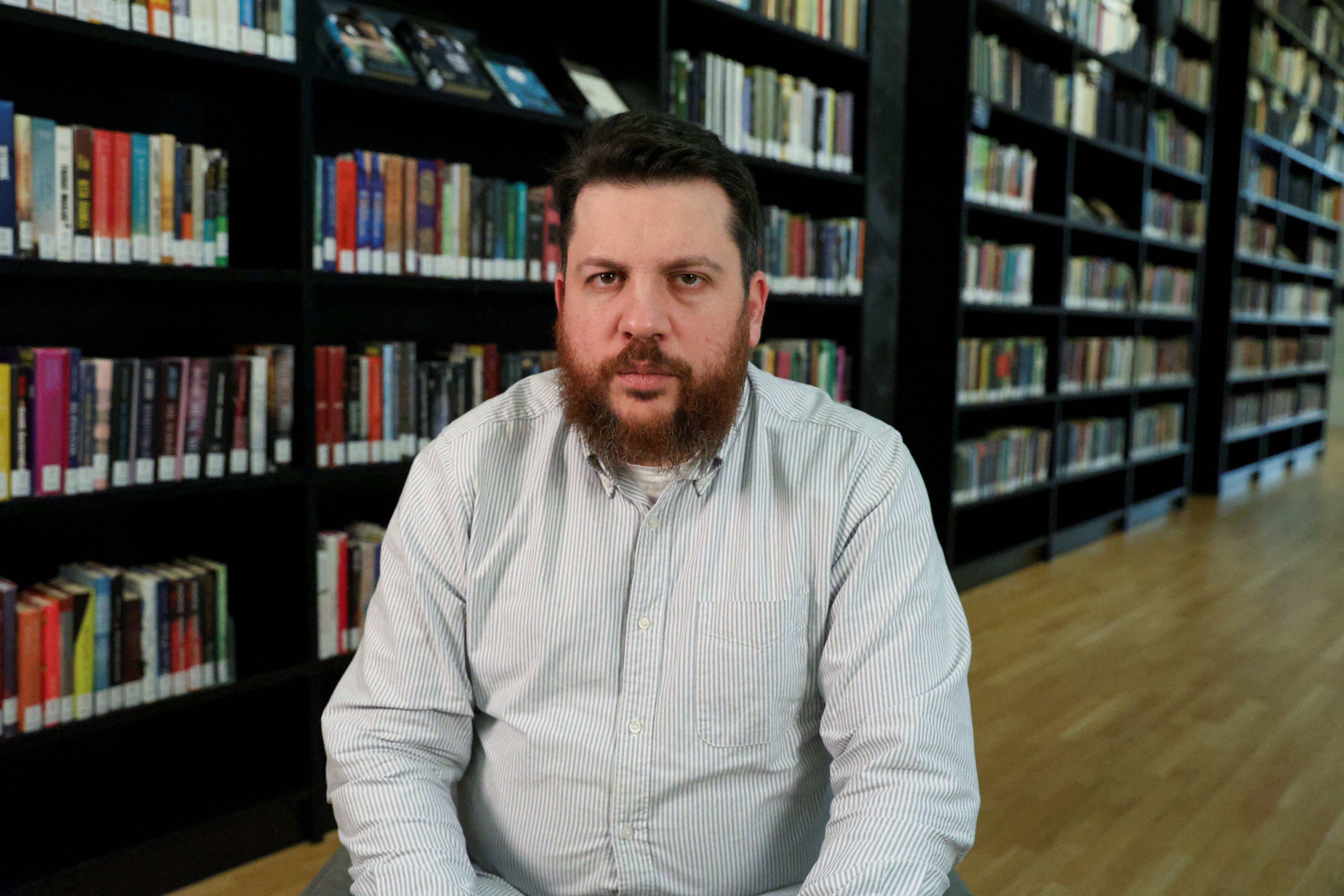
Monday’s verdict arrives in a different political environment than those earlier trials, but with a familiar logic. Russia has sentenced dozens of exiled critics and journalists in absentia since 2022 under the military fake-news statute and related laws. Leonid Volkov, an ally of the late opposition leader Alexei Navalny, received 18 years from a Russian military court last week on charges that included spreading false information about the war in Ukraine. The television journalist Ekaterina Kotrikadze was sentenced to eight years in February for Telegram posts about civilian deaths in Bucha and Odessa. A cookbook author and blogger received nine years for Instagram posts in early 2023. The sentences, handed to people who have no intention of returning to Russia, function less as punishments than as a public ledger of who the state considers its enemies.
Khodorkovsky has been one of the more prominent voices calling for Western governments to maintain pressure on Moscow over its military operation in Ukraine. In December 2024, he described Russia as a fully fledged totalitarian dictatorship and said he was committed to fighting for a Russia governed by the rule of law and political pluralism. His Anti-War Committee, which has been banned in Russia, continued to operate from abroad. The five-year ban on administering online channels attached to Monday’s sentence is, in legal terms, an attempt to formalize that work as criminal activity.
The international reaction to similar sentences against exiled Russians has generally followed a predictable arc: condemnation from Western governments and press-freedom groups, no change in the defendant’s situation, and no extradition. Khodorkovsky’s case is unlikely to differ. The Committee to Protect Journalists, which has documented hundreds of detentions and prosecutions of journalists and dissidents in Russia since 2022, has consistently condemned what it describes as a campaign of transnational legal persecution targeting those who report independently on Russia’s military operation in Ukraine.
What the sentence does accomplish, from Moscow’s perspective, is administrative. The foreign-agent designation, the pending terrorism charges, and now the fake-news conviction together constitute a legal architecture that makes any future return to Russia — under any conceivable political circumstances — extremely complicated for Khodorkovsky. It also sends a message to the broader network of exiled Russian media figures and opposition organizers: that the Russian state is prepared to maintain and expand its pursuit of them regardless of where they live or how many years have passed since they left.
The wave of repression that followed Russia’s military operation in Ukraine has touched people with very different relationships to the state. Khodorkovsky’s case is among the more historically layered: he was once Russia’s richest man, once its most famous political prisoner, and is now, in the accounting of Russian courts, a foreign agent, a suspected terrorist, and a convicted spreader of military disinformation. Whether any of those designations will ever translate into a prison cell is a question that depends entirely on geopolitical developments that no one in Monday’s courtroom could predict.
His lawyers have consistently rejected all charges as fabricated. The Committee to Protect Journalists and other watchdog groups have argued that the fake-news statute itself, applied to people outside Russia for speech made abroad, represents an extension of domestic legal repression into international territory. That argument has gained little traction in Russian courts, which have now produced a third conviction against the man who was once the face of Russia’s post-Soviet business class — and who remains, from exile, among its most persistent critics.