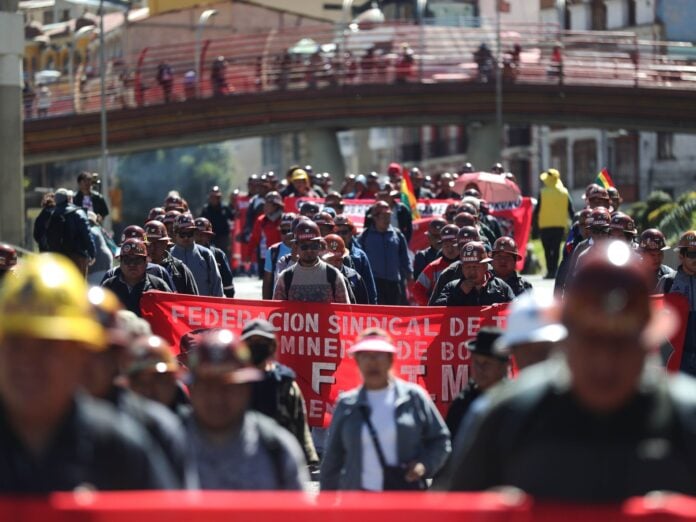

LA PAZ — The firecrackers came first, then the stones. By the time tear gas was drifting through Cochabamba’s central arteries on Monday, Bolivian President Rodrigo Paz had already done the one thing his government had been building toward for five weeks: he signed it.
The legislation Paz enacted formalizes the constitutional conditions under which the state may suspend ordinary rights and empower the military to restore order. It develops Article 139 of Bolivia’s constitution, the provision that has sat dormant since the country returned to democratic governance, and lays out four triggers – threats to state security, external dangers, internal unrest, natural disasters – under which a state of exception may be declared. The bill, numbered 161/2025-2026, passed Bolivia’s Plurinational Legislative Assembly with 86 votes in favor following 39 days of road blockades that have, by most measurements, brought the Andean nation to the edge of a supply collapse.
What it does not do is declare anything. For a state of emergency to actually come into force, Paz must issue a separate decree. That distinction – between a law that enables and a decree that triggers – is the space in which Bolivia’s crisis now sits.
The country has been here before. In November 2019, then-president Jeanine Áñez declared a state of emergency to suppress social protests; 37 people died during that period. The memory of that episode haunts the current standoff in ways that neither the government nor the protest coalition has said plainly. Paz’s own political survival may depend on how seriously he takes it. Violent military crackdowns on protests have toppled Bolivian presidents before.
The protests began in early May, initially over a law permitting land mortgages that Paz ultimately annulled on May 13. The concession did not hold. Bolivia’s national workers’ union, peasant farmers and Indigenous groups from the highlands remained outraged over the scrapping of fuel subsidies and frustrated with Paz’s failure in seven months to resolve Bolivia’s persistent economic problems, according to the Associated Press. What started as a sectoral grievance has widened into a demand for the president’s resignation, with the Central Obrera Boliviana – the COB, the country’s main labor federation – and coca growers, miners, and rural teachers sustaining the blockades across seven departments simultaneously.
At the peak of the crisis, Bolivia’s road administration registered 103 active blockade points across those seven departments, preventing the passage of food, fuel, medicine, and ambulances, Latin Times reported. By Monday that figure had dropped to approximately 90, though the effect on La Paz, the seat of government, remained severe. The capital and neighboring El Alto – a city sitting at more than 4,000 meters above sea level on the plateau above La Paz – have been substantially isolated from supply routes for weeks.
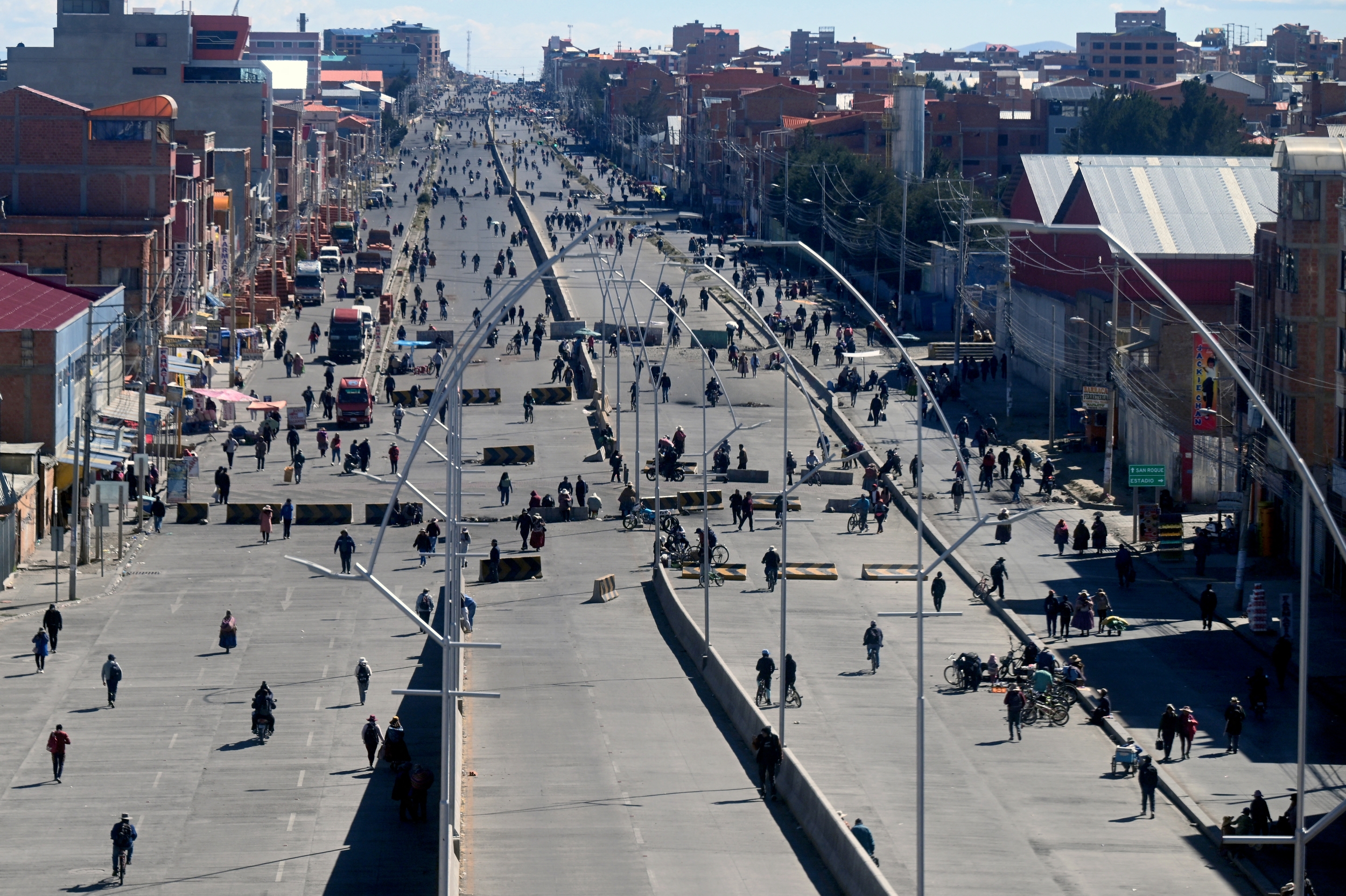
Paz addressed the country after signing the legislation. “This law is to protect the majority of the country from the narco-terrorism that is instigating the protests,” he said in a national address. The framing – casting the blockades as criminal infiltration rather than economic grievance – is one his government has pushed with increasing frequency, and one the protest coalition has rejected as a pretext for force. Neither characterization captures what the goods shortage actually looks like on the ground. Vendors in La Paz have been selling poultry directly from trucks on streets where supply chains no longer function normally.
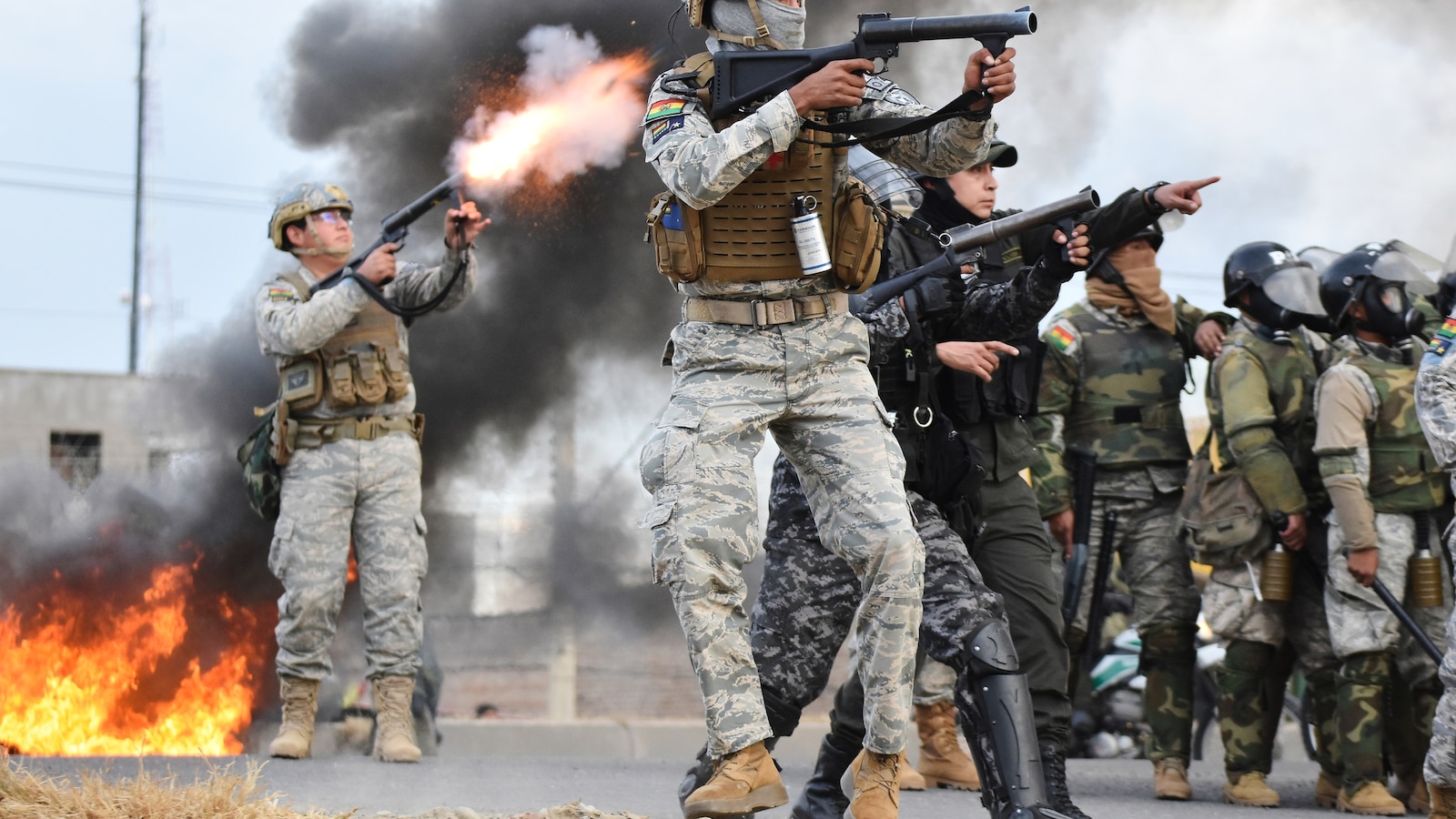
The Cochabamba clashes that followed Monday’s signing were not the first. Renewed unrest in the central city erupted after Paz enacted the measure, with protesters hurling firecrackers, stones and sticks at police who responded with tear gas, leading to dozens of arrests, ABC News reported. Cochabamba has become the geographic center of the blockade network, accounting for 32 cut routes at its peak – more than any other department, including La Paz.
What the law does not resolve is the underlying arithmetic. The economic crisis, driven by declining energy production and a severe shortage of US dollars, is the worst Bolivia has faced in decades. The COB has demanded a 20 percent wage increase. Paz has promised not to privatize state-owned enterprises or raise public service prices – concessions that address the political surface but not the structural problem beneath it. Bolivia’s Congress granted Paz sweeping emergency powers only days ago after a 13-hour legislative debate, making Monday’s signing the formal conversion of that authority into law.
Bolivia’s opposition and international observers are watching whether Paz treats the new legislation as an operational instrument or a negotiating signal – a show of legal force designed to bring unions back to the table rather than a genuine prelude to military deployment. The two readings are not obviously distinguishable from the outside, which is precisely what makes the next 48 to 72 hours the period that will define how this ends.
What remains unresolved is whether any segment of the protest coalition – the COB, the coca growers, the miners, the Indigenous federations – is willing to negotiate on terms Paz can accept, or whether each group’s internal politics has carried them past the point where a fuel-subsidy restoration or wage adjustment would be enough to lift the blockades without the president’s resignation. That gap has not narrowed. The law Paz signed on Monday narrows something else: his own options, and the country’s.