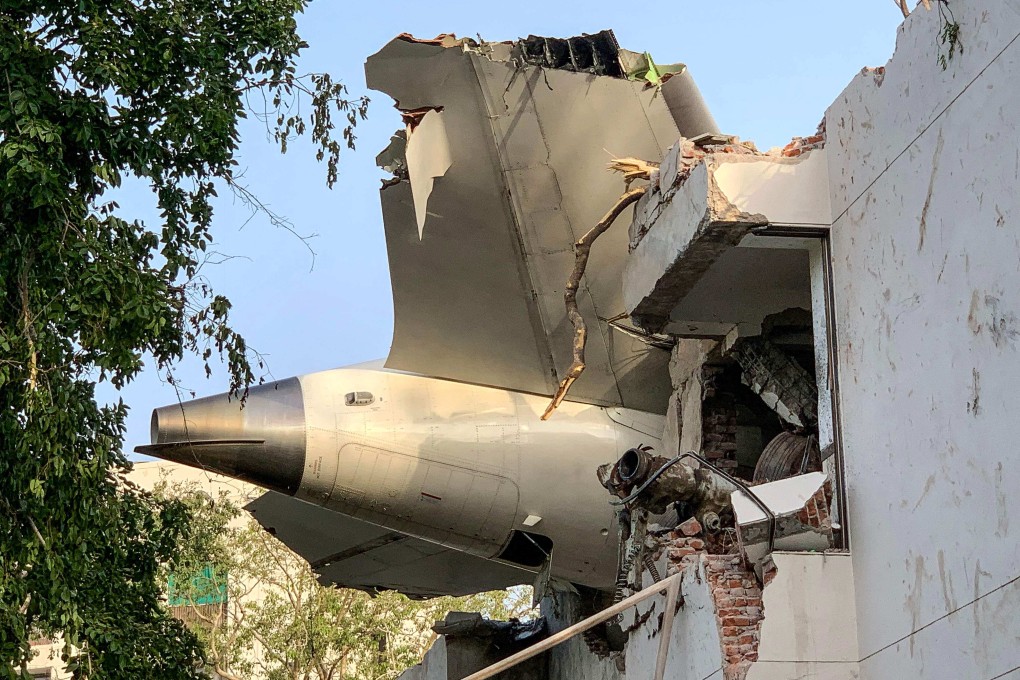

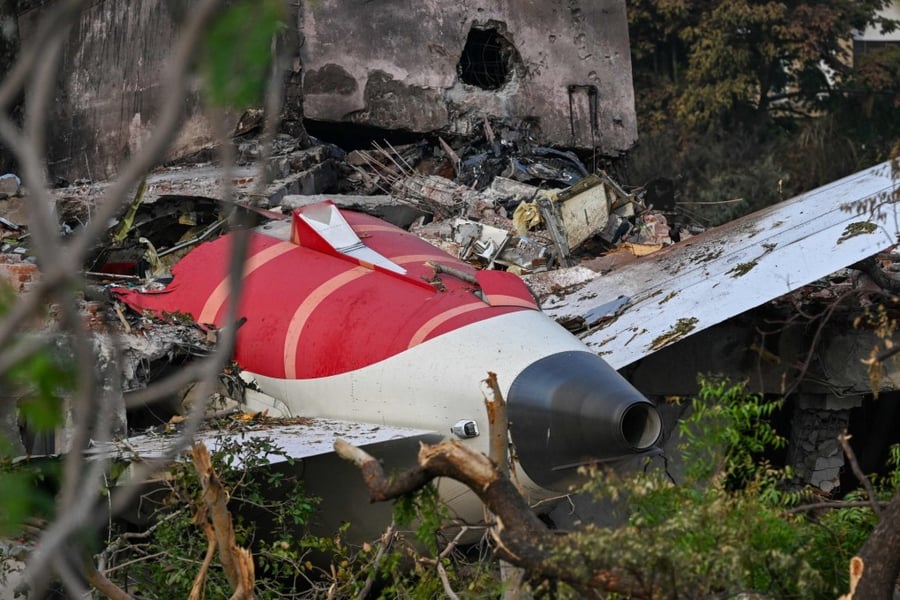
India’s Aircraft Accident Investigation Bureau was supposed to produce a final report on the crash of Air India Flight 171 by Friday. It did not. Instead, the bureau issued a status update explaining that the examination of the Boeing 787’s General Electric engines in the United States remains incomplete. For the families of 260 people who died when the aircraft came down in Ahmedabad on June 12, 2025, the anniversary passed without answers.
The preliminary report, released last July, narrowed the focus to a single detail: both engine fuel cutoff switches moved from RUN to CUTOFF within one second of each other, moments after takeoff. The sequence cut power to both GE engines simultaneously. Investigators have since ruled out mechanical failure and found no evidence of sabotage. What remains, according to Bloomberg, is the probability of deliberate pilot action.
Flight AI171 departed Sardar Vallabhbhai Patel International Airport at 14:30 local time on a Boeing 787-8 Dreamliner bound for London Gatwick. The aircraft reached 625 feet before losing engine power and crashing into a medical college hostel in the Meghani Nagar residential area. Of the 242 people on board, 241 died, including 169 Indian and 52 British nationals. Nineteen people on the ground were also killed. A British national, Vishwash Kumar Ramesh, was the sole survivor.
It was the first fatal crash of a Boeing 787 since the model entered service in 2011. The aircraft type had logged more than a decade of commercial flights without a hull loss. After the crash, Air India grounded part of its 787 fleet for a $400 million retrofit programme, and later suspended its Delhi-Washington route because of aircraft shortages and the ongoing closure of Pakistan’s airspace.
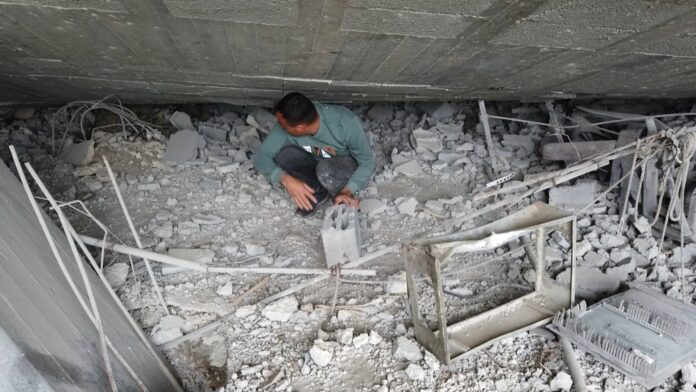
At the crash site on Friday, relatives gathered for a candlelight vigil. One woman wept while holding a framed photograph of her family members. Others scattered rose petals on the rubble of the hostel where their children died. Sita Patni, whose 14-year-old son Aakash was killed on the ground near her tea stall, was not told of his death for 20 days.
At least 120 families have retained a US-based law firm. Muhammad Shethwala, whose wife Sadika and daughter Fatima were on the flight returning to London from a relative’s wedding, spent roughly $15,000 on legal proceedings to recover their remains. Air India, he told Al Jazeera, declined to help with the costs. The airline paid the sole survivor’s family the equivalent of $28,800. The Tata Group, which owns Air India through a 2022 privatisation deal, established a 500 crore rupee ($60 million) welfare trust for victims’ families.
The Federation of Indian Pilots opposes what it calls the pilot suicide theory emerging from the investigation. The captain’s father has requested an independent inquiry examining non-deliberate causes for the fuel cutoff. Neither the bureau nor the Modi government has committed to one.
India’s aviation sector is the world’s fastest-growing by passenger volume. The country ordered 970 new aircraft in the past three years, 470 of them from Boeing. Flight AI171 raised the same question that trailed Boeing after two 737 MAX disasters killed 346 people in 2018 and 2019: whether regulators and airlines prioritised expansion over the machinery of accountability. So far, neither Boeing nor engine maker GE Aerospace has issued safety recommendations in response to the Ahmedabad crash. The 260 dead have a status update, not an explanation.